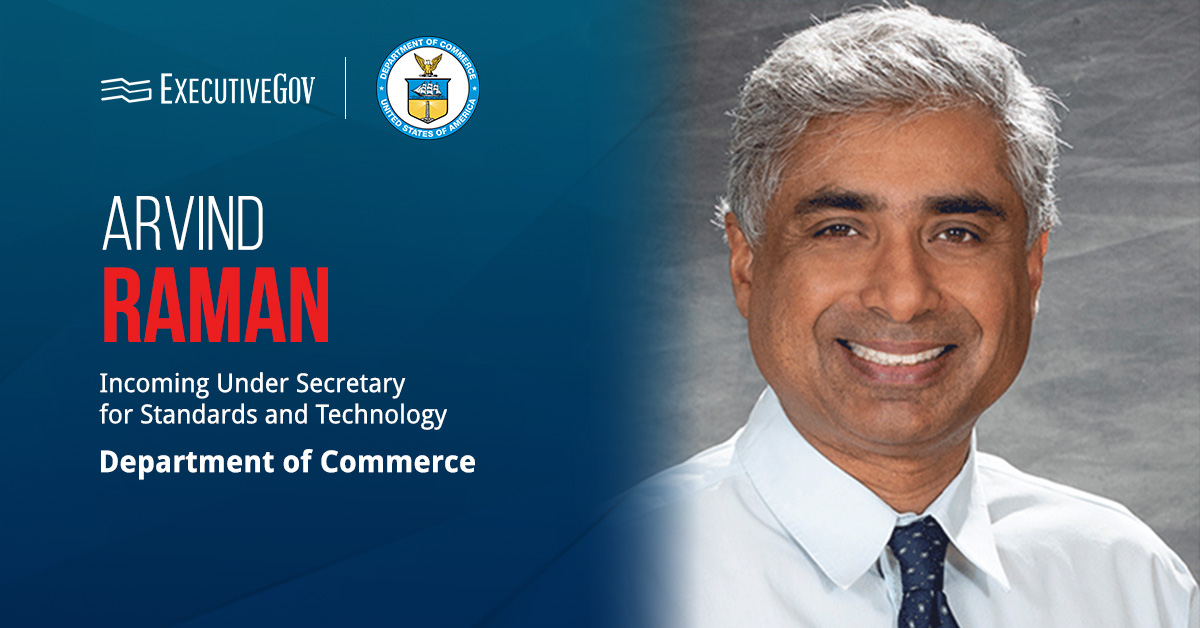
- Senate confirms Arvind Raman for the dual-hatted Commerce under secretary and NIST director role
- Raman commits to advancing AI standards and manufacturing innovation
- The Purdue University engineering dean previously led the LASER PULSE Consortium
The Senate on Monday confirmed Arvind Raman, the John A. Edwardson Dean of Engineering at Purdue University, as the next under secretary of commerce for standards and technology through the adoption of an executive resolution authorizing the en bloc consideration of multiple nominations on the executive calendar.
Raman appeared as Calendar Number 692 in the resolution, which was approved by the Senate in a 46-45 vote.
In addition to the under secretary role, he will also serve as director of the National Institute of Standards and Technology within the Department of Commerce.
In October, President Trump nominated Raman to the dual-hatted role of under secretary of commerce for standards and technology and director of NIST.
What Commitments Did Raman Make During His Confirmation Process?
During his confirmation hearing, Raman said he would work to accelerate technological innovation through industry partnerships and establish a common standard for AI technologies.
He also pledged support for the Trump administration’s artificial intelligence action plan by “maximizing innovation in the entire AI tech stack, including chips in biotechnology, in the quantum industrial base and advanced manufacturing.”
Who Is Arvind Raman?
Raman has led Purdue University's College of Engineering as the John A. Edwardson Dean of Engineering since April 2023, according to his LinkedIn profile. He also serves as the Robert V. Adams Professor at Purdue's School of Mechanical Engineering.
Before becoming dean, Raman served as executive associate dean within Purdue’s College of Engineering. He previously held the positions of senior associate dean of the faculty and associate dean for Global Engineering Programs.
In addition, Raman founded the LASER PULSE Consortium, an initiative focused on advancing manufacturing and engineering research collaboration.
Raman earned his undergraduate degree from the Indian Institute of Technology. He later received a master’s degree in mechanical engineering from Purdue University and a doctorate in mechanical engineering from the University of California, Berkeley.