
- The Department of War wants to acquire advanced UAS and C-UAS technologies from small, innovative firms as quickly as possible
- The department has embarked on a number of initiatives including lucrative prize competitions and innovative procurements to progress these technologies
- Get the latest UAS business opportunities from top DOW officials like DIU Acting Director Emil Michael at the 2026 Defense R&D Summit on Jan. 29!
The Department of War wants breakthrough unmanned aircraft system technologies from small, innovative firms and it wants them now. To rapidly procure these capabilities, the department has embarked on a number of initiatives, including lucrative prize competitions, rapid acquisition programs and advanced domestic and international demonstrations.
The DOW doesn’t want just drone capability, it also wants to buy the world’s most advanced counter UAS technologies. The DOW and other federal agencies came together in November to kickoff a three-year initiative to acquire counter small UAS, or C-sUAS, capabilities. The DOW recorded about 3,000 drone incursions at the southern border in the past year and wants to prepare for major domestic events like the 2026 World Cup being jointly hosted by the U.S., Mexico and Canada.
Let’s explore the DOW’s latest drone and C-UAS developments.
Discover the latest business opportunities and requirements in UAS and C-UAS technology at the Potomac Officers Club’s 2026 Defense R&D Summit on Jan. 29! Hear directly from top DOW officials including Emil Michael, DIU acting director and under secretary for research and engineering, and Dr. Thomas Rondeau, principal director for FutureG. Tickets are running out—secure your seat today!
What Are Some Recent Pentagon UAS Developments?
1. Prize Competition for Voice-Controlled Drones
Three DOW units are teaming to hold a prize competition with up to $100 million in multiple awards to pursue an operationally-viable Autonomous Vehicle Orchestrator. This is technology that can leverage a person’s intent from text, voice and haptic input into machine execution.
The Defense Innovation Unit, the Defense Autonomous Warfare Group and the Navy seek to prototype market-ready offerings to create a scalable, robust and vehicle-agnostic device. The competition will include challenges such as iterative sprints and tackling increasingly complex portions of a problem.
The DOW seeks orchestrator technologies that allow people to work naturally and through plain language, not by clicking through menus or programming behaviors.
“If a company can deliver, they will receive substantial rewards. If they can’t, we will move on,” said Emil Michael, DIU acting director, under secretary of War for research and engineering and a keynote speaker at the upcoming 2026 Defense R&D Summit. “The ones who show they can perform will move immediately into follow‑on contracts so we can field these capabilities at scale for our fighting force.”
Responses are due Sunday, Jan. 25.
2. Counter-UAS Using Drones Deploying Nets
Fortem Technologies has developed a unique counter-drone solution leveraging a tried-and-true approach with advanced technology. The DOW on Jan. 13 announced it awarded the company a contract for two DroneHunter F700 systems that use AI-enabled drones to deploy nets and defeat enemy UAS.
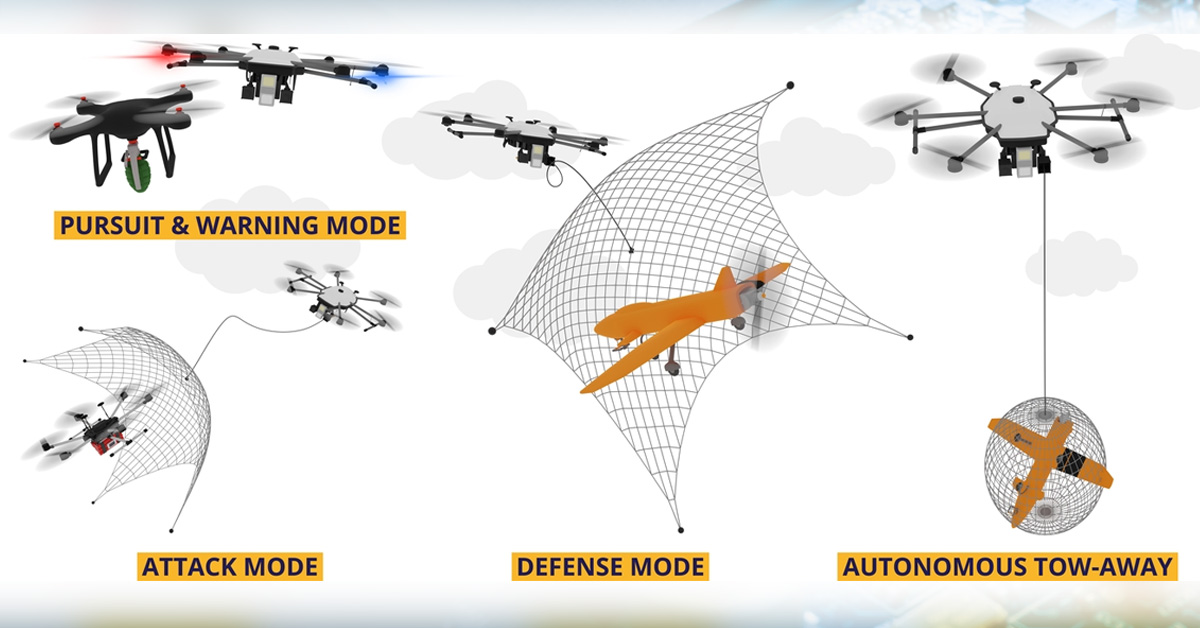
The DroneHunter is a reusable application that uses radar and AI to identify and follow small drones in low-altitude and complex environments. Once the system spots a threat, the DroneHunter deploys a tethered net to capture the adversary aircraft, which is brought to a designated location for a thorough analysis.
This contract award is part of the DOW’s Replicator initiative, a program to speed up delivery of cutting-edge capabilities to operators at scale and speed. Though Replicator 1, the opening phase, had an intent of utilizing thousands of autonomous systems in various domains, this contract award was part of Replicator 2, which is specifically focused on countering small drones.
The Potomac Officers Club’s 2026 Defense R&D Summit on Jan. 29 is the marquee event of the year for GovCon technology professionals. Engage with leading federal officials and top industry experts at panel discussions on essential topics like Securing the Future of Defense Innovation. Spark collaborations with other GovCon titans and score that big contract. Buy your ticket now!
3. Navy AI C-UAS Effort
The Navy is pursuing its own effort to leverage AI to counter small drones. The service in September tested at sea a system that used AI to combine the capabilities from multiple independent sensors to identify small UAS.
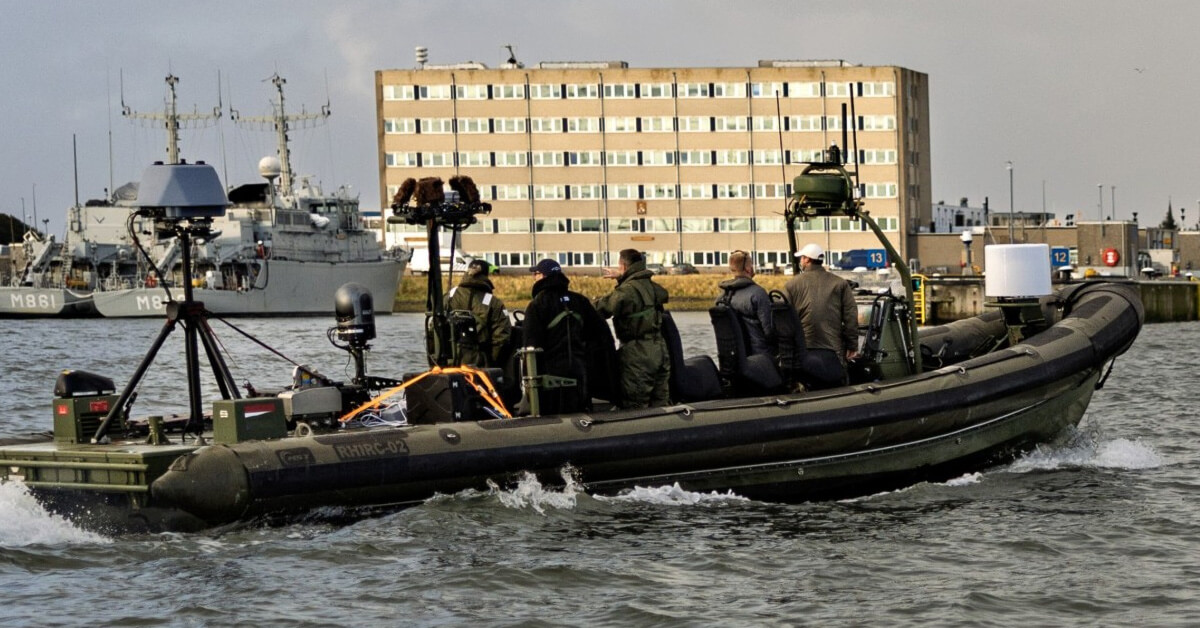
When fully operational, the system should provide special forces in a maritime environment valuable defenses against distant drones without compromising their position. The trial took place as part of the Bold Machina exercise in the Netherlands. Quickly developed by a team of scholar-officers from the Naval Postgraduate School, the C-UAS system was used aboard a Dutch Navy fast raiding, interception and special forces craft, or FRISC.
Special forces craft such as FRISCs and other rigid-hull inflatable boats are vulnerable to drone attacks on open water because they lack cover. NATO required a pair of NPS scholar-operators to create a system that was passive enough to allow users on a small craft to not give off detectable emissions or signatures.
4. First Kinetic Drone Swarm on U.S. Soil
The Pentagon on Jan. 8 achieved a notable milestone when it performed the first kinetic UAS swarm on U.S. land, according to DefenseScoop.
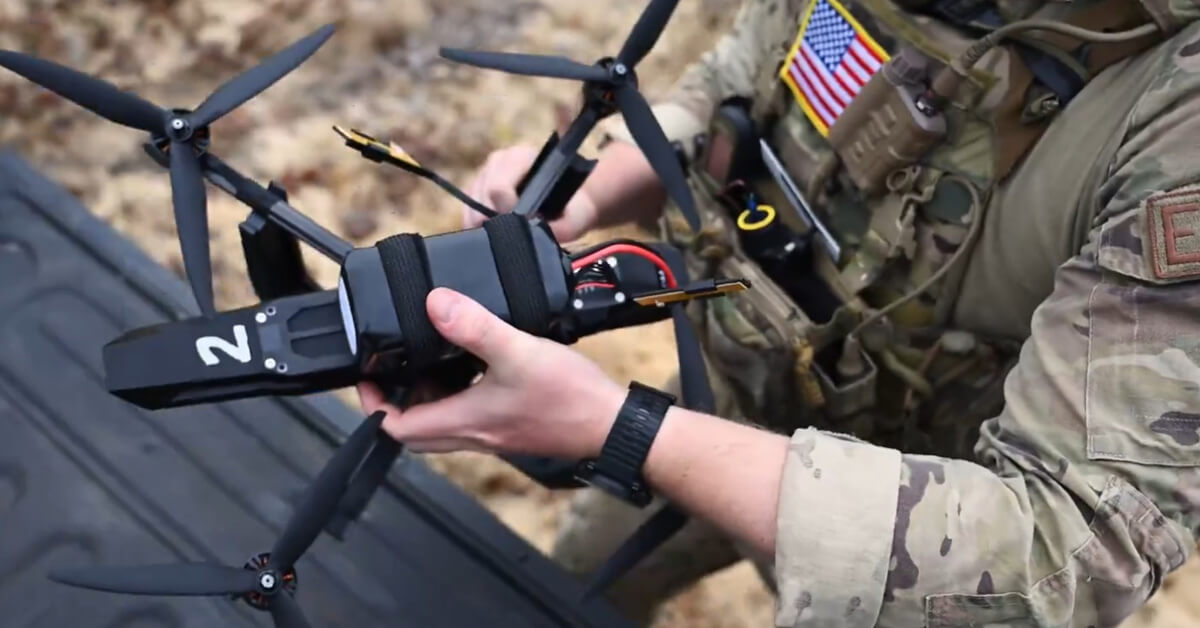
The demonstration was notable because it was part of the DOW’s initiative to experiment with unmanned systems that communicate using a common operating network. Troops deployed four first-person-view UAS, many leveraging plastic explosives, into the air and toward inflatable tanks. One UAS acted as a “leader,” guiding the other three platforms toward the targets, which were destroyed.
The demonstration was part of the DOW effort Swarm Forge, which has a goal of testing and growing fighting capabilities with, and against, AI-enabled systems. UAS swarms have been a DOW priority for years and the Marine Corps recently created a FPV drone squad. This has served as a repository for training, doctrine and experimentation.
5. DIU C-sUAS Low-Cost Sensing Challenge Winner
The DIU in December announced MatrixSpace as the overall winner of the Counter-small UAS Low-Cost Sensing challenge. MatrixSpace won $500,000 while Guardian RF, Hidden Level and Teledyne FLIR Defense earned $100,000 awards.
The LCS challenge, which began in May, was created to identify nascent technologies that permitted distributed, broad and resilient sensing architectures. During U.S. Northern Command’s Falcon Peak 25.2 exercise in September, 10 selected finalists demonstrated capabilities ranging from radio frequency passive detection, acoustic sensing, optical and infrared modalities and hybrid systems.
The challenge had a goal of identifying promising sensor technologies that could expand detection coverage, easily integrate into joint command-and-control architectures, slash lifecycle cost and provide the redundancy required to successfully counter small drone threats.
The LCS challenge was a joint effort between the DIU, NORTHCOM, Joint Interagency Task Force 401, the Army, Navy, Marine Corps and U.S. Indo-Pacific Command.