
Processing....

Executive Gov

Digital News Coverage of Government Contracting and Federal Policy Landscape
Sticky Logo
  • Home
  • Acquisition & Procurement
  • Agencies
    • DoD
    • Intelligence
    • DHS
    • Civilian
    • Space
  • Cybersecurity
  • Technology
  • Executives
    • Profiles
    • Announcements
    • Awards
  • News
  • Articles
  • About
  • Wash100
  • Contact Us
    • Advertising
    • Submit your news
    • Jobs
Logo
News
Government Budget at a Crossroads as CR Nears Expiration
by Kristen Smith
Published on December 17, 2024
Government Budget at a Crossroads as CR Nears Expiration

As the December 20 expiration date for the current continuing resolution looms, lawmakers in Washington are racing against the clock to avoid a government shutdown. The CR, enacted earlier this year, has kept federal agencies funded at previous fiscal year levels, but its expiration on Friday has prompted renewed negotiations to secure funding and address pressing policy needs.

Table of Contents

  • Background: What Is a Continuing Resolution?
  • Key Developments in Budget Negotiations
    • Disaster Aid and Farmer Assistance at the Forefront
    • Bipartisan Negotiations Hit Snags
  • What Happens If the CR Expires Without a Deal?
    • Implications for Government and Policy
  • Looking Ahead: High Stakes for Friday’s Deadline

Background: What Is a Continuing Resolution?

A continuing resolution is a temporary funding measure that Congress passes to maintain government operations while legislators work on full-year appropriations bills. These stopgap measures are often used to avoid shutdowns when disagreements or delays stall the regular budget process. The current CR has allowed federal programs to function uninterrupted, but only until December 20.

Key Developments in Budget Negotiations

In recent days, congressional negotiators have made significant strides toward a new stopgap funding agreement. The proposed bill would extend government funding through March 14, 2025, providing additional time to finalize appropriations for the fiscal year.

Disaster Aid and Farmer Assistance at the Forefront

One of the bill’s key provisions is $100 billion in disaster aid. This funding is aimed at supporting recovery efforts for communities affected by hurricanes, wildfires and other natural disasters. Additionally, $10 billion is allocated for economic assistance to farmers, whose programs face expiration at the end of the year.

Bipartisan Negotiations Hit Snags

While the framework for the stopgap bill has bipartisan backing, disputes over specific provisions, including the details of agriculture aid, remain unresolved. House Appropriations Chair Tom Cole and Senate leaders expressed cautious optimism but acknowledged the complexities of the negotiations. These unresolved issues could delay the final passage of the bill, raising concerns about a potential lapse in funding.

What Happens If the CR Expires Without a Deal?

If Congress fails to pass a new funding measure by December 20, the government could face a partial shutdown. This would disrupt federal operations, furlough employees and halt many public services. Essential services, such as national security and emergency response, would continue to function, but the broader impacts could affect millions of Americans.

The House of Representatives, led by Speaker Mike Johnson, plans to give lawmakers 72 hours to review the proposed bill. This timeline pushes the potential House vote to Thursday, December 19. If delays occur, even a brief shutdown remains a possibility as the Senate would need to expedite its own approval process.

Implications for Government and Policy

The proposed funding package reflects both immediate and long-term priorities:

  • Disaster Recovery: Communities devastated by recent hurricanes and wildfires stand to benefit from increased disaster relief funding.
  • Agriculture Stability: Farmers face significant financial uncertainty as programs approach expiration. The proposed $10 billion aid package seeks to provide economic stability.
  • Operational Continuity: Extending the CR through March 14 would give lawmakers additional time to negotiate comprehensive appropriations bills for fiscal year 2025.

Looking Ahead: High Stakes for Friday’s Deadline

As the deadline approaches, all eyes are on Congress to deliver a stopgap funding solution. The stakes are high, with potential economic and operational consequences if a shutdown occurs. Lawmakers on both sides of the aisle have expressed a desire to avoid such a scenario, but the resolution of outstanding disputes remains critical to meeting Friday’s deadline.

In the coming days, the success of these negotiations will hinge on the ability of Congress to find common ground and balance urgent funding needs with broader legislative priorities. The next 72 hours will determine whether the government avoids disruption or faces yet another funding crisis.

Government Budget at a Crossroads as CR Nears Expiration

Curious about the state of government innovation and funding? Join the 2025 Defense R&D Summit, hosted by the Potomac Officers Club on Jan. 23, to hear directly from government and military leaders about their top innovation priorities, budget concerns and technological advancements.
Cybersecurity/DoD/News
DOD Unveils Updated Cyber Resilient Weapon Systems Engineering Resource
by Jane Edwards
Published on December 17, 2024
DOD Unveils Updated Cyber Resilient Weapon Systems Engineering Resource

The Department of Defense has issued the latest version of the Online Cyber Resilient Weapon Systems Body of Knowledge, or CRWS-BoK.

Table of Contents

  • What Is CRWS-BoK?
  • CRWS-BoK Version 4.3

What Is CRWS-BoK?

DOD said Monday CRWS-BoK is a free resource designed to foster innovation and best practices in secure cyber resilient engineering and enable science and technology and system security engineering professionals to build systems that can operate amid persistent cyberthreats.

The Office of the Under Secretary of Defense’s system security, or SysSec, team launched CRWS-BoK in May 2021. The SysSec team continues to update the online resource to improve collaboration, functionality and engagement.

CRWS-BoK Version 4.3

The latest version includes several key updates, including improved resource viewing, simplified email management, expanded nomination capabilities for engineering design patterns and compliance with the Revised Section 508 of the Rehabilitation Act of 1973.

The updated platform comes with new security features and graphics to improve the user experience.

Cybersecurity/News
CISA Seeks Feedback on Updated Cyber Incident Response Playbook
by Kristen Smith
Published on December 17, 2024
CISA Seeks Feedback on Updated Cyber Incident Response Playbook

The Cybersecurity and Infrastructure Security Agency is requesting public feedback on the draft of the National Cyber Incident Response Plan, or NCIRP, updating policies from the original 2016 release.

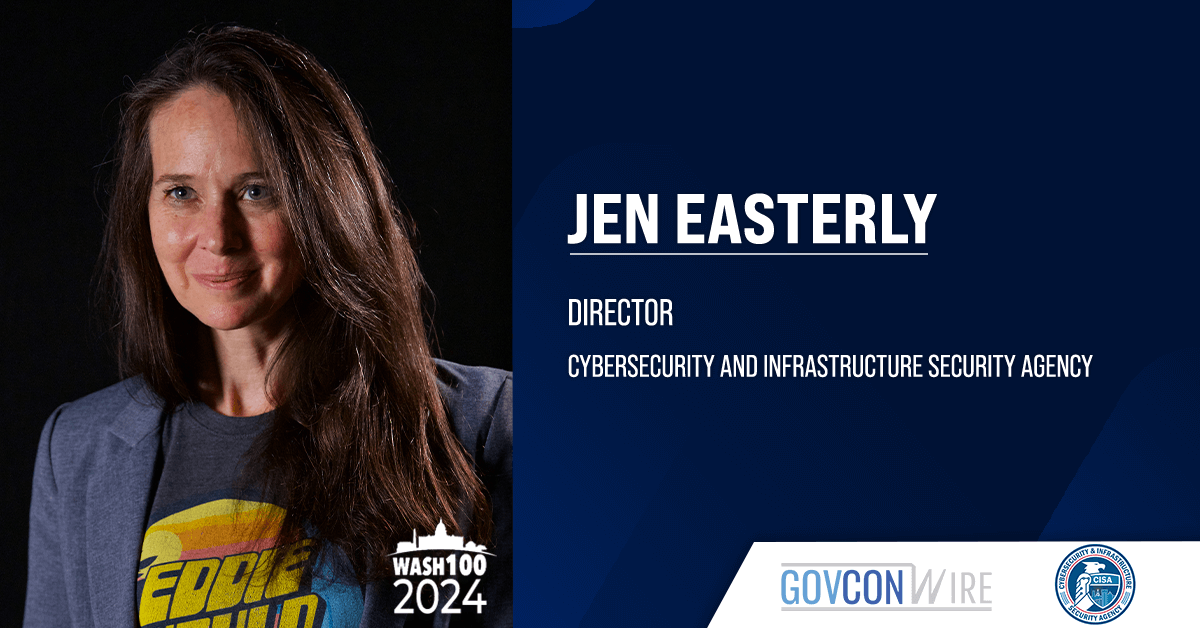
“This draft NCIRP Update leverages the lessons learned over the past several years to achieve a deeper unity of effort between the government and the private sector,” said CISA Director Jen Easterly. Public comment on the draft will help maximize NCIRP’s effectiveness against an increasingly difficult threat environment, added Easterly, a 2024 Wash100 awardee,  

CISA conducted extensive collaboration with its government and industry partners to draft a framework that provides sound security coordination to match adversarial actions. In June, the agency and the Joint Cyber Defense Collaborative conducted an AI tabletop exercise among artificial intelligence experts from government and industry to foster response coordination on AI cybersecurity breaches. 

Coordinated Cyber Incident Response Mechanisms

In the NCIRP draft, CISA identified the coordinating structures that may be tapped for responses on cyber incidents requiring coordinated cross-sectoral, public-private or federal action.

The 42-page NCIRP draft focuses on four key updates, including a way for non-federal stakeholders to join in a coordinated cyber incident response. The plan also features condensed and organized content aligned to an operational lifecycle, with the goal of improving NCIRP’s usability.  

In addition, the updated draft provides relevant legislation and policy changes on agency roles and responsibilities in cybersecurity. The draft’s fourth highlight offers a predictable timeline for future NCIRP updates.

CISA requests that comments be submitted in writing on or before Jan. 15. Feedback can be sent directly through the Federal Register’s public document portal at regulations.gov.

Civilian/News
NTIA Invests $273M in 7 Open Radio Unit Projects
by Miles Jamison
Published on December 17, 2024
NTIA Invests $273M in 7 Open Radio Unit Projects

The National Telecommunications and Information Administration, or NTIA, has awarded over $273 million in grants to seven projects aimed at developing open and interoperable wireless networks.

The NTIA said Friday the grants, meant to support projects involving open radio unit hardware commercialization, are from the second Notice of Funding Opportunity of the Public Wireless Supply Chain Innovation Fund. NTIA will award another $146 million in grants this winter.

Open Radio Unit Projects

The NTIA required applicants to collaborate with a mobile network operator, or MNO, to help commercialize their products. The chosen projects are:

  • American Ruggedized Modular O-RAN Radio by JMA Wireless, which received $43.9 million, aims to support energy-efficient variants of open radio units.
  • Wireless Heart of America by Abside Networks was given $46.8 million to support the development of Very-Large-Array Massive Multiple Input / Multiple Output Open Radio Units, or mMIMO ORUs.
  • Battelle Memorial Institute’s RavenStar Open Radio Unit project was granted $37.8 million for developing mMIMO ORUs with advanced radio frequency front end and digital signal processing.
  • Microelectronics Technology will have $35 million to work on five Open RAN Macro Radios for Operation with four worldwide mobile network operators.
  • The Miracle RU: Eridan by Eridan Communications received $36.8 million to hasten the development of a light, power-efficient and cost-efficient Open RAN small-cell radio unit.
  • Solid Gear’s Multi-Operator Radio Access Network-capable O-RAN Radio Unit Point of Interface embedded in Distributed Antenna System will have $27.7 million in funds.
  • Nokia of America was awarded $45 million for its ORU Commercialization proposal.

Secretary of Commerce Gina Raimondo stated, “To out-compete and out-build the rest of the world, we need to ensure we’re tapping into every resource to unleash U.S. innovation, which is precisely what these federal dollars will do by boosting the development of open and interoperable wireless networks.”

Civilian/Government Technology/News
NSF Selects Final 6 Projects for National Quantum Lab Program
by Kristen Smith
Published on December 17, 2024
NSF Selects Final 6 Projects for National Quantum Lab Program

The National Science Foundation has chosen the final six pilot projects for its National Quantum Virtual Laboratory program, which seeks to accelerate the development of quantum technologies.

The selected projects will explore methods of providing distributed access to the required tools for creating functional technologies that exploit quantum phenomena, NSF said Monday. The NQVL program participants will receive $1 million each to create real-world testing environments for advancing quantum capabilities.

Table of Contents

  • Tapping Quantum Computing’s Capacity
  • Exploring Quantum Possibilities

Tapping Quantum Computing’s Capacity

For example, a team of researchers from Iowa State University, Indiana University and IonQ will develop hardware and techniques that can be used in quantum chemistry, condensed matter physics and nuclear physics. Each application intends to tap quantum computing’s capacity to manage the exponential complexities of quantum systems.

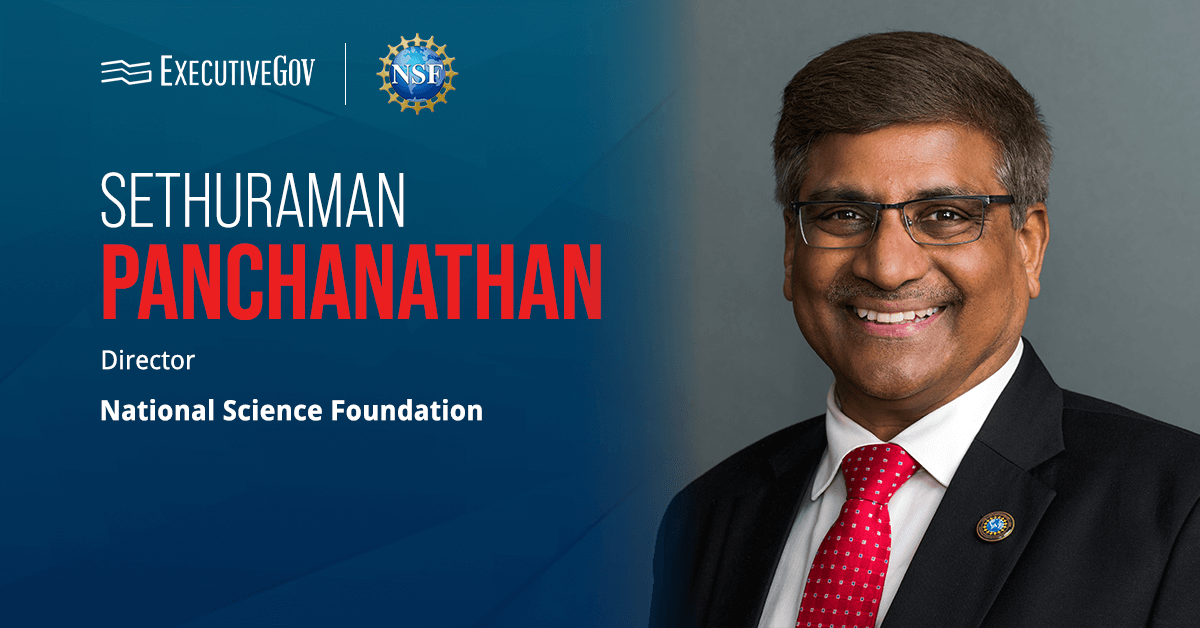
Through the NQVL initiative, the government is establishing a national resource without “the limitations of distance and space or the boundaries of laboratory walls,” according to NSF Director Sethuraman Panchanathan.

Exploring Quantum Possibilities

The program is meant to unlock the possibilities of quantum phenomena, which could create networks with impenetrable security. NQVL will also provide workforce training and educational opportunities to grow the U.S. STEM workforce and develop leaders for future quantum-based industries.

The six projects will join the earlier five program participants that NSF announced in August. All teams are invited to submit proposals to the latest agency funding solicitation for the NQVL initiative.

DoD/News
Space Force Launches GPS III Satellite With SpaceX
by Kristen Smith
Published on December 17, 2024
Space Force Launches GPS III Satellite With SpaceX

The U.S. Space Force has confirmed the launch of a Global Positioning System III satellite. The military service said the national security space launch mission, dubbed Rapid Response Trailblazer-1, demonstrates the government’s capacity to work with industry to condense the process of bringing mission concept to launch.

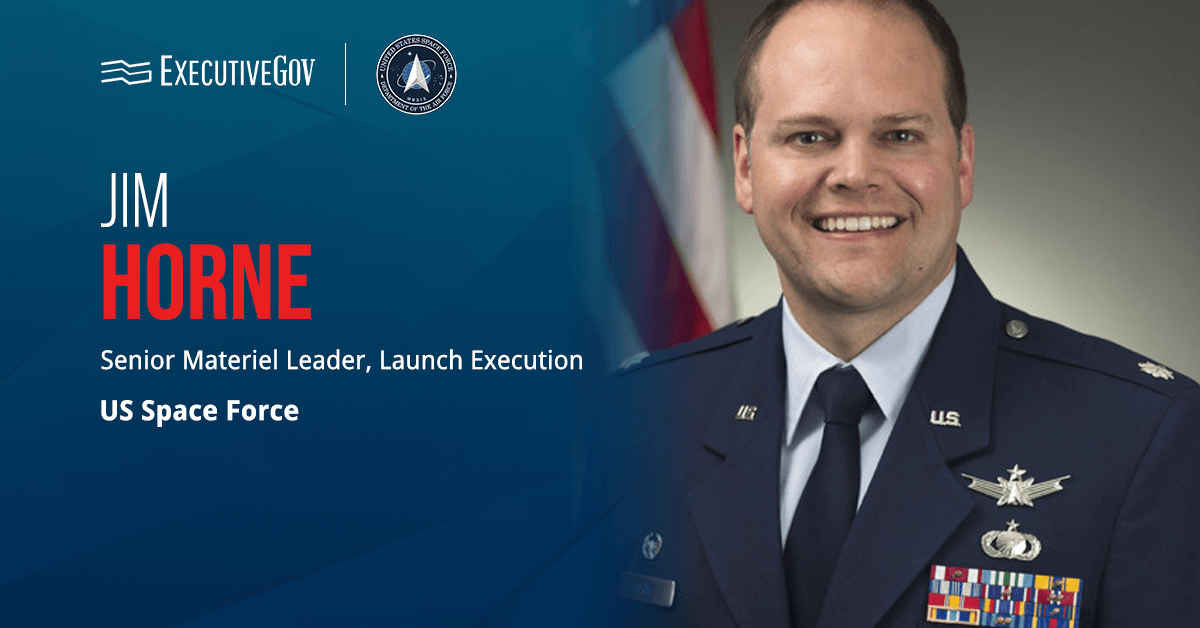
“This launch was a remarkable achievement that highlights the Space Force’s ability to execute high-priority launches of major space systems on a significantly reduced timescale,” stated Col. Jim Horne, senior materiel leader of launch execution for the Space Systems Command’s Assured Access to Space.

Table of Contents

  • Falcon 9 Launches GPS III Satellite
  • Launching a Spacecraft at an Accelerated Timeline
  • Delivering Reliable GPS to Warfighters

Falcon 9 Launches GPS III Satellite

According to the Space Force, the RRT-1 launch was made possible through its partnership with Space X. On Monday, at 7:52 p.m. EST, a Falcon 9 rocket lifted off from Space Launch Complex 40 at Cape Canaveral Space Force Station in Florida to deliver the GPS III satellite SV-07 to orbit. 

RRT-1 was originally scheduled for a Dec. 13 flight but was delayed due to unfavorable weather conditions. 

The mission marks SpaceX’s 126th launch of 2024. 

Launching a Spacecraft at an Accelerated Timeline

Horne said planning the mission began a few months ago in response to concerns over the readiness of United Launch Alliance’s Vulcan rocket, which is still awaiting required certification to deploy NSSL missions. 

“It not only demonstrates the teams’ ability to respond to emergent constellation needs but is a testament to our flexibility and responsiveness to deliver capability as rapidly as space vehicle readiness allows,” the military leader added. 

Delivering Reliable GPS to Warfighters

Manufactured by Lockheed Martin, GPS III satellites are designed to provide navigation information to deployed troops and military assets. The space vehicles support M code, ensuring resistance to jamming and spoofing. 

SV-07 follows the launch of SV-06 in 2023. Mission Delta 31 operates the satellite constellation.

Civilian/News/Space
NASA Issues Final Strategy for Sustained Human Activities in LEO
by Kristen Smith
Published on December 17, 2024
NASA Issues Final Strategy for Sustained Human Activities in LEO

NASA has published its finalized low Earth orbit microgravity strategy that outlines key goals and objectives to support a sustained human presence in LEO and launch future space explorations.

The strategy will guide future human activities in LEO and promote international space collaboration, the space agency said Monday, adding that the specified 13 goals and 44 objectives will advance microgravity science, technology and exploration for all space stakeholders.

Table of Contents

  • Roadmap for Future LEO Missions
  • Final Framework for LEO Strategy

Roadmap for Future LEO Missions

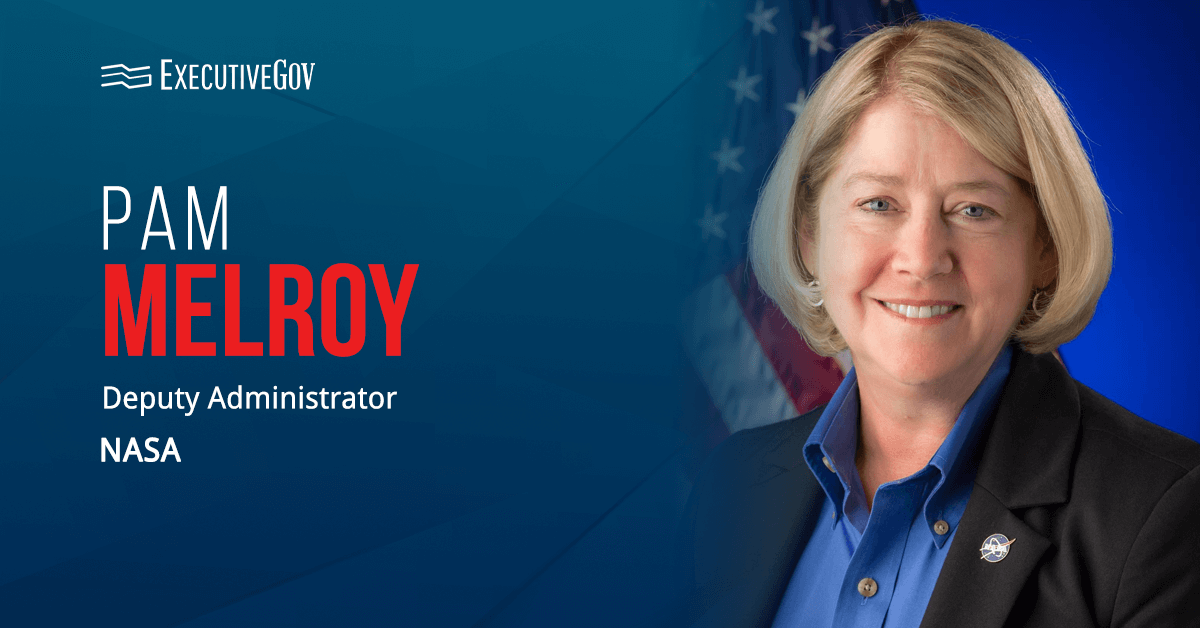
NASA Deputy Administrator Pam Melroy explained that the strategy will serve as a roadmap for upcoming LEO missions, the continuous human presence in the orbit and the ambition to explore the Moon and Mars.

“As we near the retirement of the International Space Station in 2030, these objectives are a pivotal next step in solidifying U.S. leadership in space,” she added.

Final Framework for LEO Strategy

NASA started developing the strategy in early 2024 and sought public comments for a draft document. Following its review of the input, the agency assembled a final framework of targets for commercial LEO infrastructure, operations, science, research and technology development, international cooperation, workforce development, science, technology, engineering and mathematics engagement, and public participation.

NASA envisions that the LEO microgravity goals and objectives will develop future commercial space stations to support space operations, reduce risk for human missions to Mars, preserve operational skills, advance critical scientific research and sustain international and commercial partnerships.

Financial Reports/News
GovCon Index Faces 4th Straight Monthly Loss
by Branson Brooks
Published on December 16, 2024
GovCon Index Faces 4th Straight Monthly Loss

Executive Mosaic’s GovCon Index has fallen by more than 2% in the last two weeks, closing with an average of $4,947.67 in this most recent period. If the index continues its December deficit, it could result in a fourth consecutive monthly loss.

GovCon Index tracks and displays real-time stock market data on 30 major public government contracting organizations. This data is presented daily for site visitors to gain insight into the performance of each individual company and to understand the overall trends moving the GovCon market.

Table of Contents

  • GovCon Index’s Stretch of Decline
  • Weekly Gains & Declines 

GovCon Index’s Stretch of Decline

The GovCon Index has declined 4.95% overall throughout the first half of December. 

The index’s worst recorded months in 2024 have been September, with a 3.05% decrease, followed by October and November, with a 0.24% and 2.87% decline. Prior to its streak of monthly loss, the GovCon Index had one of its best months in August, increasing 4.74%.

Weekly Gains & Declines 

Overcoming overall loss, Palantir Technologies, a data analytics firm, grew by 13.40%, followed by Boeing, which experienced a 9.14% increase. On the other hand, AeroVironment declined 19.54% during the period. 

Five stocks, including CACI International and Booz Allen Hamilton, dropped between 9% and 11%.

Visit GovConIndex.com to view the complete list of tracked companies and gain insight into daily GovCon Index performance.

Executive Moves/News
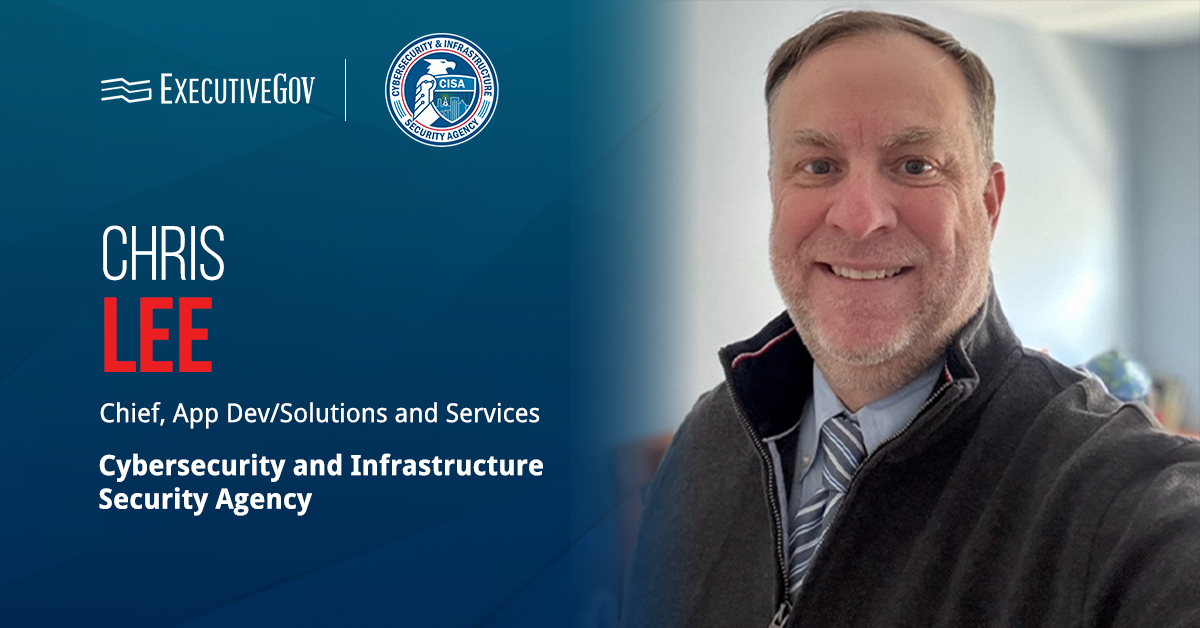
Chris Lee Joins CISA as App Dev/Solutions, Services Chief
by Jane Edwards
Published on December 16, 2024
Chris Lee Joins CISA as App Dev/Solutions, Services Chief

The Cybersecurity and Infrastructure Security Agency has appointed Chris Lee, a government technology veteran, as chief of app development/solutions and services.

Prior to CISA, Lee spent 15 years at the Department of Homeland Security’s Immigration and Customs Enforcement.

“I can’t wait to use all the amazing things I have learned over the years to take the DHS and CISA Missions forward in this space!” Lee said in a LinkedIn post announcing his move to the cyber agency.

According to his profile on the professional networking site, Lee will provide mission application services, including cloud platforms, on behalf of the agency’s chief information officer.

Chris Lee’s Career Background

His career at ICE included time as a vendor liaison, SharePoint and web services section chief and internet/intranet project manager.

Before ICE, the former U.S. Air Force communications computer specialist spent seven years at the Northern Virginia Astronomy Club, where he served as director of communications.

Lee also held leadership roles at several tech companies, including collaboration consultant at DataCure, senior network consultant at DelCor Technology Solutions and assistant director of communications at Telos.

Executive Moves/News
Johney Green Named Savannah River National Laboratory Director
by Miles Jamison
Published on December 16, 2024
Johney Green Named Savannah River National Laboratory Director

Johney Green has been appointed laboratory director of the Savannah River National Laboratory, or SRNL, by the Battelle Savannah River Alliance.

Battelle said Friday Green will leverage his leadership skills and extensive experience in various scientific fields in his new role.

Green is the current associate laboratory director for mechanical and thermal engineering sciences at the National Renewable Energy Laboratory. He also serves on the Defense Science Board, offering strategic and technological advice to the Office of the Secretary of Defense.

Table of Contents

  • Johney Green’s Past Roles
  • What Is Savannah River National Laboratory?

Johney Green’s Past Roles

Before joining NREL, Green was division director of energy and transportation science at the Oak Ridge National Laboratory for eight years. He was also group leader for fuels, engines and emissions research. The Additive Manufacturing Integrated Energy demonstration project was developed during his leadership.

Green also worked as technical coordinator for the 21st century truck partnership of the Department of Energy’s Office of Vehicle Technologies. He also had a stint as a visiting research scientist at Ford Motor Company’s Scientific Research Laboratory.

Juan Alvarez, executive vice president for national laboratory management at Battelle, said of Green, “We are confident that he is the right person to lead this exceptional national asset with a legacy of delivering impactful solutions for environmental, energy and security challenges.”

What Is Savannah River National Laboratory?

SRNL is a multi-program national laboratory and R&D institution for the Offices of Environmental Management and Legacy Management at the Department of Energy and the Weapons and Nonproliferation programs for the National Nuclear Security Administration.

Previous 1 … 247 248 249 250 251 … 2,720 Next
News Briefing
I'm Interested In:
Recent Posts
  • Joseph Tonon Named DCSA Director
  • Chris Scolese on AI’s Role in NRO’s Space-Based Intel Capability Delivery
  • What You Need to Know About the Growing Iranian Cyberthreat
  • FDA Launches Elsa 4.0, Consolidates Data Systems Into New HALO Platform
About

ExecutiveGov, published by Executive Mosaic, is a site dedicated to the news and headlines in the federal government. ExecutiveGov serves as a news source for the hot topics and issues facing federal government departments and agencies such as Gov 2.0, cybersecurity policy, health IT, green IT and national security. We also aim to spotlight various federal government employees and interview key government executives whose impact resonates beyond their agency.

Read More >>

RSS ExecutiveBiz
  • Arcfield Subsidiary STC Lands Subcontract for DOW Maritime Program
  • Lockheed Martin, Seagate Space, Firefly Partner to Advance Sea-Based Launch Capability
  • Former NASA Administrator Jim Bridenstine Takes CEO Role at Quantum Space
  • Carahsoft to Serve as Public Sector Distributor of Willow’s Operational AI
  • Army Awards Eight Spots on NCODE Cybersecurity Support Contract
  • C Speed Secures CMMC Level 2 Certification
RSS GovConWire
  • Air Force Awards $866M NASIC Advisory Services IDIQ to 4 Companies
  • CBP CIO Sonny Bhagowalia Accepts 2026 Wash100 Award From Jim Garrettson
  • NextPoint Acquires UScontracting to Enhance Cyber, Data Analysis Services
  • Scale AI’s Pentagon CDAO Production OTA Ceiling Rises to $500M
  • Lockheed Selects OJ Sanchez to Lead Aeronautics Business Following Greg Ulmer’s Retirement
  • HII Reports $3.1B Revenue, Growth Across Shipbuilding & Mission Technologies Segments in Q1 FY26
Executive Gov

Copyright © 2025
Executive Mosaic
All Rights Reserved

  • Executive Mosaic
  • GovCon Wire
  • ExecutiveBiz
  • GovCon Exec Magazine
  • POC
  • Home
  • Acquisition & Procurement
  • Agencies
    • DoD
    • Intelligence
    • DHS
    • Civilian
    • Space
  • Cybersecurity
  • Technology
  • Executives
    • Profiles
    • Announcements
    • Awards
  • News
  • Articles
  • About
  • Wash100
  • Contact Us
    • Advertising
    • Submit your news
    • Jobs
Go toTop