Processing....

Executive Gov

Digital News Coverage of Government Contracting and Federal Policy Landscape
Sticky Logo
  • Home
  • Acquisition & Procurement
  • Agencies
    • DoD
    • Intelligence
    • DHS
    • Civilian
    • Space
  • Cybersecurity
  • Technology
  • Executives
    • Profiles
    • Announcements
    • Awards
  • News
  • Articles
  • About
  • Wash100
  • Contact Us
    • Advertising
    • Submit your news
    • Jobs
Logo
Federal Civilian/News
DOE Investing $65M to Advance Quantum Computing Technology
by Jerry Petersen
Published on September 11, 2024
DOE Investing $65M to Advance Quantum Computing Technology

The Department of Energy has announced the availability of $65 million that will be awarded to finance multiple DOE Office of Science Advanced Scientific Computing Research program projects related to quantum computing, a technology with the potential to provide new ways of processing information that can overcome the limits of classical computing.

The DOE said Monday that the investment aims to support innovations that will work to demonstrate the utility of quantum computing in addressing the agency’s scientific research efforts. Of particular interest are advances in software, control systems and algorithms.

Out of the $65 million, $14 million will be sourced from fiscal year 2024 funds. Outyear funding will be contingent on congressional appropriations.

Commenting on the investment, DOE Associate Director of Science for Advanced Scientific Computing Research Ceren Susut said, “With these awards we are equipping scientists with computational tools that will open new frontiers of scientific discovery.”

“Quantum computers may ultimately revolutionize many fields by solving problems that are currently out of reach,” Susut added.

Cybersecurity/News
FCC Starts Administrator Application Period for IoT Cybersecurity Labeling Program
by Kristen Smith
Published on September 11, 2024
FCC Starts Administrator Application Period for IoT Cybersecurity Labeling Program

The Federal Communications Commission will begin accepting applications from entities interested in becoming a cybersecurity labeling administrator—or CLA—and lead administrator under the FCC’s Cybersecurity Labeling for Internet of Things program.

The application period will open on Sept. 11 and close on Oct. 1, the FCC said Tuesday.

CLAs will be authorized to certify the use of the FCC IoT label, which includes the U.S. Cyber Trust Mark, by manufacturers whose products are found to comply with the FCC’s IoT cybersecurity labeling program rules.

Entities selected as lead administrators will act as liaisons between the commission and CLAs; conduct stakeholder outreach to identify, develop and recommend technical standards and testing procedures for at least one class of IoT products; and develop and execute a plan for a consumer education campaign.

According to the agency, the FCC IoT label will help consumers make informed purchasing decisions, identify trustworthy products and encourage manufacturers to prioritize higher cybersecurity standards.

“We live in a world where more and more devices in your home require an internet connection,” said FCC Chairwoman Jessica Rosenworcel. “But these smart devices that make our lives easier and more convenient must also be protected from bringing malware and other kinds of malicious activity into your home.”

Cybersecurity/DoD/News
Michael Sulmeyer Discusses Aims as DOD’s 1st Cyber Director
by Branson Brooks
Published on September 11, 2024
Michael Sulmeyer Discusses Aims as DOD’s 1st Cyber Director

Michael Sulmeyer, the inaugural assistant secretary of defense for cyber policy, aims to advance Department of Defense cyber programs and focus on internal cyber scaling, Federal News Network reported Wednesday. 

The U.S. Senate appointed Sulmeyer to the role in August after the office was established in March as authorized by the fiscal 2023 National Defense Authorization Act. After over a month in the role, Sulmeyer said that the DOD should focus more on its rate of return rather than just the Pentagon’s cyber capabilities.

“It’s one thing to count the number of operations or to count the number of hunt-forwards,” Sulmeyer said.

Hunt-forward operations are cyber missions conducted by U.S. Cyber Command’s Cyber National Mission Force officers worldwide.

“There is power in quantity, but increasingly, how we talk about our return on the nation’s investment, not just DoD, but the cyber community, more broadly, private and public sector, I think, is an area I’m looking to try to work on,” Sulmeyer added.

Sulmeyer also works alongside the department’s chief information officer to sanction U.S. Cyber Command’s operations budget. 

“They’re going to work on operating the network and the cyber security type of work,” Sulmeyer stated. “I’m supposed to focus on understanding the cyber operations part of Cyber Command’s budget and then DoD-wide.”

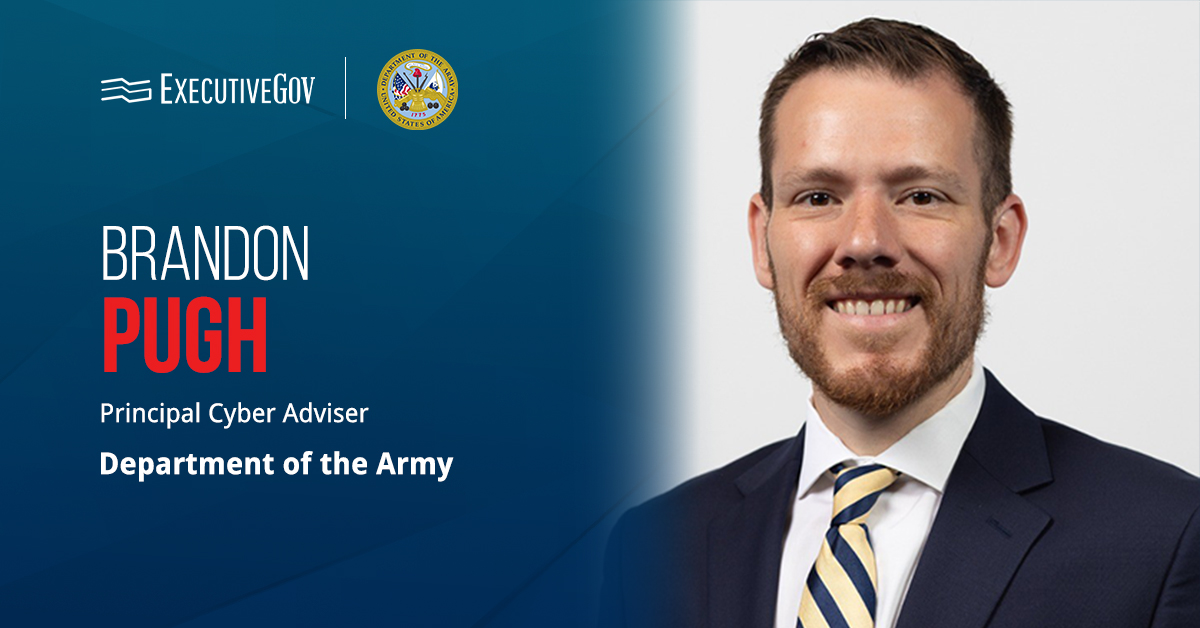
Prior to this position, Sulmeyer served as the principal cyber adviser for the U.S. Army, where he advised military leaders on all matters of cyber, such as readiness and capabilities.

Federal Civilian/News/Space
Space Commerce Office Solicits Proposals for New Commercial Pathfinder Project
by Miles Jamison
Published on September 11, 2024
Space Commerce Office Solicits Proposals for New Commercial Pathfinder Project

The Office of Space Commerce is soliciting proposals for a new commercial pathfinder project.

The OSC said Tuesday it is inviting commercial space situational awareness companies to submit proposals for a new commercial pathfinder to support the Traffic Coordination System for Space, or TraCSS, project.

The Improved O/O Ephemeris Pathfinder project is intended to evaluate the accuracy and efficiency of a satellite’s ephemeris, or its position and velocity at certain times, using data provided by satellite owners and operators. The project’s main objective is to establish the standard for ephemerides and determine the methods of achieving these benchmarks.

OSC made three orders in the Global Data Marketplace for the project. These are:

  • Generate ephemerides for satellites in low Earth orbit
  • Generate ephemerides for satellites in geostationary Earth orbit
  • Two companies to monitor data quality from the above two orders

Interested vendors may submit their proposals for the TraCSS pathfinder project until Sept. 16 at 12:00 noon EDT.

DoD/News
DLA Outlines 4 Imperatives in New Strategic Plan
by Jane Edwards
Published on September 11, 2024
DLA Outlines 4 Imperatives in New Strategic Plan

The Defense Logistics Agency has introduced a new strategic plan outlining its four transformative imperatives over the next five years: people, precision, posture and partnerships.

DLA said Tuesday the 16-page document’s people imperative has several objectives, including attracting and retaining talent, building skills and sustaining an agile and resilient workforce through training exercises.

“We have recalibrated DLA’s strategy to best support our warfighters by transforming capabilities, strengthening our partnerships and shifting to more resilient supply chain solutions, all focused on our combat support mission,” Lt. Gen. Mark Simerly, the agency’s director, said in a message at the beginning of the 2025-2030 Strategic Plan, DLA Transforms: A Call to Action.

Under the precision imperative, DLA should enhance forecasting and develop logistics strategies that enable it to tailor its approach to customers’ unique needs.

For the posture imperative, the agency will leverage infrastructure and position capabilities and material to better support combatant commands, services and allies.

Under partnerships, DLA should recognize the need to work with joint logistics enterprise members and promote logistics interoperability.

DoD/News
Air Force Reorganizing Major Commands in Anticipation of Great Power Competition
by Jerry Petersen
Published on September 11, 2024
Air Force Reorganizing Major Commands in Anticipation of Great Power Competition

The U.S. Air Force is undergoing a reorganization as part of efforts to prepare for great power competition.

The Air Force said Monday that under the reorganization, its major commands will be classified either as an institutional command or service component command.

Institutional commands will organize, train and equip airmen, and serve as enterprise integrators for capability modernization, acquisition and sustainment. Service component commands will work to prepare airmen and employ them for warfighting in the area of responsibility of a combatant command.

Examples of institutional commands include the Air Education and Training Command, the Integrated Capabilities Command, the Air Force Materiel Command and the Air Combat Command.

Examples of service component commands include Pacific Air Forces, U.S. Air Forces in Europe – U.S. Air Forces Africa, Air Force Special Operations Command and Air Mobility Command.

According to Air Force Chief of Staff Gen. David Allvin, the military service has, over the years, suffered from fragmentation that now requires a reorganization to correct.

“After some deep introspection, it has become clear that to dominate in this challenging strategic environment, we must have a force structure that is better aligned, clearly understood, and agile enough to exploit the rapid pace of change,” Allvin said.

DHS/News
Breaking Down CBP OIT’s $1.8B Budget & Priorities
by Kristen Smith
Published on September 11, 2024
Breaking Down CBP OIT’s $1.8B Budget & Priorities

The Customs and Border Protection’s Office of Information Technology is the largest IT organization within the Department of Homeland Security with a budget of $1.8 billion. OIT recently released a refreshed IT strategy to guide the agency’s goals and priorities for the next five years. Here’s a look at the six key IT efforts CBP is focusing on in the coming years.

Breaking Down CBP OIT’s $1.8B Budget & Priorities

Hear insights from multiple CBP decision makers — including OIT CTO Sunil Madhugiri — at the 2024 Homeland Security Summit, hosted by the Potomac Officers Club on Nov. 13. Don’t miss your opportunity to meet, learn from and network with the foremost homeland security experts and leaders at this day-long event. Register for the 2024 Homeland Security Summit to join the conversation.

Table of Contents

  • Mission Infrastructure
  • Mission Applications
  • Operational/Information Technology
  • Cybersecurity
  • IT/IRM Governance
  • CIO Business Operations

Mission Infrastructure

Under the first goal in CBP’s new IT strategy, the agency will “continuously provide innovative, near-real time infrastructure capabilities to ensure a secure, reliable, and scalable IT infrastructure at the speed of CBP’s mission through collaboration with application teams and our trusted partners to accelerate and optimize delivery.”

Some of the objectives under this goal include delivering cloud services, achieving enterprise network mobility and establishing a modern integrated network with edge-to-edge security.

Mission Applications

This component of the IT strategy covers building “mission-aligned applications” and software, and it notably focuses on the responsible deployment of artificial intelligence.

OIT will “support CBP’s evolution into a more data-driven organization that rapidly accelerates the operational use of AI across the entire agency, achieving real mission outcomes guided by Responsible AI Principles,” the strategy states. 

For CBP, machine learning, deep learning, generative AI, computer vision, natural language processing, are all under the AI umbrella and are part of the agency’s broader goal to achieve enterprise AI adoption.

Operational/Information Technology

CBP wants to “bring physical equipment into the digital realm” under this goal, with a major focus on the tactical edge. 

The agency aims to define the edge, develop enterprise edge infrastructure, implement edge architecture and policies and integrate with edge mission operations.

The strategy notes that CBP has been centralizing its IT capabilities into data centers and cloud environments, which has reduced costs and increased scalability. But now, with the increasing amount of data created and consumed at the edge, new challenges have emerged, and CBP is focusing heavily on solving these challenges in mission environments.

Cybersecurity

“CBP’s strategic cybersecurity goal will close the gap between increasingly sophisticated and persistent threat actors and CBP’s adoption of the right technology, people, and processes,” the strategy states. “Shifting and competing priorities make it difficult for federal agencies to maintain state-of-the-art capabilities, but without effective cybersecurity measures, CBP’s entire mission is at risk.” 

Ransomware, supply chain threats and phishing campaigns top the list of cyber threats to CBP’s systems. To combat these threats, CBP will focus on cyber hygiene, improve threat detection and response and implement a zero trust architecture, among other initiatives.

IT/IRM Governance

For CBP, this component of the IT strategy involves “getting IT right.” This goal is all about the frameworks, policies and governance behind the IT.

The agency will strive to “improve IT governance capabilities, resources and tools to maximize enterprise-wide efficiencies and enhance customer experience through disciplined performance and business intelligence.”

CIO Business Operations

In the final focus area outlined in the IT strategy, CBP OIT plans to improve the customer experience.

The agency aims to “provide OIT customers with a common, shared user experience to deliver holistic, end-to-end services by collaborating across strategy, budget, acquisition and workforce activities.”

CBP will work to improve cost and budget transparency, procurement and acquisition support, the OIT workforce experience and workforce management. 

Breaking Down CBP OIT’s $1.8B Budget & Priorities

Learn more about CBP OIT’s upcoming initiatives, contracts and IT efforts at the 2024 Homeland Security Summit on Nov. 13! Save your seat today. 

DoD/Executive Moves/News
Nora Christine Dillman Appointed Deputy Director at DOD CIO Office
by Miles Jamison
Published on September 10, 2024
Nora Christine Dillman Appointed Deputy Director at DOD CIO Office

The Department of Defense has named Nora Christine Dillman the new deputy director of the Office of the Chief Information Officer.

Dillman, who announced the move in a LinkedIn post shared Sunday, brings a wealth of experience to her new role having served in various leadership roles for different government agencies.

Before her move to the CIO office, Dillman was the associate deputy assistant administrator at the Drug Enforcement Administration. In this role, her tasks included supervising data standardization, software engineering, project management and large-scale information technology initiatives.

Dillman also served as senior product manager for multiple organizations. This included the U.S. Department of Commerce, Defense Information Systems Agency and Oddball, a service-disabled veteran-owned small business devoted to the digital modernization of federal citizen-centric services.

In addition, Dillman had stints with the Office of the Secretary of Defense, DISA Mobility Program Management Office and the Department of Treasury.

Before her government career, Dillman worked as a data applications developer at Advance Business Systems.

Artificial Intelligence/News
GAO Says Some Requirements Under Trustworthy AI EO Have Been Achieved
by Jerry Petersen
Published on September 10, 2024
GAO Says Some Requirements Under Trustworthy AI EO Have Been Achieved

Several artificial intelligence management and talent requirements called for by Executive Order 14110 have been implemented by the agencies tasked to carry them out, according to a study conducted by the Government Accountability Office that sought to assess how far along the EO’s mandates were being met.

GAO said Monday that among the agencies that have achieved this accomplishment are the Executive Office of the President, which had been tasked by the EO to organize the AI and Technology Talent Task Force and establish the White House AI Council; and the Office of Management and Budget, which had been tasked to convene the interagency Chief AI Officer council, issue AI guidance to agencies and issue instructions regarding agency AI use cases.

For the study, the GAO picked 13 requirements to evaluate. They were chosen because their accomplishment was due 150 days after the issuance of the EO, they had government-wide implications and they had clear deliverables.

The study was carried out in light of rapid developments in AI and the technology’s potential to impact the lives of citizens.

EO 14110, which concerns the safe, secure and trustworthy development and use of AI, was released in October 2023 for these same reasons.

Government Technology/News
USAF Building New Mexico Lab for Experimental Re-Entry Vehicles
by Kristen Smith
Published on September 10, 2024
USAF Building New Mexico Lab for Experimental Re-Entry Vehicles

The Air Force Research Laboratory has started building the Re-Entry Vehicle Integration Laboratory in New Mexico, where experimental re-entry vehicles and components will be assembled and disassembled.

Perikin Enterprises will construct the $8.7 million REVIL under the supervision of the U.S. Army Corps of Engineers, with the project to be completed in 14 months, AFRL said on Monday.

The facility will advance nuclear skills development by developing expertise for evaluating re-entry technology and designs, the laboratory noted, adding that the Air Force will build three more laboratories to enhance its nuclear science and technology system integration capability.

When REVIL becomes operational, it is expected to promote collaborative efforts with Department of Defense agencies, Department of Energy laboratories and industry partners.

At the site’s groundbreaking in July, Stephanie Eddy, head of the nuclear deterrence portfolio at AFRL, said REVIL is envisioned as a world-class laboratory to enable advanced research projects on re-entry vehicles.

Col. Jeremy Raley, the director of AFRL’s Space Vehicles Directorate, added that the facility will enable the development of nuclear-related components and technologies to maintain the United States’ nuclear deterrence capabilities.

For the Air Force, REVIL is an important facility for advanced nuclear research to ensure the United States’ technological advantage and safeguard its national security, AFRL explained.

Previous 1 … 301 302 303 304 305 … 2,708 Next
News Briefing
I'm Interested In:
Wash100 Vote Now
Recent Posts
  • DHA Names David Smith Deputy Director
  • Air Force Launches IT Storefront to Streamline Procurement
  • Coast Guard Issues RFI for Contractor-Operated Drone ISR Support
  • Leidos, Defense Unicorns Land Navy OTA for Software Container Prototype Testing
About

ExecutiveGov, published by Executive Mosaic, is a site dedicated to the news and headlines in the federal government. ExecutiveGov serves as a news source for the hot topics and issues facing federal government departments and agencies such as Gov 2.0, cybersecurity policy, health IT, green IT and national security. We also aim to spotlight various federal government employees and interview key government executives whose impact resonates beyond their agency.

Read More >>

RSS ExecutiveBiz
  • Evolver CEO Mike Santelli on Rebrand, Post-Quantum Risk & Mid-Tier GovCon Growth
  • Telos Xacta Suite Secures FedRAMP High Authorization
  • Everpure Names Katherine Hennessey Head of US Government Strategy
  • Former Red Hat VP Clara Conti Joins Odyssey as Director of Capture Management
  • Vantor to Expand Constellation With Vantage, Pulse Satellites
  • Booz Allen Invests in Portal Space Systems
RSS GovConWire
  • Air Force Awards $200M IDIQ for Aerospace R&D to Six Contractors
  • SAIC Names Paul Eremenko, Michael Rogers to Board
  • Navy Posts RFP for TCTS II, P6CTS Combat Training Support
  • CACI Lands $287M Army Contract to Support IPPS-A Modernization
  • Robert Smith Joins AeroVironment as Executive VP, Chief Operating Officer
  • Lentech Names Mike Majarov Chief Innovation, IT Officer to Drive AI, Cloud Growth
Executive Gov

Copyright © 2025
Executive Mosaic
All Rights Reserved

  • Executive Mosaic
  • GovCon Wire
  • ExecutiveBiz
  • GovCon Exec Magazine
  • POC
  • Home
  • Acquisition & Procurement
  • Agencies
    • DoD
    • Intelligence
    • DHS
    • Civilian
    • Space
  • Cybersecurity
  • Technology
  • Executives
    • Profiles
    • Announcements
    • Awards
  • News
  • Articles
  • About
  • Wash100
  • Contact Us
    • Advertising
    • Submit your news
    • Jobs
Go toTop