Processing....

Executive Gov

Digital News Coverage of Government Contracting and Federal Policy Landscape
Sticky Logo
  • Home
  • Acquisition & Procurement
  • Agencies
    • DoD
    • Intelligence
    • DHS
    • Civilian
    • Space
  • Cybersecurity
  • Technology
  • Executives
    • Profiles
    • Announcements
    • Awards
  • News
  • Articles
  • About
  • Wash100
  • Contact Us
    • Advertising
    • Submit your news
    • Jobs
Logo
DoD/Executive Moves/News
Eric Moore Named Army Research Lab’s Acting Director
by Jane Edwards
Published on November 19, 2025
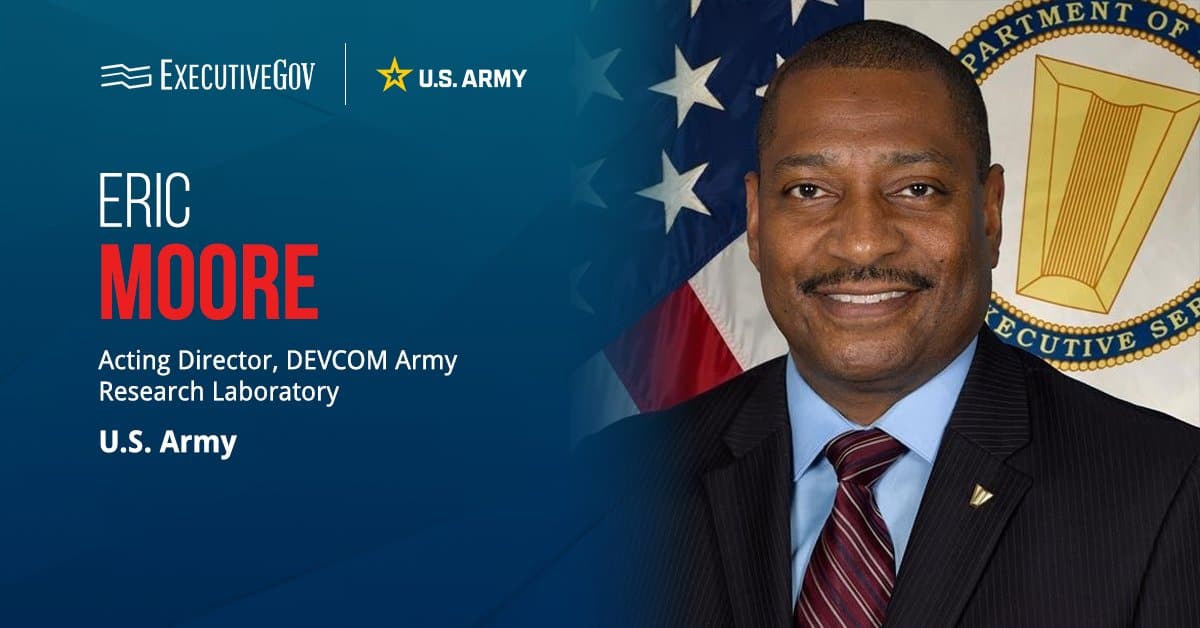
Eric Moore. As acting dir of Army Research Lab, Moore will oversee work in quantum computing, materials and biotechnology

The U.S. Army has appointed Eric Moore, a 40-year veteran of military and federal service, as acting director of the Combat Capabilities Development Command, or DEVCOM, Army Research Laboratory, or ARL.

Eric Moore Named Army Research Lab's Acting Director

Attend the Potomac Officers Club’s 2026 Army Summit on June 18 and hear top officials discuss the service’s modernization and strategic priorities. Secure your spot today!

In this capacity, Moore oversees the service’s technical experts across quantum computing, biotechnology, energy sciences, materials, human performance and other scientific areas, the Army said Tuesday.

Table of Contents

  • Who Is Eric Moore?
  • What Does DEVCOM ARL Do?

Who Is Eric Moore?

Moore previously served as deputy to the commanding general at DEVCOM headquarters, directing research, development and engineering efforts across the command. 

His career includes leadership roles at the DEVCOM Chemical Biological Center and the Defense Threat Reduction Agency.

Before his civilian service, he served in the Army as an officer. He was the Defense Intelligence Agency’s senior scientific and technical intelligence officer for chemical, biological, radiological and nuclear medical countermeasures at the Armed Forces Medical Intelligence Center.

The Fisk University biology graduate holds a doctorate in neurophysiology from Meharry Medical College.

What Does DEVCOM ARL Do?

Adelphi, Maryland-based DEVCOM ARL is the Army’s foundational research lab that bridges academia, industry and military expertise to advance science and technology advancements in support of warfighters. 

ARL operates seven locations nationwide, housing facilities and partners to accelerate research and innovation.

DoD/Government Technology/News
NIWC Pacific Leads Research on Quantum-Enhanced Fiber Optic Gyroscopes
by Jane Edwards
Published on November 19, 2025
NIWC Pacific logo. Scientists at NIWC Pacific are advancing research on quantum-enhanced fiber optic gyroscopes.

Scientists at the Naval Information Warfare Center, or NIWC, Pacific in San Diego are advancing research on quantum-enhanced fiber optic gyroscopes, or FOGs, to improve precision navigation for the U.S. Navy, DVIDS reported Monday.

NIWC Pacific Leads Research on Quantum-Enhanced Fiber Optic Gyroscopes

NIWC Pacific’s advancements in quantum-enhanced FOGs highlight the growing role of quantum technologies in defense. To dive deeper into these innovations, a panel discussion titled “Securing the Quantum Edge” will take place at the Potomac Officers Club’s 2026 Defense R&D Summit on Jan. 29. Sign up today to join the conversation and learn how quantum technologies are shaping the future of defense. 

The research team is developing techniques to reduce noise and increase photon flux, aiming to surpass the sensitivity limits of traditional FOGs. Such gyroscopes play a key role in inertial navigation, enabling vessels to determine orientation without relying on GPS. 

NIWC Pacific researchers are using entangled photon states, known as N00N states, to enhance FOG sensitivity and angular rotation precision.

“This work is particularly significant for long-duration missions in GPS-denied environments where accurate navigation is vital for warfighter safety and mission success,” said Joanna Ptasinski, head of NIWC Pacific’s cryogenic electronics and quantum research branch.

Table of Contents

  • How Do Quantum FOGs Achieve Greater Precision Than Traditional Gyroscopes?
  • How Could Quantum FOGs Improve Naval Navigation & Defense Systems?

How Do Quantum FOGs Achieve Greater Precision Than Traditional Gyroscopes?

Traditional FOGs leverage classical light to measure angular velocity, but their precision is limited by shot noise.

Meanwhile, quantum-enhanced FOGs utilize the unique properties of entangled photons to potentially achieve sub-shot noise precision.

“Our work mitigates one of the key obstacles in quantum FOGs: uncorrelated photon noise,” Ptasinski said. “By identifying optimal phase bias angles and suppressing noise sources, we’ve paved the way for more reliable and precise quantum gyroscopes.”

How Could Quantum FOGs Improve Naval Navigation & Defense Systems?

According to the report, NIWC Pacific’s work demonstrates the potential of quantum-enhanced FOGs to provide navigation solutions for surface ships, submarines and unmanned underwater vehicles operating in GPS-denied or contested environments. The technology could also play a role in missile guidance and other defense applications that require ultra-precise orientation.

“Precision navigation is not just a technological advantage; it’s a strategic necessity,” Ptasinski said. “The Navy’s investment in quantum technologies like this ensures we remain at the forefront of innovation, ready to meet the challenges of tomorrow’s battlespace.”

Government Technology/News
DLA Expanding Tech Industry Engagement Through Accelerator Team
by Elodie Collins
Published on November 19, 2025
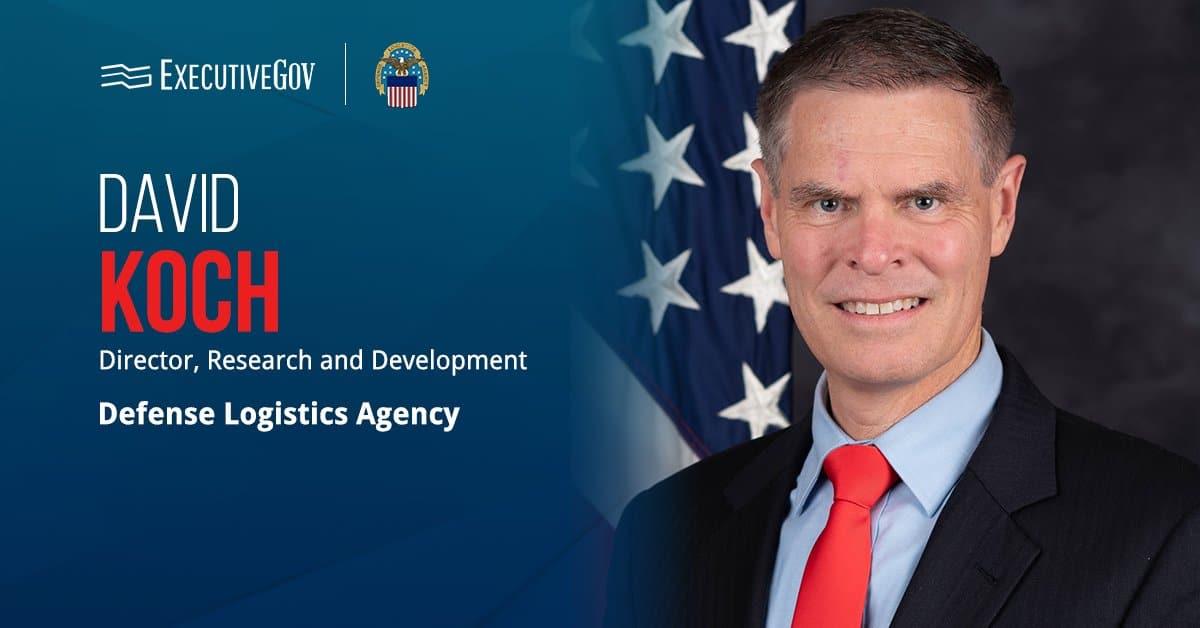
David Koch, R&D director at DLA. Koch discussed DLA's Tech Accelerator Team in a new interview

The Defense Logistics Agency is advancing efforts to attract emerging companies and streamline internal practices through its Tech Accelerator Team, Federal News Network reported Tuesday.

A panel discussion full of subject matter experts at Potomac Officers Club’s 2026 Defense R&D Summit will tackle the critical subject of bridging the technology valley of death. Register now for this essential Jan. 29 GovCon networking event!

Table of Contents

  • How Is DLA Engaging New Commercial Partners?
  • What Is Next for DLA?

How Is DLA Engaging New Commercial Partners?

In an interview, David Koch, the director of research and development at DLA, said the Tech Accelerator Team was established to identify commercial technologies from non-traditional companies to address agency challenges.

“We don’t go into a problem with a solution in mind. We go into it solution agnostic,” he explained. “What is the problem that you want to solve? Then, let’s pull in a bunch of commercial folks that have tackled similar type of problems before.”

He added that the team enters each effort without a predetermined approach and evaluates what commercial firms propose.

Koch pointed to an example involving RGBSI Aerospace and Defense, which enabled DLA to deploy digital twins and strengthen digital threads.

“You can pull in things like acquisition data, logistics data and manufacturing data, along with that thread so that you can pull in more industry partners and more people are available to make that part,” he explained. “Now, what we do is we use a computer program to go in and follow where the data flows, and it maps the process for you.”

What Is Next for DLA?

In fiscal 2025, DLA spent $135 million on research and development across logistics, manufacturing technology and its small business innovation program.

Koch shared that, for 2026, DLA will focus on four areas: strategic material recovery, additive manufacturing, artificial intelligence transformation and automated inventory management.

DLA Expanding Tech Industry Engagement Through Accelerator Team
Cybersecurity/Government Technology/News
GAO Calls on SBA’s Information Chief to Resolve High-Risk Recommendations
by Elodie Collins
Published on November 19, 2025
Government Accountability Office logo. GAO issued a report on SBA's open recommendations tied to high-risk areas.

The Government Accountability Office has called on the Small Business Administration’s Office of the Chief Information Officer to address 20 open recommendations, all of which fall under areas considered high-risk.

In a letter sent to SBA CIO Hartley Caldwell, GAO said fully implementing the recommendations would improve agency cybersecurity and enhance management of critical systems. 

GAO Calls on SBA's Information Chief to Resolve High-Risk Recommendations

Hear about the next evolution of cyber, user experience and enterprise IT from top officials at the Potomac Officers Club’s 2026 Digital Transformation Summit on April 22. Do not miss your chance to engage with GovCon industry leaders and learn from experts during panel discussions. Purchase your tickets today.  

What Issues Require CIO Attention?

GAO identified actions tied to the CIO’s responsibilities in strategic planning, investment oversight and information security. Of the 20 open recommendations, four are designated as priority items.

In one recommendation, the congressional watchdog urged SBA to fully establish a process for privacy workforce management.

GAO also reported that the agency has not yet defined how its senior privacy official will participate in assessing hiring, training and professional development needs. Without this involvement, GAO said SBA may be limited in identifying staffing gaps and strengthening its privacy workforce.

The letter also cited gaps in how SBA manages IT resources, limiting its ability to identify problems early and reduce potential impacts. The watchdog recommended that SBA develop a project risk management strategy and mitigation plan for the Unified Certification Platform.

Additional recommendations call for SBA to complete annual reviews of its portfolio and address duplication risks. GAO also noted open recommendations from the SBA Inspector General and the agency’s independent financial statement auditor, including findings related to cybersecurity requirements under the Federal Information Security Modernization Act of 2014 and deficiencies in IT controls.

GAO said it will continue coordinating with SBA as the agency works to address the outstanding recommendations

Acquisition & Procurement/DoD/Government Technology/News
Army Advances Janus Program With Microreactor Site Selection, DIU Industry Solicitation
by Miles Jamison
Published on November 19, 2025
U.S. Army logo. The U.S. Army has identified nine installations as microreactor power plant sites under its Janus Program.

The U.S. Army has identified nine installations as candidates to host microreactor power plants under its Janus Program, while the Defense Innovation Unit released an Area of Interest notice to solicit commercial technologies for advanced nuclear power.

Army Advances Janus Program With Microreactor Site Selection, DIU Industry Solicitation

Unlock the Army’s 2030 Vision. On June 18, the Potomac Officers Club’s 2026 Army Summit offers a deep dive into the programs and innovations driving the U.S. Army forward. Book your seat now!

This nuclear initiative is designed to provide secure, resilient and reliable energy for national defense installations and critical missions, aligning with the mandate of Executive Order 14299 for advanced nuclear reactor technologies, the Army said Tuesday.

Table of Contents

  • What Installations Were Selected for the Janus Program?
  • How Does the Army-DIU Partnership Help the Janus Program?

What Installations Were Selected for the Janus Program?

The Army conducted comprehensive analysis and on-site evaluations to identify optimal locations for the program. The assessment focused on mission-critical installations’ energy requirements, resilience gaps, power infrastructure, environmental factors and technical feasibility.

The nine selected sites are Fort Benning, Fort Bragg, Fort Campbell, Fort Drum, Fort Hood, Fort Wainwright, Holston Army Ammunition Plant, Joint Base Lewis-McChord and Redstone Arsenal.

How Does the Army-DIU Partnership Help the Janus Program?

The Army partnered with the DIU, utilizing its commercial solutions opening process and other transaction authority to solicit vendors for the Janus Program. DIU’s AOI notice seeks to gather industry input by collecting technical and operational feedback on the deployment of microreactors at military installations.

Federal Civilian/Government Technology/News
DOE’s Fermilab, Qblox to Produce Quantum Control Platform
by Kristen Smith
Published on November 19, 2025
DOE logo. Fermilab and Qblox have formed a partnership to produce a quantum control platform.

The Department of Energy has launched a new partnership bringing together its Fermi National Accelerator Laboratory and Qblox to manufacture and distribute a Fermilab-built control platform for American quantum research. 

The collaboration aims to transition the Quantum Instrumentation Control Kit, or QICK, from a laboratory-built tool into a domestically produced technology positioned for broader use across the U.S. quantum research ecosystem, DOE said Tuesday.

DOE's Fermilab, Qblox to Produce Quantum Control Platform

Efforts to expand America’s quantum manufacturing base reflect a broader push to accelerate next-generation defense innovation. The 2026 Defense R&D Summit on Jan. 29 will bring together the leaders driving that transformation, offering insight into the technologies and partnerships shaping tomorrow’s operational edge. Reserve your seat now.

Launched through a letter of intent, the partnership is expected to advance to a cooperative research and development agreement and a full licensing structure in the coming weeks. DOE described the arrangement as a model for future public-private efforts aimed at building out the U.S. quantum supply chain.

Table of Contents

  • What Is QICK’s Role in the Quantum Ecosystem?
  • How Will Qblox Contribute?

What Is QICK’s Role in the Quantum Ecosystem?

QICK is an open-source platform designed to coordinate quantum readouts and control functions for synchronizing quantum processors and sensors, a capability that could enable enhancements to U.S. computing, sensing and networking capabilities.

“By supporting the transition of QICK from research to production, we are laying the groundwork for scalable, interoperable quantum systems that serve national and scientific priorities,” said Dario Gil, DOE under secretary for science.

How Will Qblox Contribute?

Qblox will assume responsibility for U.S.-based manufacturing, distribution and supply chain operations. The company specializes in readout and control electronics that bridge classical and quantum systems.

“This collaboration underscores Qblox’s commitment to open-source developments and advancing the U.S. quantum ecosystem through workforce development and innovation,” said Qblox founder and CEO Niels Bultink. “Qblox is proud to facilitate this Made-in-the-USA platform to strengthen America’s quantum infrastructure, cultivate a highly skilled talent pool, and cement the nation’s position as a global leader in quantum technology.”

DOE’s Office of Technology Commercialization facilitates the QICK manufacturing and distribution initiative.

Defense And Intelligence/News
Atlantic Council Launches ReForge Commission to Boost US Defense Industry
by Miles Jamison
Published on November 19, 2025
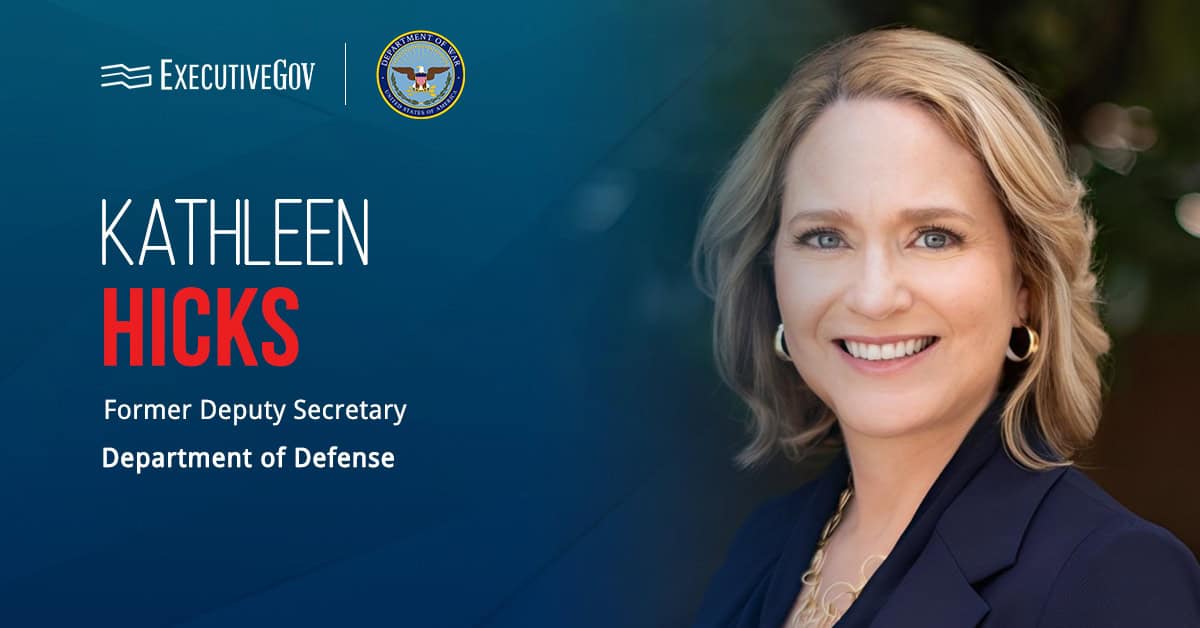
DOD Deputy Secretary Kathleen Hicks. The Atlantic Council has launched the ReForge Commission.

The Atlantic Council has launched the ReForge Commission to create a blueprint for nationwide defense industrial mobilization, aiming to revitalize the U.S. defense industrial base to meet the challenges of modern warfare.

Table of Contents

  • What Are the Goals of the ReForge Commission?
  • Who Will Lead the Atlantic Council’s Commission?
  • Who Are the Other Members of the ReForge Commission?

What Are the Goals of the ReForge Commission?

Modeled after World War II’s Freedom’s Forge, the commission will develop a roadmap to transform defense industrial capabilities and a broader industrial base to sustain production and deter prolonged conflicts. ReForge will explore mobilization for potential two-theater conflicts, investment in advanced manufacturing, critical stockpiles, digital industrial systems and incentives for private industry to prepare for sustained conflict.

Who Will Lead the Atlantic Council’s Commission?

The initiative is co-chaired by Kathleen Hicks, former deputy secretary of defense and four-time Wash100 Award winner, and William “Mac” Thornberry, former chair of the House Armed Services Committee. Stephen Rodriguez will serve as director of the commission.

Who Are the Other Members of the ReForge Commission?

The commissioners are Lael Brainard, James “Hoss” Cartwright, Walter Copan, Melissa Dalton, Alan Estevez, Frank Finelli, Michael Gilday, Paul Kwan, Steve Lyons, Nadia Schadlow and Jon Tester.

Industry commissioners include Applied Intuition’s Jason Brown, Scott Cooper of Peraton, Lockheed Martin’s Megan Dake, Alex Daly of PTC and Gecko Robotics President Troy Demmer. Also part of the commission are Booz Allen Hamilton’s Steve Escaravage, a four-time Wash100 awardee; Hank Holland of Amaero; Rob Lehman of Saronic; Primer AI CEO Sean Moriarty; Edge Case Research CEO Nathan Parker; Garrett Smith of Reveal Technology; and Vince Stametti of Blue Forge Alliance.

DoD/Executive Moves/News
Maj. Gen. John Rafferty Jr. Nominated to Lead Army Space & Missile Defense Command
by Jane Edwards
Published on November 18, 2025
Maj. Gen. John Rafferty Jr. The chief of staff of U.S. European Command has been nominated to lead USASMDC.

President Donald Trump has nominated Maj. Gen. John Rafferty Jr., chief of staff of U.S. European Command, to serve as the next commanding general of U.S. Army Space and Missile Defense Command, or USASMDC, and U.S. Army Forces Strategic Command at Redstone Arsenal in Alabama.

Maj. Gen. John Rafferty Jr. Nominated to Lead Army Space & Missile Defense Command

Explore the service’s modernization and strategic priorities at the Potomac Officers Club’s 2026 Army Summit on June 18. Hear from top officials and engage in high-value GovCon networking at this must-attend event. Reserve your seat today!

In a general officer announcement published Monday, Defense Secretary Pete Hegseth, a 2025 Wash100 awardeee, announced that Rafferty is also up for promotion to the rank of lieutenant general.

If confirmed, Rafferty will oversee USASMDC, which is responsible for developing and providing global space, missile defense and high-altitude capabilities for the Army, joint force and U.S. allies to enable multidomain combat effects, strengthen deterrence and enhance the detection of strategic attacks.

Who Is Maj. Gen. John Rafferty?

Rafferty assumed the role of chief of staff at European Command in Germany in July.

Before taking on his current assignment, he served as the commanding general of the 56th Artillery Command within the U.S. Army Europe-Africa in Germany.

His previous roles include chief of public affairs within the Office of the Secretary of the Army in Washington, D.C.; director of the Long Range Precision Fires Cross Functional Team at Fort Sill in Oklahoma; and commander of the 18th Field Artillery Brigade.

Rafferty began his Army career in 1987, enlisting as an infantryman before earning his commission as a field artillery officer.

The Longwood University graduate holds master’s degrees from King’s College London and the U.S. Army War College.

DoD/Executive Moves/News
Army Names W. Jordan Gillis Assistant Secretary for Installations, Energy, Environment
by Elodie Collins
Published on November 18, 2025
W. Jordan Gillis, assistant secretary of the Army. Gillis previously served as assistant secretary of defense for sustainment

W. Jordan Gillis has been sworn in as the assistant secretary of the Army for installations, energy and environment. He will oversee all Army installations and facilities worldwide and guide policies related to installations, energy management, environment and safety, the service said Monday.

Army Names W. Jordan Gillis Assistant Secretary for Installations, Energy, Environment

Learn about initiatives transforming the Army directly from defense leaders and industry experts at the Potomac Officers Club’s 2026 Army Summit on June 18. The 11th annual edition of the Army Summit will provide insights into how the industrial base can meet the service’s modernization needs through keynote speeches and panel discussions. Secure your spot for the highly anticipated GovCon networking event as early as today. 

Who Is W. Jordan Gillis?

Gillis served as assistant secretary of defense for sustainment during President Donald Trump’s first term. In the role, he directed over $170 billion in logistics activities and shaped sustainment, energy and real property policy for the Department of Defense.

He also previously held the positions of acting assistant secretary and principal deputy assistant secretary of the Army for installations, energy and environment.

His private sector career includes leadership roles at ScottMadden, Deloitte and UiPath. 

Gillis is a former active duty Army officer who received the Bronze Star Medal and Purple Heart for his military service.

The defense leader holds a bachelor’s degree in history and political science from Duke University and a master of business administration from Emory University.

Healthcare IT/News
OIG Offers Recommendations to Help NIH Improve All of Us Research Program’s Cybersecurity
by Jane Edwards
Published on November 18, 2025
NIH logo. The HHS OIG is calling on NIH to strengthen the cybersecurity of its All of Us Research Program.

The Department of Health and Human Services Office of Inspector General, or OIG, has issued a report calling on the National Institutes of Health to strengthen the cybersecurity of its All of Us Research Program to protect participants’ personal health data from cyber and national security threats.

OIG Offers Recommendations to Help NIH Improve All of Us Research Program’s Cybersecurity

Join top government and industry experts at the Potomac Officers Club’s 2025 Healthcare Summit on Feb. 12 (rescheduled due to the shutdown) to explore the latest in healthcare technology, citizen user experience and innovative solutions transforming federal healthcare. Secure your spot today for this premier GovCon networking event! 

In an audit report posted Friday, OIG said the All of Us Research Program aims to improve disease prevention and treatment by providing researchers access to personal health information from over 1 million volunteer participants.

An NIH award recipient oversees the Data and Research Center, or DRC, which stores the participant data.

The OIG audit found that although the DRC award recipient implemented some cybersecurity controls, NIH did not ensure that authorized users’ access to program data was limited as required by program policies.

What Are OIG’s Recommendations for NIH to Improve Cybersecurity? 

OIG issued five recommendations for NIH to improve its oversight of the program’s DRC. One of the recommendations is requiring the DRC awardee to implement controls that prevent users from accessing the system from outside the U.S. without verified approval. 

According to the report, NIH should ensure the DRC prevents the downloading of detailed participant data in accordance with the program’s data use policies.

Other recommendations in the report are that NIH formally communicate national security concerns about maintaining genomic data to All of Us award recipients; require the DRC awardee to reassess the security categorization for the DRC and DRC-RW information systems in light of national security concerns; and update the remediation timeframe in its system security plans to meet the deadlines in its award agreement with NIH.

Previous 1 … 75 76 77 78 79 … 2,719 Next
News Briefing
I'm Interested In:
Recent Posts
  • Leonel Garciga Steps Down as Army CIO
  • CAISI Signs Frontier AI Testing Agreements With 3 Companies
  • New ARPA-H Program Aims to Accelerate Biomedical Research With AI
  • Army, Defense Firms Launch ‘Right to Integrate’ Hackathon Initiative
About

ExecutiveGov, published by Executive Mosaic, is a site dedicated to the news and headlines in the federal government. ExecutiveGov serves as a news source for the hot topics and issues facing federal government departments and agencies such as Gov 2.0, cybersecurity policy, health IT, green IT and national security. We also aim to spotlight various federal government employees and interview key government executives whose impact resonates beyond their agency.

Read More >>

RSS ExecutiveBiz
  • Exiger VP Dan Kunze on the Interconnection of Emerging Technologies, Energy & Space
  • LMI’s RAPTR Platform Earns DOW Tradewinds ‘Awardable’ Status
  • Patrick Roddy Joins Sodexo as COO for Facility Management, Government Services
  • Peraton Labs Secures NSF Award for Low-Latency XR Medical Collaboration Research
  • Nokia Federal, Lockheed Martin Launch Modular 5G Capability for Defense Platforms
  • LogicMonitor, IBM, Red Hat Collaborate to Automate IT Operations
RSS GovConWire
  • Intel Taps Alex Katouzian to Lead Client Computing & Physical AI; Pushkar Ranade Named CTO
  • Anduril Books $100M Space Force Contract Modification for SDA Mesh Networking Work
  • ICE Plans Shared EHR Platform BPA Exceeding $100M
  • Leidos Reports $4.4B Q1 FY26 Revenue Driven by Strong Demand Across Key Markets
  • Sarah Campbell Named Future Technologies COO
  • SAP NS2 Appoints Retired Army Gen. Gus Perna as EVP & Strategic Customer Officer
Executive Gov

Copyright © 2025
Executive Mosaic
All Rights Reserved

  • Executive Mosaic
  • GovCon Wire
  • ExecutiveBiz
  • GovCon Exec Magazine
  • POC
  • Home
  • Acquisition & Procurement
  • Agencies
    • DoD
    • Intelligence
    • DHS
    • Civilian
    • Space
  • Cybersecurity
  • Technology
  • Executives
    • Profiles
    • Announcements
    • Awards
  • News
  • Articles
  • About
  • Wash100
  • Contact Us
    • Advertising
    • Submit your news
    • Jobs
Go toTop