Processing....

Executive Gov

Digital News Coverage of Government Contracting and Federal Policy Landscape
Sticky Logo
  • Home
  • Acquisition & Procurement
  • Agencies
    • DoD
    • Intelligence
    • DHS
    • Civilian
    • Space
  • Cybersecurity
  • Technology
  • Executives
    • Profiles
    • Announcements
    • Awards
  • News
  • Articles
  • About
  • Wash100
  • Contact Us
    • Advertising
    • Submit your news
    • Jobs
Logo
Acquisition & Procurement/News
CBP Issues Draft Solicitation for Traveler Processing & Vetting Software 2.0
by Miles Jamison
Published on September 8, 2025
CBP seal. CBP issued a draft solicitation for Traveler Processing & Vetting Software 2.0.

The Department of Homeland Security’s Customs and Border Protection agency has issued a draft solicitation to seek industry feedback for a blanket purchase agreement supporting the Traveler Processing and Vetting Software, or TPVS, 2.0.

CBP Issues Draft Solicitation for Traveler Processing & Vetting Software 2.0

Learn about the latest U.S. homeland security programs and initiatives at the Potomac Officers Club’s 2025 Homeland Security Summit on Nov. 12. Register now!

Traveler Processing and Vetting Software 2.0 Contract Scope

According to the presolicitation notice published on SAM.gov Thursday, the TPVS 2.0 contract, under the General Services Administration Multiple Award Schedule Program, will cover comprehensive lifecycle services for various CBP initiatives. Through BPA task orders, the agreement will include the Passenger Systems Program Directorate’s TPVS suite of software applications and specialized equipment. The task orders may incorporate hybrid contract types, including time-and-material and firm fixed price.

The actual solicitation is expected to be released around mid-October through the GSA’s eBuy procurement platform. CBP, particularly its IT Contracting Division, plans to award the contract during the first quarter of 2026, while the potential completion date is June 30.

In May, the CBP PSPD started seeking proposals for the TPVS 2.0 contract, which is estimated to be valued at over $100 million. The potential contractor will handle software application services, including technology, modernization and cloud migration.

Government Technology/News
Federal CIO Gregory Barbaccia to Oversee Federal Service Delivery Under GSDI Act
by Elodie Collins
Published on September 8, 2025
Federal CIO Gregory Barbaccia. Barbaccia will also oversee efforts to improve service delivery under the GSDI Act.

Gregory Barbaccia, federal chief information officer and a 2025 Wash100 Award winner, will serve as the federal government’s service delivery lead under the Government Service Delivery Improvement, or GSDI, Act.

The official confirmed his new responsibilities in a LinkedIn post Friday.

“The goal? Give the American public a 21st century experience that rivals their favorite consumer brands,” he wrote.

Gregory Barbaccia’s New Responsibilities

In January, former President Joe Biden signed into law the GSDI Act, which tasked the Office of Management and Budget to designate a federal government service delivery lead who would work with executive branch leaders and coordinate efforts to ensure that agencies meet the needs of citizens, businesses and organizations.

Barbaccia established three core principles to meet the objectives of the GSDI Act.

His first focus would be to encourage adoption of commercial, user-friendly solutions and to eliminate the government’s reliance on costly paper documents. Barbaccia said he will work with the new chief design officer, Joe Gebbia, to implement President Donald Trump’s executive order on Improving Our Nation Through Better Design.

Barbaccia will also prioritize services built around end users, not agencies.

“One set of data for the public, not a thousand repeats across 7,000+ sites,” he said. “We’ll realign accountabilities so technology becomes an integrator, not a barrier.”

Finally, the official will establish standardized metrics to measure cost to serve, return on investment, technical performance and user experience. He added that decisions will be based on data. 

Executive Moves/News
Deborah Gracio Named PNNL Director
by Jane Edwards
Published on September 5, 2025
Deborah Gracio. The 35-year PNNL veteran will be the next director of the Battelle-run national lab.

Deborah Gracio, a 35-year Pacific Northwest National Laboratory veteran, will take on the role of PNNL director in October.

Battelle said Thursday Gracio will succeed Steven Ashby, who announced his intent to step down as head of PNNL earlier this year.

Battelle operates the national lab for the Department of Energy.

“Deb is a visionary leader with deep scientific roots and a steadfast commitment to mission,” said Lou Von Thaer, president and CEO of Battelle and a 10-time Wash100 awardee. “Her insight, experience, and dedication to advancing science in service to the nation make her the ideal leader for PNNL’s future.”

Gracio, who was selected through a competitive national search, said she is honored to lead the national lab.

“Our mission has never been more urgent or more inspiring. I’m committed to fostering the collaboration, innovation, and clarity needed to help our teams deliver meaningful impact for the Department of Energy and the nation as we look to the future,” she added.

Who Is Deborah Gracio?

Gracio currently serves as PNNL’s associate laboratory director for national security, overseeing a suite of national security initiatives and leading key programs and partnerships.

Her previous roles at PNNL include chief operating officer of the National Security Directorate; director of the National Security Program Development Office; director of the Computational and Statistical Analytics Division; head of the Data-Intensive Computing Research Initiative; and project lead for the Extensible Computational Chemistry Environment.

The Washington State University electrical engineering graduate is a Fellow of the Washington State Academy of Sciences and the American Association for the Advancement of Science.

Gracio is a senior member of the Institute of Electrical and Electronics Engineers and sits on the boards of several academic, community and business organizations.

DoD/Government Technology/News
Army DEVCOM Armaments Center Partners With IQT to Address Tech Capability Gaps
by Jane Edwards
Published on September 5, 2025
Michael Santaspirt. The Army DEVCOM Armaments Center chief futures officer commented on the partnership with IQT.

The U.S. Army Combat Capabilities Development Command, or DEVCOM, Armaments Center has partnered with the CIA and In-Q-Tel to advance Army priorities and accelerate the development and deployment of military capabilities to warfighters in support of national security missions.

Army to Leverage IQT’s Tech Scouting Infrastructure

“Our relationship with IQT combines specific U.S. Army technology needs with IQT’s global technology scouting and assessment network to ensure that we deliver innovative capabilities when and where they’re required,” Michael Santaspirt, chief futures officer at Army’s DEVCOM Armaments Center, said in a statement published Thursday.

IQT is a not-for-profit strategic investor that identifies and evaluates commercial emerging technologies to deliver capabilities to government partners through its global investment platform. The organization’s portfolio companies develop software and products that could support national security missions.

“The Army will provide a comprehensive problem set of technical challenges and IQT will activate its network to find new and novel technologies that can fill capability gaps,” Santaspirt said. “IQT meets with about 1000 companies each year to find the best company founders and technologies that the Army can adopt.”

Through the partnership, Santaspirt added that the Armaments Center could benefit by broadening its Strategic Futures program scope and “gaining access to companies and technologies that would be otherwise undiscoverable.”

Intelligence/News
Western Tech Startups Urged to Guard Against Exploitation in International Pitch Competitions
by Kristen Smith
Published on September 5, 2025
Office of the Director of National Intelligence seal. US and Canada warn tech startups about international pitch risks.

The Office of the Director of National Intelligence’s National Counterintelligence and Security Center, alongside the U.S. Air Force Office of Special Investigations, the Canadian Security Intelligence Service and ODNI’s Office of Economic Security and Emerging Technology, has issued new guidance to help Western technology startups avoid exploitation at international pitch competitions. 

Western Tech Startups Urged to Guard Against Exploitation in International Pitch Competitions

The 2025 Intel Summit, hosted by the Potomac Officers Club, will bring together top leaders from across the intelligence community and industry to discuss how the U.S. can stay ahead in an era of rapid technological change and complex global threats. From AI-driven analysis and quantum advances to zero trust adoption and countering disinformation, keynote speakers and expert panels will highlight the strategies shaping the future of intelligence. Register now!

Table of Contents

  • Risks and Red Flags in International Pitch Events
  • Protective Measures Startups Should Consider

Risks and Red Flags in International Pitch Events

The bulletin warns that entities affiliated with the Chinese government or the Chinese Communist Party may use pitch competitions, often held across the United States, Canada, Australia, the United Kingdom and elsewhere, to exploit Western innovation and talent. Participants are typically lured via promises of cash awards, subsidized trips to China, market-entry support and other benefits—but at potential cost to their intellectual property, data, production processes or talent.

“International pitch competitions should be a nurturing ground for innovation, not a hunting ground for foreign threat actors and competitors to coopt Western technology and talent for their own benefit,” said James Cangialosi, NCSC acting director. “Western tech startups face significant risks when participating in international pitch competitions organized by entities affiliated with the Chinese government or the Chinese Communist Party.”

The China Overseas Talent Innovation and Entrepreneurship Competition, held by the China Association for Science and Technology, is cited as a key example. The event collected over 2,032 project pitches from 50 countries in 2024 and more than 7,400 pitches since 2016. Evidence suggests that such competitions aim to attract overseas talent and support China’s innovation and entrepreneurship goals, the guidance stated, adding that participants were asked to disclose sensitive information, including patents, business plans and personal data, and in some cases, were required to form a business in China as a condition for receiving funding. 

Protective Measures Startups Should Consider

To mitigate the risks, the bulletin urges tech startups to take the following steps before joining pitch competitions:

  • Due diligence: Research event organizers—confirm affiliations, funding sources and alignment with participant intentions. 
  • Data protection: File patents before public disclosure and use non-disclosure agreements and secure presentations to protect IP. 
  • Limit exposure: Disclose only necessary information, review agreements carefully, document all interactions and set clear boundaries. 
  • Continuous monitoring: Track any increased foreign interest following the event and be prepared to act. 
  • Engage authorities: Register travel, use government security guidance and report suspicious activity to appropriate agencies.
Federal Civilian/Government Technology/News
NSF Selects 4 Teams to Design Quantum Science Virtual Laboratory
by Elodie Collins
Published on September 5, 2025
Brian Stone, chief of staff at NSF. Stone issues statement on the National Quantum Virtual Laboratory initiative.

The National Science Foundation has selected four teams that will receive $4 million to design an infrastructure that would expand access to hardware and software to support quantum science research.

The funding was made under the Foundation National Quantum Virtual Laboratory, or NQVL, initiative, which aims to accelerate the development of useful quantum technologies, NSF said Thursday.

“The National Quantum Virtual Laboratory is a critical bridge between basic discovery and deployment, specifically focused on turning America’s leadership in fundamental quantum science into practical technologies, products, and systems that will strengthen our nation’s competitiveness and ensure U.S. dominance in this field for decades to come,” stated Brian Stone, the agency’s chief of staff and acting director.

NQVL Design Phase Projects

The task of the selected teams is to develop shareable and networked computers accessible for experimentation from any location across the United States. NSF is also seeking a digital twin of a quantum computer for researchers to test and refine quantum algorithms.

The four design projects are as follows: 

  • Quantum Advantage-Class Trapped Ions System
  • Quantum Computing Applications of Photonics
  • Wide-Area Quantum Network to Demonstrate Quantum Advantage
  • Open Stack Rydberg Atom Quantum Computing Laboratory

Each of the four teams includes members from higher education institutions, private sector organizations like NVIDIA and QuEra, and federal agencies, such as the National Institute of Standards and Technology, Department of Energy and NASA.

NSF will select a second cohort of teams to support the initiative in the coming months. 

Civilian/Cybersecurity/News
GAO Urges Action to Address Gaps in Federal Cyber Workforce Data, Initiative Assessments
by Kristen Smith
Published on September 5, 2025
Government Accountability Office logo. GAO urged ONCD to fix gaps in federal cyber workforce data.

The Government Accountability Office has called on the Office of the National Cyber Director to take urgent steps to improve the quality, completeness and evaluation of federal cyber workforce data, citing significant gaps in information on both the size and cost of civilian and contractor personnel performing IT, cybersecurity and cyber-related functions.

According to a GAO report released Thursday, most of the 23 federal civilian departments and agencies reviewed could not fully identify their cyber workforce or its total costs. Agencies reported at least 63,934 federal employees and 4,151 contractor staff in cyber roles at a combined annual cost of about $14.6 billion, but GAO said the figures were incomplete and unreliable.

The watchdog found that 22 agencies reported partial or no contractor data, 19 lacked documented quality assurance processes and 17 did not have standardized procedures for identifying cyber employees. GAO warned that without high-quality data, the government cannot ensure informed workforce decisions, noting that such data becomes especially critical during administration transitions when incoming leaders need to assess cyber readiness.

Table of Contents

  • GAO Found Agencies Lacking Effectiveness Assessments
  • GAO Recommendations

GAO Found Agencies Lacking Effectiveness Assessments

GAO also determined that while 22 agencies reported using various initiatives to strengthen their cyber workforce through hiring, reskilling, training and retention, most did not assess the effectiveness of those measures. Nine agencies evaluated certain aspects of costs, benefits and performance, and five used assessments to expand some programs, but the majority cited a lack of visibility into data needed to support such reviews.

The report noted that the ONCD’s 2023 National Cyber Workforce and Education Strategy does not require agencies to evaluate such initiatives, limiting the ability of ONCD and agencies to prioritize those with the highest return on investment.

GAO Recommendations

GAO made four recommendations for ONCD, to be implemented in coordination with the Office of Management and Budget and other relevant entities. The ONCD is encouraged to:

  • Address gaps in cyber workforce size and cost data used by agency-level chief information officers and chief human capital officers.
  • Address the lack of documented quality assurance processes in cyber workforce data.
  • Address variances in identifying cyber personnel in workforce data.
  • Direct agencies to assess the effectiveness of cyber workforce initiatives using costs, benefits, performance and other relevant metrics.

ONCD neither agreed nor disagreed with the recommendations.

GAO’s review builds on previous work in which it made 64 recommendations since 2019 to improve cyber workforce management, 32 of which remain unimplemented.

DoD/News
SECNAV Phelan Orders Reorganization of Navy’s Robotic, Autonomous Systems Leadership
by Elodie Collins
Published on September 5, 2025
Navy Secretary John Phelan. Phelan issued a memo on reforms to the Navy's robotic and autonomous systems efforts.

Navy Secretary John Phelan has announced three new positions and offices to lead the development of robotic and autonomous systems, or RAS, as part of the service’s bid to create a hybrid fleet.

In a memorandum that Breaking Defense obtained, the military leader established the deputy assistant secretary, program executive office and portfolio acquisition executive to lead all efforts related to RAS.

The new secretary and offices are expected to reach initial operating capacity in the coming months.

In addition to the new titles, Phelan has also paused all contracting activities related to RAS and tasked the Office of the Assistant Secretary of the Navy for Research, Development and Acquisition to conduct a 30-day sprint for the analysis and creation of an implementation plan.

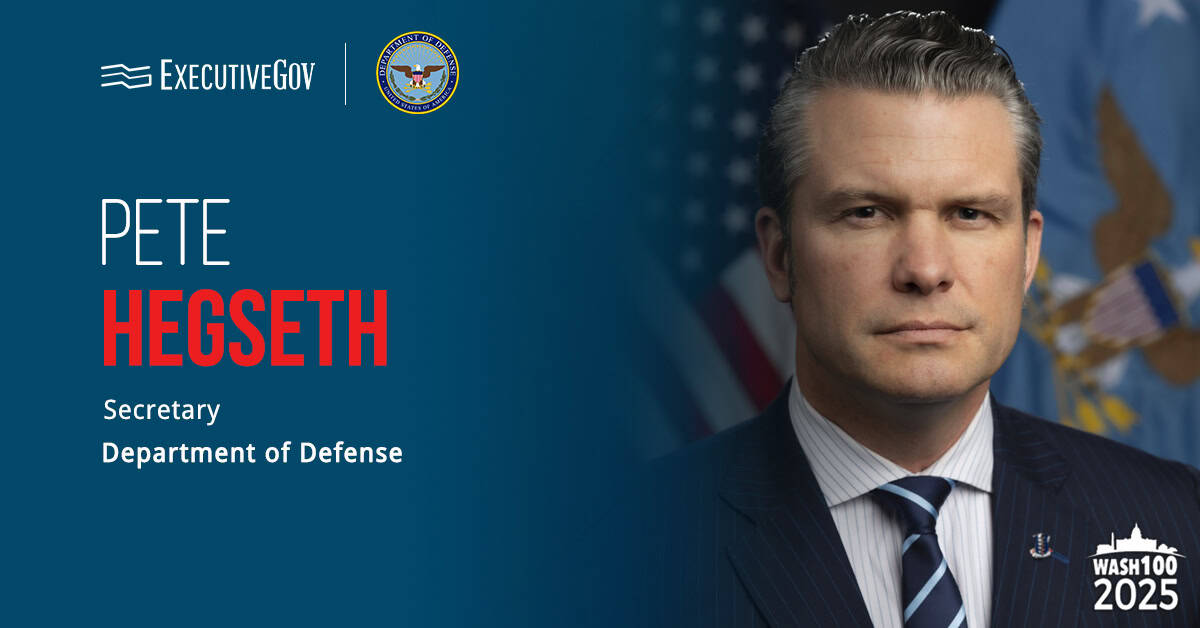
Phelan’s memorandum comes weeks after Pete Hegseth, secretary of defense and a 2025 Wash100 Award winner, issued his own memo ordering the Pentagon to equip warfighters with U.S.-made, low-cost drones.

AUVSI Supports Navy’s RAS Shakeup

The Association for Uncrewed Vehicle Systems International, or AUVSI, issued a statement applauding Phelan’s reforms.

“To stay the world’s dominant naval force, the U.S. Navy must build a hybrid fleet that pairs crewed ships with uncrewed systems,” commented Michael Robbins, president and CEO of the industry lobbying group. “Uncrewed surface and subsurface vehicles extend our reach, deliver asymmetric advantages, and keep sailors out of harm’s way—because robots don’t bleed. These systems are critical for power projection, logistics, and deterrence in contested waters. The dedicated RAS team creates the required structure and urgency needed to restore Congressional confidence and finally turn innovation into deployable capability.”

A hybrid fleet consists of crewed and uncrewed systems working together.

DoD/Government Technology/News
Air Force Unveils Network of the Future Strategy
by Jane Edwards
Published on September 4, 2025
Department of the Air Force seal. DAF unveiled the Network of the Future Strategy.

The Department of the Air Force has unveiled a new strategy outlining how the DAF will deliver a resilient and adaptive encrypted network that facilitates real-time data sharing in support of warfighters.

Table of Contents

  • DAF Network of the Future Strategy’s Objectives
  • Bolstering Network Resilience by Migrating to SD-WAN

DAF Network of the Future Strategy’s Objectives

The department’s Network of the Future Strategy has six objectives: bolster network resilience; increase operational scalability and flexibility; secure the network of the future; streamline network management; integrate the network environment; and enable the workforce of the future.

“This strategy will serve as our North Star as we address rapidly evolving threats and rising demand for seamless connectivity, empowering our warfighters with the data they need, when and where they need it most,” the DAF Chief Information Officer said in a LinkedIn post published Wednesday.

Bolstering Network Resilience by Migrating to SD-WAN

One objective is strengthening network resilience by migrating to a software-defined wide area network, or SD-WAN, for transport routing and incorporating 5G technology, satellite and other alternative transport methods to ensure the flexible movement of data in the face of high network demand.

According to the strategy, SD-WAN could help enhance network flexibility and responsiveness by making it easier to deliver secure connections to cloud and off-site data center applications. 

DAF said the integration of 5G, satellite and new transport methods will support future missions by strengthening network resilience and improving bandwidth capacity.

Executive Moves/News
Amit Kshatriya Named NASA ​Associate Administrator
by Miles Jamison
Published on September 4, 2025
NASA's Amit Kshatriya. Amit Kshatriya has been appointed associate administrator at NASA.

NASA Acting Administrator Sean Duffy has named Amit Kshatriya the agency’s new associate administrator, the highest-ranking civil service position.

The agency said Wednesday Kshatriya will oversee program planning and execution for crewed missions to the Moon through the Artemis campaign in preparation for humanity’s first mission to Mars.

Who Is Amit Kshatriya?

Kshatriya has dedicated nearly two decades of service to NASA, gaining valuable operational and strategic experience. Before his most recent promotion, he served as deputy associate administrator for the Moon to Mars program in the Exploration Systems Development Mission Directorate. In this role, he oversaw the execution of the initiative’s initial segments, including Artemis’ human lunar return and the development of foundational surface exploration elements.

The executive also served as deputy associate administrator for the Moon to Mars program, assistant deputy associate administrator for exploration systems development and deputy manager of the ISS Vehicle Office. He was also flight director, robotics operations lead, and chief training officer.

Before joining NASA, Kshatriya spent over three years at United Space Alliance. He was part of the engineering staff of the ISS mechanical and robotics systems and the computer science staff of the space shuttle avionics development.

“Under his leadership, the agency will chart a bold vision to return to the Moon during President Trump’s term. Amit’s knowledge, integrity, and unwavering commitment to pioneering a new era of exploration make him uniquely qualified to lead our agency as associate administrator,” said Duffy.

Previous 1 … 90 91 92 93 94 … 2,698 Next
News Briefing
I'm Interested In:
Wash100 Vote Now
Recent Posts
  • Pentagon DIB Cybersecurity Chief Stacy Bostjanick to Retire
  • US, Japan Announce 2nd Tranche of Investments, Unveil Defense & Tech Initiatives
  • DLA’s Adarryl Roberts Discusses AI/ML in Agency’s Digital Transformation
  • FedRAMP Seeks Input on Updated Continuous Monitoring Requirements
About

ExecutiveGov, published by Executive Mosaic, is a site dedicated to the news and headlines in the federal government. ExecutiveGov serves as a news source for the hot topics and issues facing federal government departments and agencies such as Gov 2.0, cybersecurity policy, health IT, green IT and national security. We also aim to spotlight various federal government employees and interview key government executives whose impact resonates beyond their agency.

Read More >>

RSS ExecutiveBiz
  • Seekr, GDIT Partner to Deliver Agentic AI Capabilities for Federal Missions
  • Lockheed Demonstrates 5G-Enabled NetSense Drone Detection Prototype
  • Guidehouse, IP3, Cybernetic Intelligence Form Nuclear-Enabled Compute Infrastructure Collaboration
  • GCS Geospatial Enhances NGA’s 3D Analytics Capabilities Under BIG-R Program
  • Knox Systems Raises $25M in Funding to Accelerate Federal AI, SaaS Adoption
  • LMI Unveils SHEPRD Threat Management Platform for Military Asset Protection
RSS GovConWire
  • Redhawk Announces Twenty8 Technology Acquisition
  • Neumo Names Matt Coury CEO as Paul Colangelo Moves to Board Role
  • Palo Alto Networks Taps Danielle Gonzalez to Lead Talent Strategy as Chief People Officer
  • DHS Plans $100M Databricks BPA to Support Enterprise Data Platform Expansion
  • Kratos Lands $447M Space Force OTA for MEO Missile Warning Program
  • War Dept Shifting From AI Strategic Enablement to Delivery Focus, Says CDAO
Executive Gov

Copyright © 2025
Executive Mosaic
All Rights Reserved

  • Executive Mosaic
  • GovCon Wire
  • ExecutiveBiz
  • GovCon Exec Magazine
  • POC
  • Home
  • Acquisition & Procurement
  • Agencies
    • DoD
    • Intelligence
    • DHS
    • Civilian
    • Space
  • Cybersecurity
  • Technology
  • Executives
    • Profiles
    • Announcements
    • Awards
  • News
  • Articles
  • About
  • Wash100
  • Contact Us
    • Advertising
    • Submit your news
    • Jobs
Go toTop