Processing....

Executive Gov

Digital News Coverage of Government Contracting and Federal Policy Landscape
Sticky Logo
  • Home
  • Acquisition & Procurement
  • Agencies
    • DoD
    • Intelligence
    • DHS
    • Civilian
    • Space
  • Cybersecurity
  • Technology
  • Executives
    • Profiles
    • Announcements
    • Awards
  • News
  • Articles
  • About
  • Wash100
  • Contact Us
    • Advertising
    • Submit your news
    • Jobs
Logo
Artificial Intelligence/Digital Modernization/Federal Civilian/News
GSA, CAISI Partner to Advance Federal AI Evaluation
by Kristen Smith
Published on March 19, 2026
Artificial intelligence. GSA and CAISI signed an MOU to support USAi evaluation needs.

The General Services Administration has partnered with the Center for AI Standards and Innovation to develop approaches to assessing artificial intelligence tools.

The collaboration will support the evaluation needs of USAi, a governmentwide platform designed to help agencies test and adopt generative AI technologies, the National Institute of Standards and Technology said Wednesday. 

GSA, CAISI Partner to Advance Federal AI Evaluation

The Potomac Officers Club’s 2026 Digital Transformation Summit on April 22 will examine how federal agencies are adopting and governing AI and other emerging technologies. Register now to hear leaders from government and industry share insights on building trust in AI systems, establishing evaluation frameworks and aligning innovation with mission requirements across the federal enterprise.

Table of Contents

  • What Role Will CAISI Play?
  • What Is USAi?

What Role Will CAISI Play?

Under a memorandum of understanding with GSA, CAISI will contribute measurement frameworks that allow agencies to assess how AI systems perform in operational settings, including how they handle security, reliability and mission-specific use cases.

It will also support the development of methodologies to evaluate user workflows on the USAi platform, guidelines for pre-deployment assessments and tools to help agencies measure performance after an AI system is deployed. GSA and CAISI will work on other resources that support federal AI procurement and adoption activities.

“We’re at a pivotal time in the AI revolution and this partnership between CAISI and GSA will enable federal agencies to adopt AI in ways that help the American people,” said Craig Burkhardt, acting NIST director and deputy under secretary of commerce for standards and technology.

What Is USAi?

USAi, launched in 2025, provides agencies with a shared environment to experiment with AI tools and compare capabilities. GSA said the platform supports priorities outlined in the administration’s AI Action Plan, which aims to solidify U.S. leadership in artificial intelligence by aligning federal efforts, accelerating technology adoption and optimizing digital infrastructure.

DoD/News/Space
Space Force Extends Arctic Comms Capability With EPS-R Operational Milestone
by Kristen Smith
Published on March 19, 2026
U.S. Space Force logo. USSF announced the operational acceptance of the Enhanced Polar System–Recapitalization.

The U.S. Space Force has moved its Enhanced Polar System–Recapitalization program into operational status, extending secure communications for U.S. and allied forces operating in the Arctic into the mid-2030s.

Space Force Extends Arctic Comms Capability With EPS-R Operational Milestone

Save your spot at the 2026 Air and Space Summit, hosted by the Potomac Officers Club, to hear government and industry stakeholders discuss developments affecting the air and space mission areas. Scheduled for July 30, the event will feature keynote speakers and panel sessions examining service priorities, emerging technologies and collaboration between the U.S. Air Force, the U.S. Space Force and the private sector.

Table of Contents

  • What Capabilities Does EPS-R Provide?
  • What Infrastructure Supports EPS-R?

What Capabilities Does EPS-R Provide?

EPS-R supports command and control for deployed forces and connectivity for special operations units, combatant commands, and joint operations across land, sea and air domains, Space Systems Command said Wednesday. The system enables the secure transmission of voice, data and multimedia communications, providing increased bandwidth and coverage for operations in the northern polar region compared to the initial EPS payloads.

EPS-R is intended to prevent a gap in Arctic communications as the Space Force transitions to next-generation military satellite communications platforms — the polar variants of the Evolved Strategic SATCOM architecture.

What Infrastructure Supports EPS-R?

The system consists of two extremely high-frequency payloads hosted on Space Norway’s Arctic Satellite Broadband Mission satellites, which launched in 2024 aboard a SpaceX Falcon 9 rocket from Vandenberg Space Force Base in California.

It is operated by Space Force units responsible for satellite communications and supported by a Northrop Grumman-led ground segment that manages both legacy and recapitalized systems through a common software baseline.

Artificial Intelligence/Civilian/News
Commerce Department Seeks Proposals for Full-Stack AI Export Packages
by Miles Jamison
Published on March 19, 2026
DOC seal. The Commerce Department launched a new American AI Exports Program phase and seeks proposals for exporting AI tech.

The Department of Commerce has launched a new phase of the American AI Exports Program, inviting industry-led consortia to submit proposals for exporting full-stack artificial intelligence technologies to allied nations.

Table of Contents

  • What Is Included in the Call for Proposals?
  • What Support Will Selected Participants Receive?
  • What Is the American AI Exports Program?

What Is Included in the Call for Proposals?

The department said Monday the request for proposals calls for both pre-set and on-demand industry-led consortia. Pre-set groups offer full-stack AI capabilities for ongoing global deployment and serve as standard offerings to allies, while on-demand consortia are formed to address specific opportunities with only the necessary technology stack layers needed for execution.

Industry-led consortia will have 90 days starting April 1 to submit proposals for full-stack AI export packages, including AI-optimized hardware, data center storage systems, models, cybersecurity safeguards and applications for various sectors.

What Support Will Selected Participants Receive?

Following selection, approved consortia may provide AI technologies to trusted international partners. In addition, participants could receive federal support such as priority export license reviews, access to government-backed credit programs and coordinated advocacy through interagency engagement. Further details on the program and submission requirements will be published in an upcoming Federal Register notice.

What Is the American AI Exports Program?

The American AI Exports Program is an initiative intended to expand the global reach of U.S. artificial intelligence technologies. It was launched in October 2025 under an executive order to promote U.S. AI technology exports. The program aligns with the government’s AI Action Plan, which includes more than 90 federal actions focused on accelerating innovation, expanding AI infrastructure and strengthening U.S. leadership in global AI policy and security.

DoD/News/Space
Gen. Michael Guetlein: DOW Boosts Golden Dome Cost Estimate to $185B
by Jane Edwards
Published on March 18, 2026
Michael Guetlein. The Golden Dome director said DOW has increased the missile defense shield’s cost estimate by $10 billion.

Gen. Michael Guetlein, director of the Golden Dome initiative, said the Department of War has increased the program’s cost estimate by $10 billion to $185 billion to speed up the development of space-based capabilities designed to defend the homeland from aerial threats, Breaking Defense reported Tuesday.

Gen. Michael Guetlein: DOW Boosts Golden Dome Cost Estimate to $185B

The discussion around Golden Dome’s expanding scope and space-based priorities comes as defense leaders prepare to convene at a key industry forum this summer. The 2026 Air and Space Summit on July 30 will bring together government and industry experts to explore emerging capabilities and strategic initiatives shaping the future of air and space defense. Save your spot now!

“We were asked to procure some additional space capabilities, so we are at $185 billion for the objective architecture,” Guetlein, a 2026 Wash100 awardee, said Tuesday at the McAleese Defense Programs conference.

Table of Contents

  • What Are the Other Space Capabilities Being Pursued by DOW?
  • What Is Golden Dome?
  • How Does the MDA SHIELD Vehicle Support Golden Dome?

What Are the Other Space Capabilities Being Pursued by DOW?

The Pentagon is advancing several key space-related systems as part of the Golden Dome effort, with a focus on accelerating development timelines. These include the Airborne Moving Target Indication capability, the Space Data Network and the Hypersonic Ballistic Tracking Space Sensor.

Guetlein said accelerating the development of space-based interceptors remains a challenge, noting that the issue is not the technology itself but the ability to scale it affordably.

What Is Golden Dome?

Golden Dome is a homeland defense initiative focused on building a multi-layered system to counter hypersonic, ballistic and cruise threats through advanced sensors, data networks, space capabilities and interceptors.

A U.S. government slide presentation released in August 2025 revealed that the next-generation missile defense shield will have four layers: one will be a space-based sensing and targeting layer to serve as a missile warning and tracking system, while the other three will feature ground-based radar arrays, lasers and missile interceptors.

In January 2025, President Donald Trump signed an executive order to build the Golden Dome for America, which had an initial cost estimate of $175 billion.

In May 2025, Trump selected Guetlein, then vice chief of space operations, to lead the Golden Dome project.

How Does the MDA SHIELD Vehicle Support Golden Dome?

The Missile Defense Agency has awarded companies positions on the potential 10-year, $151 billion Scalable Homeland Innovative Enterprise Layered Defense, or SHIELD, contract vehicle through several tranches. In January, 340 companies won spots on the vehicle, expanding the competitive pool to more than 2,400 awardees. 

SHIELD is designed to support a broad range of activities tied to layered homeland defense, including research and development, systems engineering, experimentation, prototyping, modernization and sustainment, with task orders incorporating artificial intelligence and machine learning-enabled applications.

Civilian/Government Technology/News
OPM Introduces HR Shared Service Center
by Jane Edwards
Published on March 18, 2026
Office of Personnel Management logo. OPM launched the HR Shared Service Center to modernize HR service delivery.

The Office of Personnel Management has unveiled the HR Shared Service Center, a governmentwide initiative aimed at modernizing human capital management and streamlining the delivery of HR services across federal agencies.

OPM Introduces HR Shared Service Center

OPM’s launch of a new HR Shared Service Center underscores the broader federal push toward modern, technology-driven operations. Hear from artificial intelligence, cyber and enterprise IT experts and be part of the conversation shaping government technology at the 2026 Digital Transformation Summit on April 22. Sign up now!

OPM said Tuesday the center aims to provide agencies with centralized, scalable HR support under a voluntary, fee-for-service model through its evolving fund authority.

“This Shared Service Center is a milestone in our effort to streamline operations, reduce duplication, and deliver high quality service across government. With the expertise and modern HR technology we have at OPM, we are well positioned to make that vision a reality,” said OPM Director Scott Kupor.

Table of Contents

  • What Services Will the HR Shared Service Center Offer?
  • How Will the OPM Implement the HR Shared Service Center?

What Services Will the HR Shared Service Center Offer?

The HR Shared Service Center will provide a full suite of operational HR services, including benefits administration, staffing, onboarding, performance management, classification and personnel action processing.

In addition, OPM will deliver strategic offerings such as workforce planning, human capital strategy, assessment services and executive development to help agencies align HR functions with mission needs.

How Will the OPM Implement the HR Shared Service Center?

OPM plans to implement the Shared Service Center over an estimated six-month timeline, beginning with a planning phase focused on assessing agency needs, defining success metrics and risks, and establishing communication protocols and funding requirements. The agency will also formalize interagency agreements to support each transition.

The implementation will continue through coordination, onboarding and migration phases, during which OPM and partner agencies will align on requirements, prepare systems and processes, and execute onboarding activities. The final phase will focus on completing migration tasks, conducting performance checks and ensuring a smooth operational handoff.

The effort aligns with the Federal HR 2.0 initiative, which was launched by OPM and the Office of Management and Budget in December. Federal HR 2.0 seeks to consolidate more than 100 outdated federal HR systems into one Core Human Capital Management platform.

Civilian/News/Policy Updates/Space
FAA Moves to Single Licensing Framework for Commercial Space Launches
by Kristen Smith
Published on March 18, 2026
FAA logo. The FAA’s Part 450 rule consolidates launch and reentry licensing into a single framework.

The Federal Aviation Administration has completed the transition to a streamlined licensing framework for commercial space launch and reentry operations, consolidating approvals under a single rule to reduce regulatory complexity for industry.

Under the updated approach, all commercial space licensing will now fall under Part 450, replacing multiple legacy regulations that previously governed launch and reentry activities, the FAA said Tuesday.

FAA Moves to Single Licensing Framework for Commercial Space Launches

The Potomac Officers Club’s 2026 Air and Space Summit, scheduled for July 30, will bring together Air Force, Space Force and industry leaders to discuss evolving priorities across the air and space domains, including regulatory developments, technology adoption and operational challenges shaping the sector. Register now to join the conversation.

Table of Contents

  • What Changes Under Part 450?
  • Which Companies Have Transitioned?
  • How Does This Fit Broader Policy Efforts?
  • Why It Matters for Commercial Space Operations

What Changes Under Part 450?

The Part 450 rule introduces a performance-based framework that provides operators with greater flexibility in meeting safety requirements while reducing administrative and cost burdens. It allows companies to operate under a single license covering multiple missions, vehicle configurations, and launch or reentry sites, eliminating the need to seek separate approvals for each variation. The rule also reduces the number of licensing actions required over time, enabling operators to scale launch activities more efficiently.

Which Companies Have Transitioned?

Several major commercial space providers transitioned their legacy licenses to Part 450 by the March 9 deadline, including Blue Origin, SpaceX, United Launch Alliance, Rocket Lab and Firefly Aerospace.

FAA said it has issued 14 licenses under the rule since it took effect in 2021.

How Does This Fit Broader Policy Efforts?

The shift aligns with broader federal efforts to streamline regulations and support growth in the commercial space sector.

A 2025 executive order directed federal agencies to accelerate licensing and environmental reviews, eliminate redundant requirements and improve coordination to support spaceport development and commercial space activity.

In 2024, the FAA took steps to refine the Part 450 rule through an industry-focused advisory committee. It also initiated efforts to modernize internal licensing processes, including exploring automation tools.

Why It Matters for Commercial Space Operations

The move to a single licensing framework reflects the FAA’s effort to adapt oversight to a growing launch market, where operators are conducting more frequent and varied missions.

By reducing regulatory fragmentation and enabling more flexible licensing, the agency aims to support a higher launch cadence while maintaining public safety standards.

DoD/News/Space
Space Force Unveils New PAE Mission Areas to Accelerate Acquisition
by Elodie Collins
Published on March 18, 2026
Air Force Secretary Troy Meink. Meink said the PAE model will empower leaders to deliver mission-critical capabilities faster

The U.S. Space Force has announced six mission areas to be overseen by portfolio acquisition executives, or PAEs. The service said Tuesday that all PAEs will report to the secretary of the Air Force through the space service acquisition executive.

Space Force Unveils New PAE Mission Areas to Accelerate Acquisition

Gain insights into acquisition reforms across the Space Force at the Potomac Officers Club’s 2026 Air and Space Summit on July 30. Space Force leaders will be present at the event to discuss evolving acquisition requirements and share opportunities for industry to collaborate with the military. Get your tickets today.

Table of Contents

  • What Mission Areas Will the New PAEs Oversee?
  • Why Is the Space Force Transitioning to Portfolio Acquisition Executives?

What Mission Areas Will the New PAEs Oversee?

The newly designated portfolios are:

  • Infrastructure
  • Battle Management, Command, Control, Communication and Space Intelligence
  • Satellite Communication and Positioning, Navigation and Timing
  • Missile Warning and Tracking
  • Space-based Sensing and Targeting
  • Space Access

Each PAE will be responsible for delivering capabilities within a defined mission area, according to the Space Force. For instance, PAE Infrastructure will focus on delivering data management, training and personnel systems, while the PAE BMC3I will provide data, networks, command and control, and space domain awareness.

“To win in the long run we must innovate faster than our adversaries,” stated Air Force Secretary Troy Meink, a 2026 Wash100 Award winner. “These next six PAEs will allow us to do just that by capitalizing on the right talent, giving them the resources they need and empowering them to deliver mission effective capability to the warfighter faster.”

Tom Ainsworth, who is performing the duties of the Air Force assistant secretary for space acquisition and integration, mentioned three other PAE mission areas that the Space Force has yet to announce. The three PAEs will cover Space Control; Electronic Warfare, Cyber Warfare and Orbital Warfare; and Integration, Breaking Defense reported.

Why Is the Space Force Transitioning to Portfolio Acquisition Executives?

Space Force’s new PAEs align with the Department of the War’s acquisition overhaul to accelerate decision-making and capability delivery. The shift to PAEs reflects the Department of the Air Force’s effort to streamline acquisition and accelerate the delivery of capabilities to warfighters. By moving away from the program executive officer model, the department aims to align authority with responsibility and enable faster decision-making across integrated mission portfolios.

The Air Force previously announced five PEOs overseeing Fighters and Advanced Aircraft; Command, Control, Communications and Battle Management; Nuclear Command, Control and Communications; Weapons; and Propulsion.

Contract Awards/DoD/News
NSRI Secures $500M Strategic Command Contract for Defense R&D Efforts
by Miles Jamison
Published on March 18, 2026
USSTRATCOM logo. The U.S. Strategic Command awarded the National Strategic Research Institute a contract for defense R&D.

The U.S. Strategic Command has awarded the National Strategic Research Institute, or NSRI, at the University of Nebraska a $500 million indefinite-delivery/indefinite-quantity contract to support defense-focused research and development efforts.

Table of Contents

  • What Does the STRATCOM IDIQ Contract Cover?
  • What Research Has NSRI Conducted?

What Does the STRATCOM IDIQ Contract Cover?

The award supports R&D activities to enhance the safety of U.S. forces and preserve the nation’s technological capabilities through rapid-response research, the University of Nebraska said Tuesday. It includes a five-year base period and a five-year option period, enabling federal agencies to issue funded task orders without lengthy procurement processes. The contract also allows NSRI to retain its designation as a University Affiliated Research Center sponsored by USSTRATCOM.

What Research Has NSRI Conducted?

NSRI has focused on strategic deterrence and countering weapons of mass destruction since 2012. Its work spans multiple domains and addresses a wide range of threats. The institute has partnered with more than 50 federal and state agencies, providing research, technology development, training, exercises and expert support, resulting in hundreds of products now used by defense operators and decision-makers.

Past initiatives include electromagnetic operations analysis, acute radiation syndrome prophylactic development, infectious aerosol risk studies and gamma radiation technology assessments. The institute has also provided chemical, biological, radiological and nuclear readiness frameworks and training exercises.

NSRI has previously received three IDIQ contracts from USSTRATCOM, including $107 million in 2020, $92 million in 2018 and $84 million in 2012.

Acquisition & Procurement/DoD/News
Navy Restructures SBIR, STTR Programs to Accelerate Technology Transition
by Kristen Smith
Published on March 18, 2026
US Navy logo. The Navy is preparing changes to SBIR and STTR programs..

The Department of the Navy is preparing changes to its Small Business Innovation Research and Small Business Technology Transfer programs to accelerate the transition of technologies from development to operational use, Federal News Network reported Monday. 

Navy Restructures SBIR, STTR Programs to Accelerate Technology Transition

The 2026 Navy Summit, hosted by the Potomac Officers Club, will bring together Navy leaders, defense officials and industry executives to discuss emerging technologies, modernization efforts and the future of naval operations. Register now.

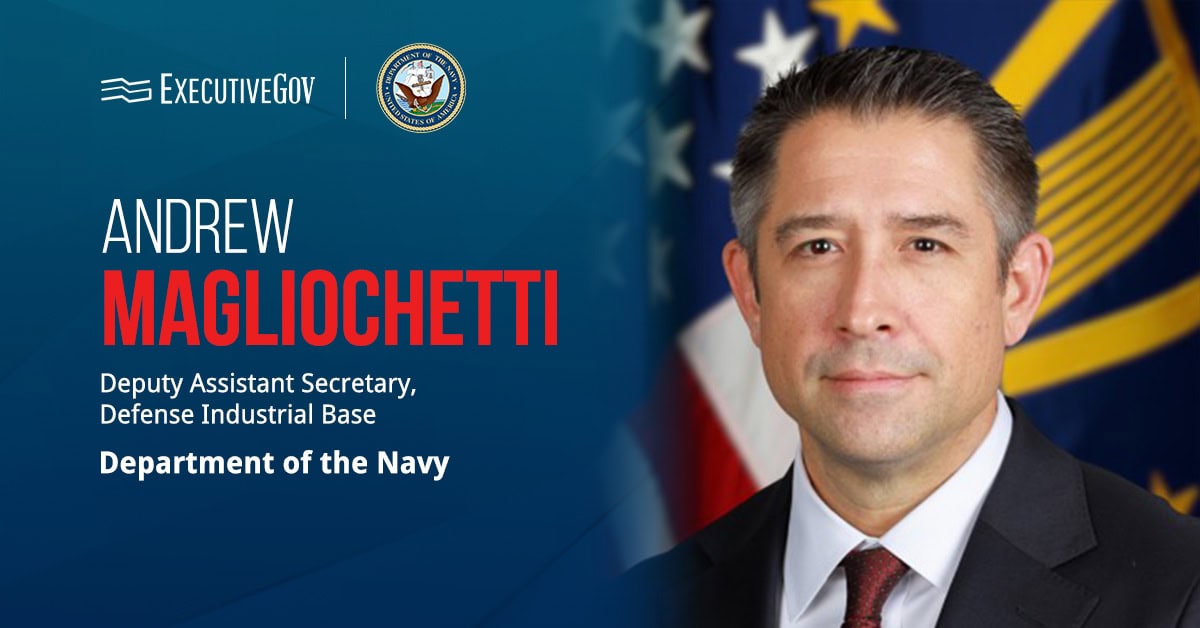
Andrew Magliochetti, the Navy’s director of small business programs, said the changes are intended to simplify execution of the programs, increase access to capital and strengthen commercialization outcomes as the service works to transition more capabilities to the fleet.

The updates are expected to align with pending SBIR/STTR reauthorization legislation, which would extend the programs through fiscal 2031 and introduce new requirements tied to proposal limits, workforce training and commercialization incentives.

Table of Contents

  • What Changes Is the Navy Planning?
  • How Does This Fit Broader Navy Innovation Efforts?
  • How Is the Navy Supporting Commercialization?

What Changes Is the Navy Planning?

Magliochetti said the Navy plans to centralize contract execution through a center of excellence, consolidating responsibilities that are currently distributed across multiple organizations.

The service is also looking to move companies through SBIR and STTR phases more efficiently and award larger amounts of capital to support technology maturation and adoption.

In parallel, the Navy is exploring ways to incorporate more private investment alongside government funding to help scale emerging technologies beyond early development.

How Does This Fit Broader Navy Innovation Efforts?

The planned changes build on ongoing efforts to reduce the gap between research and deployment, an area the Navy has been addressing through multiple initiatives.

Programs such as Naval Information Warfare Systems Command’s Catapult have accelerated the development of new capabilities and worked to bridge the so-called “valley of death” for small business innovations.

How Is the Navy Supporting Commercialization?

The Navy continues to expand programs to help small businesses transition technologies into commercial and dual-use markets.

One example is Navy Launch, which provides Phase II awardees with training, advisory support and access to private capital to develop commercialization strategies and pursue opportunities beyond traditional defense customers.

The program includes workshops on customer discovery, product-market fit and intellectual property, as well as forums that connect companies with investors and funding partners.

Acquisition & Procurement/Artificial Intelligence/Civilian/News
DOE Launches $293M Genesis Mission Funding Call for AI-Driven National Challenges
by Miles Jamison
Published on March 18, 2026
DOE Under Secretary Darío Gil. The Department of Energy has issued a request for applications under the Genesis Mission.

The Department of Energy has issued a $293 million request for application, or RFA, under the Genesis Mission, inviting interdisciplinary teams to apply artificial intelligence to a range of national science and technology challenges.

Table of Contents

  • What Areas Are Covered by the Genesis Mission Funding Opportunity?
  • How Will Awards Be Structured?

What Areas Are Covered by the Genesis Mission Funding Opportunity?

The Energy Department said Tuesday the RFA, titled “The Genesis Mission: Transforming Science and Energy with AI,” calls for proposals addressing 26 challenge areas, covering advanced manufacturing, biotechnology, critical materials, nuclear energy and quantum information science.

GovCon opportunities at the Department of Energy will be a central focus at Potomac Officers Club’s 2026 FedCiv Summit on October 29. Don’t miss this essential thought leadership hub for federal civilian contractors.

Moreover, the initiative encourages the use of emerging AI models and frameworks to tackle complex research problems tied to energy and scientific advancement. The funding opportunity is open to teams from DOE national laboratories, private industry and academic institutions.

“With these investments, we seek breakthrough ideas and novel collaborations leveraging the scientific prowess of our National Laboratories, the private sector, universities, and science philanthropies,” said Under Secretary for Science Darío Gil and Genesis Mission Director.

How Will Awards Be Structured?

Phase I awards will range from $500,000 to $750,000 for projects lasting nine months. Phase II funding will range from $6 million to $15 million over a three-year period. Applicants may apply directly to either phase during fiscal year 2026, while teams selected for Phase I can later compete for expanded Phase II awards.

The deadline for Phase I applications and Phase II letters of intent is April 28, while Phase II applications must be submitted by May 19.

DOE Launches $293M Genesis Mission Funding Call for AI-Driven National Challenges
Previous 1 … 5 6 7 8 9 … 2,703 Next
News Briefing
I'm Interested In:
Wash100 Vote Now
Recent Posts
  • Farhan Khan Named FCC CIO
  • Marine Corps Advances AI-Driven Battle Management in Dynamis Serial 005 Exercise
  • Former DHS Executive Craig Basham Appointed US Secret Service Deputy CIO
  • DOE Invests $320M in Quantum, Nuclear, Material Science Research
About

ExecutiveGov, published by Executive Mosaic, is a site dedicated to the news and headlines in the federal government. ExecutiveGov serves as a news source for the hot topics and issues facing federal government departments and agencies such as Gov 2.0, cybersecurity policy, health IT, green IT and national security. We also aim to spotlight various federal government employees and interview key government executives whose impact resonates beyond their agency.

Read More >>

RSS ExecutiveBiz
  • FedTec, AiStrike Introduce FedRAMP-Ready Platform for AI-Driven Security Operations
  • Booz Allen to Support Air Force’s AEDC Hypersonic Test Improvement Project Under $82M Contract
  • Hanwha Defense USA, Hanwha Philly Shipyard Partner With VARD on Navy NGLS Contract
  • Evolver Secures CMMC Level 2 Certification to Strengthen Federal Cyber Posture
  • Amentum Relocates Hawaii Office to Boost USINDOPACOM Mission Support
  • Radiance Technologies Appoints Paul Lithgow as Chief Growth Officer
RSS GovConWire
  • Navy Selects Nine Contractors for $1.2B Training System Contract Modifications
  • RTX BBN Books $125M USTRANSCOM Modeling, Simulation Support IDIQ
  • Leidos Closes $2.4B ENTRUST Acquisition, Doubles Energy Infrastructure Market Footprint
  • Former Lockheed Martin Exec Jeff Schrader Joins Sierra Space as Chief Strategy Officer
  • NIH Issues RFP for Potential $3B Contract for Scientific, Technical Support Services
  • CyberArk’s Rahul Dubey on Treating AI Agents as Privileged Identities
Executive Gov

Copyright © 2025
Executive Mosaic
All Rights Reserved

  • Executive Mosaic
  • GovCon Wire
  • ExecutiveBiz
  • GovCon Exec Magazine
  • POC
  • Home
  • Acquisition & Procurement
  • Agencies
    • DoD
    • Intelligence
    • DHS
    • Civilian
    • Space
  • Cybersecurity
  • Technology
  • Executives
    • Profiles
    • Announcements
    • Awards
  • News
  • Articles
  • About
  • Wash100
  • Contact Us
    • Advertising
    • Submit your news
    • Jobs
Go toTop