Processing....

Executive Gov

Digital News Coverage of Government Contracting and Federal Policy Landscape
Sticky Logo
  • Home
  • Acquisition & Procurement
  • Agencies
    • DoD
    • Intelligence
    • DHS
    • Civilian
    • Space
  • Cybersecurity
  • Technology
  • Executives
    • Profiles
    • Announcements
    • Awards
  • News
  • Articles
  • About
  • Wash100
  • Contact Us
    • Advertising
    • Submit your news
    • Jobs
Logo
Artificial Intelligence/Defense And Intelligence/Digital Modernization/DoD/News
DLA’s Adarryl Roberts Discusses AI/ML in Agency’s Digital Transformation
by Elodie Collins
Published on March 20, 2026
Adarryl Roberts, chief information officer at the Defense Logistics Agency. Roberts discussed DLA's digital transformation

The Defense Logistics Agency is integrating artificial intelligence and machine learning across its operations as part of a broader effort to strengthen supply chain resilience and accelerate digital transformation, according to Adarryl Roberts, DLA’s chief information officer, in an interview published Thursday.

Table of Contents

  • How Is DLA Integrating AI/ML Into Operations?
  • Why Is Data Acumen Critical Across the Workforce?

How Is DLA Integrating AI/ML Into Operations?

Roberts, who was a speaker at the Potomac Officers Club’s 2025 Army Summit, said AI is helping unify disparate data sources, enabling faster, more informed decisions and allowing personnel to shift their focus from data collection to mission execution.

DLA's Adarryl Roberts Discusses AI/ML in Agency's Digital Transformation

Hear defense leaders, including Department of War CIO Kirsten Davies, talk about modernization of outdated legacy systems at the 2026 Digital Transformation Summit on April 22. The event will feature panels on AI integration in federal and mission environments. Tickets are still available here.

“Effectiveness and efficiency are bringing those disparate data sources together natively through AI so that our analysts, our procurement specialists, our procurement officers, our human resources representatives and major subordinate commands can focus on mission execution as opposed to data gathering,” Roberts stated.

He also shared that DLA is exploring the concept of a “digital employee” or AI-powered assistants to augment day-to-day tasks and streamline workflows.

Why Is Data Acumen Critical Across the Workforce?

Roberts emphasized that strengthening data acumen across the workforce is a strategic priority for the agency’s digital transformation.

He explained that combining technical expertise with data acumen creates digital acumen, enabling employees to better leverage technology to support secure and resilient supply chains. The agency has introduced training programs, including online courses and academic partnerships, to build a data-literate workforce. He mentioned the agency’s Innovation Navigators Course, which was developed to provide tools to spur innovation.

“Data acumen has now become a base component to be employable in the future, in terms of how we recruit, how we train and how we upscale our workforce,” the CIO added.

DLA Director Lt. Gen. Mark Simerly also highlighted data acumen as the foundation for building tech acumen, which he described as “the competency to confidently navigate and leverage the digital landscape to achieve mission-driven outcomes.” In an article published on the DLA website, he explained that building data acumen and tech acumen better positions DLA to meet future challenges and support defense missions. 

Civilian/Cloud/News/Policy Updates
FedRAMP Seeks Input on Updated Continuous Monitoring Requirements
by Kristen Smith
Published on March 20, 2026
FedRAMP logo. FedRAMP requested feedback on proposed updates to Rev5 continuous monitoring requirements.

The Federal Risk and Authorization Management Program is requesting public feedback on proposed updates to continuous monitoring requirements for cloud service providers under its Rev5 security baselines.

The request for comments, open through April 22, focuses on clarifying expectations for how cloud service providers share continuous monitoring data — including vulnerabilities, assessment results and remediation activities — with all federal agency customers, FedRAMP said Thursday.

Table of Contents

  • What Changes Is FedRAMP Proposing?
  • Why Is FedRAMP Updating the Guidance?
  • When Would the Changes Take Effect?

What Changes Is FedRAMP Proposing?

The draft updates revise the CA-7 continuous monitoring control to standardize reporting and coordination requirements across providers with multiple agency authorizations.

Key changes include removing outdated references to the Joint Authorization Board, requiring independent assessors to flag gaps in meeting the continuous monitoring requirement as high-impact findings and outlining clearer expectations for documenting corrective actions.

The proposal also introduces a detailed blueprint to guide providers in implementing collaborative continuous monitoring.

Why Is FedRAMP Updating the Guidance?

FedRAMP said the revisions are intended to ensure agencies have consistent access to the information needed to maintain ongoing authorizations for cloud services already in use.

The update follows changes introduced under OMB Memorandum M-24-15, which shifted FedRAMP’s operating model and eliminated prior authorization pathways, necessitating alignment of existing guidance with the new framework.

When Would the Changes Take Effect?

FedRAMP plans to integrate these updates into its 2026 consolidated rules by late June. While initial adoption begins upon publication, enforcement will be phased in through the end of the year. Full compliance is expected by 2027, at which point providers failing to meet requirements will face formal remediation.

Civilian/Cybersecurity/News
DOE CESER Unveils First Strategy Plan to Strengthen Energy Sector Security
by Miles Jamison
Published on March 20, 2026
Department of Energy seal. CESER released its five-year strategic plan to protect the energy sector.

The Department of Energy’s Office of Cybersecurity, Energy Security and Emergency Response, or CESER, has released its inaugural five-year strategic plan to enhance the security and resilience of the U.S. energy sector.

DOE CESER Unveils First Strategy Plan to Strengthen Energy Sector Security

The CESER Strategic Plan highlights the significance of cybersecurity in safeguarding the nation’s critical infrastructure. Register for the Potomac Officers Club’s 2026 Cyber Summit on May 21 to learn how the government and industry can address escalating cyber threats.

Table of Contents

  • What Are CESER’s Priorities?
  • What Is CESER?

What Are CESER’s Priorities?

The Energy Department said Wednesday its priorities will center on providing industry partners with timely, actionable information to enhance their capabilities to address emerging threats and strengthen U.S. energy infrastructure.

Under the strategic plan, CESER will focus on three core goals. First, it will collaborate with utilities to develop practical, scalable security technologies. Second, it will work on hardening the energy system by implementing cybersecurity measures and physical security protocols to prevent disruptions. The DOE office will also build prototypes designed for rapid recovery from disruptions. The final objective is to oversee emergency preparedness and response efforts for natural disasters, physical threats and cyber attacks.

Alex Fitzsimmons, acting under secretary of energy and director of CESER, stated that collaborating with industry partners will allow the department to safeguard vital energy infrastructure against evolving threats and strengthen U.S. energy security. He also noted that 80 percent of the energy sector is owned or operated by the private sector, Federal News Network reported.

“A lot of those organizations are well resourced, but a lot of them are not. They might have one person working on [operational technology] or IT, not even a dedicated cyber person, but they’re expected to defend their networks against nation state threat actors,” Fitzsimmons said.

What Is CESER?

CESER is a DOE subcomponent established to ensure reliable access to energy amid emerging threats and natural and manmade emergencies. The CESER Strategic Plan aligns with the Trump administration’s national cybersecurity strategy, which emphasizes strengthening protections for critical infrastructure by protecting supply chains and reducing dependence on technology vendors deemed potential security risks.

Acquisition & Procurement/DoD/News
ONI Seeks Industry Input on AI Development for Mission-Critical Data Workflows
by Miles Jamison
Published on March 20, 2026
ONI seal. The Office of Naval Intelligence is seeking evaluation-driven AI development and delivery suppport.

The Office of Naval Intelligence, or ONI, has issued a sources sought notice for evaluation-driven artificial intelligence development and delivery support to enhance mission-critical data workflows.

ONI Seeks Industry Input on AI Development for Mission-Critical Data Workflows

The Potomac Officers Club’s 2026 Navy Summit on Aug. 27 brings together senior Navy leaders and industry executives to explore how emerging technologies, modernization efforts and strategic investments are shaping the future of naval operations. Save your seat today to be part of the conversation.

Table of Contents

  • What Is ONI Seeking From Industry?
  • What Maintenance Support Is Required?

What Is ONI Seeking From Industry?

According to a notice published Monday on SAM.gov, ONI requests information on vendors capable of delivering AI applications to support analysts’ work in national security missions.

Building on previous Small Business Innovation Research Phase III work and aligning with ONI’s objectives, the contractor will deliver the AI platform in phases, advancing model development through data collection, training and validation.

The company will establish evaluation benchmarks, develop cold-start assessment tools and expand the model to support additional mission areas and data types. The effort also includes building secure data pipelines, ensuring compliance with data standards and preparing deployment packages with full documentation, labeling guidance and onboarding support.

What Maintenance Support Is Required?

The government requires services to support the AI delivery program, including integration and evaluation of AI systems, personnel training, technical data, and repair and maintenance. The contractor will provide a detailed transition roadmap outlining maintenance, updates and post-deployment support to ensure long-term sustainment and a smooth transition into operational use.

Responses to this market survey are due by March 31.

Defense And Intelligence/News
State Department Opens Applications for Defense Trade Advisory Group
by Kristen Smith
Published on March 20, 2026
State Department logo. The State Department seeks experts to join the Defense Trade Advisory Group.

The Department of State’s Bureau of Political-Military Affairs is seeking new members for the Defense Trade Advisory Group, a committee that provides industry input on U.S. defense export policies and regulations.

The State Department said Thursday it is inviting applications from subject matter experts across the defense sector, including representatives from industry, trade associations, academia and research organizations.

DTAG, limited to 50 members, was renewed earlier in March after the agency determined it remains essential to its operations.

Table of Contents

  • What Does the Defense Trade Advisory Group Do?
  • Who Can Apply to DTAG and What Is Required?

What Does the Defense Trade Advisory Group Do?

The group serves as a formal mechanism for the State Department to engage with private sector stakeholders. Its advisory scope covers the regulatory frameworks for defense exports and transfers, including the administration of International Traffic in Arms Regulations and the Arms Export Control Act; foreign military sales policy; licensing processes; and updates to the U.S. Munitions List.

DTAG has contributed to recent efforts to streamline compliance and modernize export processes. Its recommendations have supported initiatives to reduce reporting burdens under Part 130 requirements, informed development of compliance tools such as risk assessment frameworks and program guidelines, and provided industry input on updates to the Defense Export Control and Compliance System.

With its renewal, members are expected to provide policy and technical recommendations to support U.S. national security and foreign policy objectives, while identifying ways to reduce barriers to legitimate defense exports.

Who Can Apply to DTAG and What Is Required?

DTAG membership is limited to U.S. citizens with demonstrated expertise in defense trade and relevant policy areas. Selected individuals typically serve two-year terms. Members serving as representatives are expected to reflect the views of their organizations.

Applications are due within 15 days of the notice’s publication. The assistant secretary of state for political-military affairs is responsible for appointing, renewing or terminating DTAG members.

Wash100
2026 Wash100 Popular Vote Heats Up as Leaders Mango & Gray Surge; New Contenders Frazer & Supplee Enter Rankings
by Gabriella DeCesare
Published on March 19, 2026
Wash100 Popular Vote Top 10 Leaderboard for week six. Includes Hung Cao, Rubio, Gabbard, Hegseth, Noem, Loeffler

The 2026 Wash100 Popular Vote, now underway for over six weeks,is heating up — and if this week’s shifts are any indication, we’re just getting started.

The Wash100 Popular Vote is an annual contest where the GovCon community can show their support for the most influential government and industry leaders recognized by the prestigious Wash100 Award.

Momentum is building across the board as executives climb the rankings, new contenders enter the race and competition tightens in nearly every tier, setting the stage for even bigger shake-ups in the weeks ahead. Join in on the competition — cast your vote here! 

Table of Contents

  • Who Is Shaping the 2026 Wash100 Popular Vote? 
  • Which Executives Are Making Waves? 
  • Who Are the New Entrants & Rising Voices?
  • Push Your Pick to the Top

Who Is Shaping the 2026 Wash100 Popular Vote? 

One of the most notable movers this week is Exiger CEO Brandon Daniels, who surged past the 1,000-vote mark to 1,036 votes — a massive jump that solidifies his No. 6 position and puts pressure on the top five.

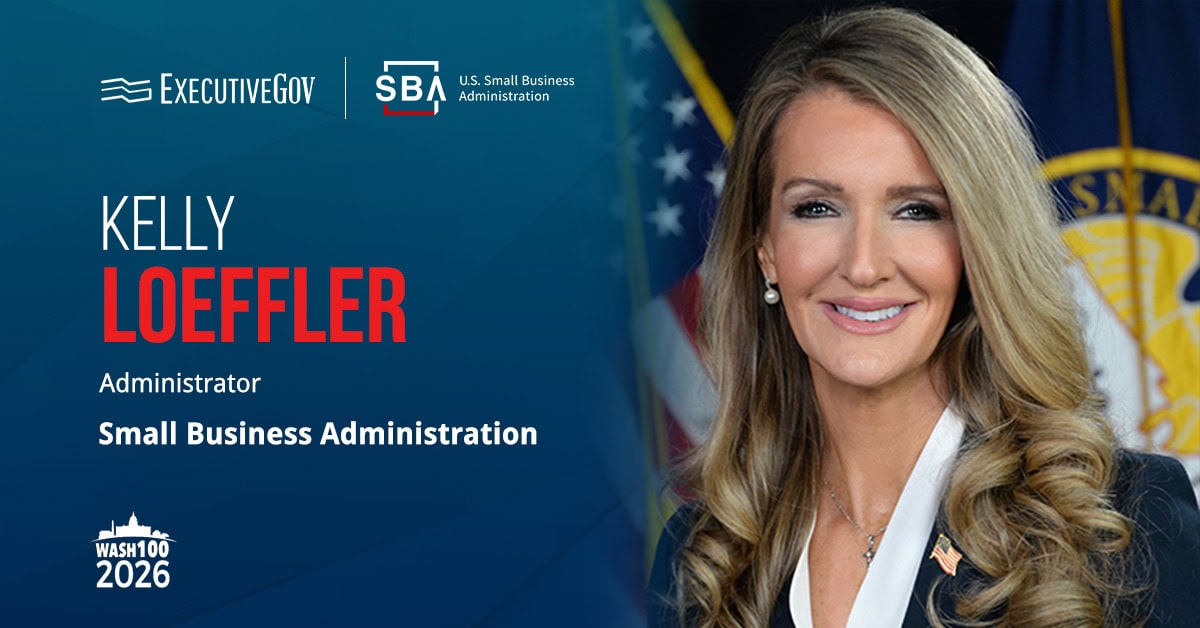
Gen. Dan Caine, chairman of the Joint Chiefs of Staff, also posted a strong increase in votes, strengthening his spot on the leaderboard, while SBA Administrator Kelly Loeffler continues her steady ascent in the dynamic top 10.

But the biggest shake-up in the top 10 comes from Gen. Michael Guetlein. After sitting outside the upper tier for much of the race, Guetlein rocketed into the top 10 with more than 100 votes this week, overtaking several contenders in a decisive move — one small step for the general, one giant step for the 2026 Wash100 Popular Vote. 

Which Executives Are Making Waves? 

The middle of the leaderboard is where competition is fiercest — and most volatile.

Aretum CEO Rohit Gupta and AT&T Executive Tang Pham remain neck-and-neck, with only a few votes separating them as they battle for the last spot in the top 10. 

The 2025 Wash100 Popular Vote winner, DeEtte Gray, president of U.S. operations at CACI, leaped into 12th, bounding ahead of several peers and advancing her bid for a second consecutive win. 

In a sign of growing momentum, Stephanie Mango, president of CGI Federal, surged in rank this week, moving up two spots to 14th place. The executive has been increasing her position every week this year, as she steadily makes her way toward the top.

Any of these leaders could take over the top 10 in the next week — make sure to cast your vote!

Who Are the New Entrants & Rising Voices?

This week brings fresh energy to the leaderboard, and the new contenders are already making moves.

Immediately gaining ground, Jake Frazer, co-founder and president of Precision Talent Solutions, debuts at No. 26, signaling he’s one to watch.

Entering right behind at No. 27, SAIC’s Barbara Supplee sailed onto the leaderboard, adding even more competition to an already crowded field.

With new names jumping into the rankings and climbing fast, the race is only getting more intense.

Push Your Pick to the Top

The Wash100 Popular Vote is far from decided.

The leaderboard is alive with movement with candidates gaining hundreds of votes week over week, new names constantly entering the race and executives surging into the spotlight.

Every vote is shifting the narrative. Which rising contender will break into the top five?

It all comes down to you

Now is the time to make your voice heard and push your pick up the leaderboard.

Cybersecurity/News
CISA Asks Organizations to Strengthen Endpoint Management Systems
by Jane Edwards
Published on March 19, 2026
Cybersecurity and Infrastructure Security Agency logo. CISA called for endpoint management system hardening.

The Cybersecurity and Infrastructure Security Agency has warned of ongoing malicious cyber activity targeting endpoint management systems and urged organizations to strengthen configurations against potential threats.

CISA Asks Organizations to Strengthen Endpoint Management Systems

The latest CISA alert underscores the growing urgency for organizations to strengthen endpoint security and defend against evolving cyberthreats. Timely discussions around cybersecurity strategies continue across government and industry. Reserve your spot at the 2026 Cyber Summit and be part of the conversation on May 21.

The alert follows a March 11 cyberattack on medical technology company Stryker that disrupted its global network and affected its Microsoft environment, CISA said Wednesday.

Table of Contents

  • What Are the Best Practices to Help Strengthen Microsoft Intune Protections?
  • What Did Acting CISA Director Nick Andersen Say About Efforts to Address the Cyberattack?

What Are the Best Practices to Help Strengthen Microsoft Intune Protections?

CISA outlined several measures organizations should adopt to reduce risk and prevent unauthorized activity, including applying least privilege principles and using Microsoft Intune’s role-based access control to limit permissions and scope of access.

Microsoft Intune is a cloud-based unified endpoint management platform designed to help IT teams manage and secure applications and devices.

The agency also urged organizations to enforce phishing-resistant multifactor authentication, strengthen privileged access controls using Microsoft Entra ID tools and require multi-admin approval for high-risk actions such as device wipes and configuration changes.

CISA also directed organizations to Microsoft and federal resources for broader guidance on securing Intune, implementing zero trust principles and strengthening identity and access management controls.

What Did Acting CISA Director Nick Andersen Say About Efforts to Address the Cyberattack?

Acting CISA Director Nick Andersen said the agency has been working directly with Stryker alongside federal partners to respond to the incident, Nextgov/FCW reported Tuesday.

“We’ve engaged with them. Our teams have worked with them, as well as some of the FBI teams, and our regional personnel have been engaged with them,” Andersen told reporters after speaking at a McCrary Institute event on Tuesday.

He did not provide additional updates but added that CISA is continuing to work with sector-based industry groups on foreign cyberthreats.

Civilian/DoD/Government Technology/News
FCC Exempts 4 Drones From Covered List After Pentagon Review
by Jane Edwards
Published on March 19, 2026
Drones. FCC has updated its Covered List to exempt four UAS after DOW determined they do not pose national security risks.

The Federal Communications Commission has updated its Covered List to exempt four uncrewed aircraft systems after the Department of War determined they do not pose national security risks.

FCC Exempts 4 Drones From Covered List After Pentagon Review

As federal agencies refine policies around trusted drones and secure airspace technologies, industry leaders are converging to discuss capabilities and strategies shaping the evolving air and space landscape. Secure your spot at the 2026 Air and Space Summit on July 30 to connect and exchange insights with government and industry leaders.

FCC said Wednesday the decision marks the first set of “Conditional Approvals” following DOW’s January determination that certain drones and components do not pose national security risks.

The commission’s Covered List is a list of communications equipment and services identified as posing potential risks to U.S. national security and the safety of individuals.

Table of Contents

  • What Are the Newly Exempted UAS?
  • What Is the DOW Determination Regarding Drones, Critical Components?

What Are the Newly Exempted UAS?

FCC removed the following systems from its Covered List:

  • Mobilicom’s SkyHopper series, including M Band, tactical data link, controllers and ICE OS3 security software
  • ScoutDI’s Scout 137 uncrewed aircraft system
  • SiFly Aviation’s Q12 UAS
  • Verge’s X1 UAS

In December, FCC added foreign-made drones and critical UAS components to its Covered List following an interagency finding of national security concerns. The designation blocked affected systems from receiving authorization for import or sale of new models in the U.S.

What Is the DOW Determination Regarding Drones, Critical Components?

In January, DOW determined that certain categories of drones and critical components do not present unacceptable national security risks through Jan. 1, 2027.

The determination applies to systems that fall into three categories: platforms on DOW’s Blue UAS Cleared List; drones and UAS components that qualify as “domestic end products” under the Buy American Standard; and UAS and drone components that receive conditional approval.

Companies seeking exemptions must submit required documentation to FCC, which forwards applications to DOW and the Department of Homeland Security for review.

Artificial Intelligence/Cybersecurity/Government Technology/Intelligence/News
ODNI Flags Expanding Missile, Cyber Threats to US in New Intelligence Community Report
by Elodie Collins
Published on March 19, 2026
Director of National Intelligence Tulsi Gabbard. Gabbard presented the 2026 Annual Threat Assessment to Senate on Wednesday

The Office of the Director of National Intelligence has warned that missile and cyber threats to the United States are accelerating, posing serious risks to the homeland.

Tulsi Gabbard, director of national intelligence and a 2026 Wash100 awardee, presented the 2026 Annual Threat Assessment to the Senate Select Committee on Intelligence on Wednesday, outlining key risks identified by the intelligence community.

ODNI Flags Expanding Missile, Cyber Threats to US in New Intelligence Community Report

Join government and industry leaders as they discuss how to combat rising cyberthreats at the Potomac Officers Club’s 2026 Cyber Summit on May 21. The event will feature panels on applying automation and AI in cyber defense and the threat that advancing quantum computing pose on sensitive data. Get your tickets today.

Table of Contents

  • How Are Missile Threats Evolving Worldwide?
  • What Are the Risks the US Is Facing in the Cyber Domain?

How Are Missile Threats Evolving Worldwide?

According to ODNI, Russia, China, North Korea and Pakistan are developing advanced missile systems capable of reaching the U.S. homeland. China and Russia, in particular, are building delivery systems that can bypass missile defenses, while North Korea has already demonstrated intercontinental ballistic missiles that can reach the U.S. Pakistan’s long-range ballistic missile program may also include ICBMs capable of striking the U.S.

Iran’s remaining missile capability will be determined as the full impact of Operation Epic Fury is assessed.

The total number of missiles threatening the U.S. could grow from more than 3,000 today to over 16,000 by 2035, according to the IC assessment.

“These nations will likely seek to understand US plans for advanced missile defense for the Homeland, probably for the purpose of shaping their own missile development programs and assessing US intentions regarding deterrence,” Gabbard told legislators.

What Are the Risks the US Is Facing in the Cyber Domain?

The report also underscores the growing intensity of cyber threats from both nation-states and nonstate actors. China and Russia remain the most persistent cyber adversaries, but Iran and North Korea continue to pose a threat.

Innovations in artificial intelligence and quantum computers are expected to further accelerate cyber operations. Gabbard noted that cyber actors used AI to carry out data-extortion operations against international government, healthcare and emergency services sectors and religious institutions in 2025. Meanwhile, quantum computing advancements could eventually enable adversaries to break current encryption methods used to protect sensitive government finance and healthcare data. 

Civilian/Government Technology/News
GAO Calls for Updates to National Quantum Strategy
by Miles Jamison
Published on March 19, 2026
GAO logo. The Government Accountability Office is urging for updates to the National Quantum Strategy.

The Government Accountability Office is urging updates to the national quantum computing strategy, citing gaps in coordination, performance tracking and agency responsibilities across federal efforts.

For an illuminating panel discussion on the security concerns of quantum and post-quantum cryptography, attend Potomac Officers Club’s 2026 Cyber Summit on May 21!

Table of Contents

  • What Are the Gaps in the National Quantum Computing Strategy?
  • What Are GAO’s Recommendations?
  • Why Did GAO Do the Review?

What Are the Gaps in the National Quantum Computing Strategy?

According to the GAO report published Wednesday, the current strategic plan developed by the Subcommittee on Quantum Information Science, or SCQIS, under the National Quantum Initiative Act, does not fully meet the criteria for an effective national strategy.

While it defines purpose and risks, it lacks performance measures to assess progress and does not outline the required resource levels, including infrastructure needs. Planning documents also do not clearly assign roles to participating agencies or integrate their individual implementation plans.

What Are GAO’s Recommendations?

GAO advised the Office of Science and Technology Policy, one of four SCQIS co-chairs, to augment the strategy to fully address the desirable characteristics of a national plan, noting that such updates could strengthen interagency planning and coordination while enabling more efficient use of federal resources, accelerating technology deployment and enhancing oversight of quantum computing initiatives.

Why Did GAO Do the Review?

Quantum computing is among the emerging technologies the government prioritizes, with the potential to transform simulation and optimization and unlock new frontiers in scientific discovery. It could help address complex challenges, such as drug development and sustainable energy, while driving economic growth and solving problems beyond the reach of today’s computers.

The study was conducted to assess how the government is organizing and managing its quantum computing efforts, as well as how it is developing a skilled workforce to support quantum research and development.

GAO Calls for Updates to National Quantum Strategy
Previous 1 … 4 5 6 7 8 … 2,703 Next
News Briefing
I'm Interested In:
Wash100 Vote Now
Recent Posts
  • Farhan Khan Named FCC CIO
  • Marine Corps Advances AI-Driven Battle Management in Dynamis Serial 005 Exercise
  • Former DHS Executive Craig Basham Appointed US Secret Service Deputy CIO
  • DOE Invests $320M in Quantum, Nuclear, Material Science Research
About

ExecutiveGov, published by Executive Mosaic, is a site dedicated to the news and headlines in the federal government. ExecutiveGov serves as a news source for the hot topics and issues facing federal government departments and agencies such as Gov 2.0, cybersecurity policy, health IT, green IT and national security. We also aim to spotlight various federal government employees and interview key government executives whose impact resonates beyond their agency.

Read More >>

RSS ExecutiveBiz
  • FedTec, AiStrike Introduce FedRAMP-Ready Platform for AI-Driven Security Operations
  • Booz Allen to Support Air Force’s AEDC Hypersonic Test Improvement Project Under $82M Contract
  • Hanwha Defense USA, Hanwha Philly Shipyard Partner With VARD on Navy NGLS Contract
  • Evolver Secures CMMC Level 2 Certification to Strengthen Federal Cyber Posture
  • Amentum Relocates Hawaii Office to Boost USINDOPACOM Mission Support
  • Radiance Technologies Appoints Paul Lithgow as Chief Growth Officer
RSS GovConWire
  • Navy Selects Nine Contractors for $1.2B Training System Contract Modifications
  • RTX BBN Books $125M USTRANSCOM Modeling, Simulation Support IDIQ
  • Leidos Closes $2.4B ENTRUST Acquisition, Doubles Energy Infrastructure Market Footprint
  • Former Lockheed Martin Exec Jeff Schrader Joins Sierra Space as Chief Strategy Officer
  • NIH Issues RFP for Potential $3B Contract for Scientific, Technical Support Services
  • CyberArk’s Rahul Dubey on Treating AI Agents as Privileged Identities
Executive Gov

Copyright © 2025
Executive Mosaic
All Rights Reserved

  • Executive Mosaic
  • GovCon Wire
  • ExecutiveBiz
  • GovCon Exec Magazine
  • POC
  • Home
  • Acquisition & Procurement
  • Agencies
    • DoD
    • Intelligence
    • DHS
    • Civilian
    • Space
  • Cybersecurity
  • Technology
  • Executives
    • Profiles
    • Announcements
    • Awards
  • News
  • Articles
  • About
  • Wash100
  • Contact Us
    • Advertising
    • Submit your news
    • Jobs
Go toTop