- Air Forces Cyber shared a new strategy to keep up with changing speed of cyberattacks
- AFC Commander Lt. Gen. Thomas Hensley warned that artificial intelligence is shortening attack timelines
- The command’s defense strategy centers on four priorities including modernizing security architectures
Advanced artificial intelligence is fundamentally changing the speed and accessibility of cyberattacks, pushing the command to accelerate its own defensive posture in response, U.S. Air Force officials said.
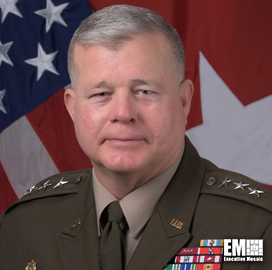
Speaking at a conference in Montgomery, Alabama on August 26 (and reported by USAF public affairs on Thursday), Lt. Gen. Thomas Hensley, commander of 16th Air Force (Air Forces Cyber), said that frontier AI systems can now independently carry out steps that once demanded extensive human expertise and time, collapsing processes that used to take months into a matter of seconds.
What Did Air Force Officials Say About AI’s Impact on Cyberthreats?
Hensley said that frontier AI uses the “Find, Fix, Track, Target, Engage, and Assess” to give non-state actors access to advanced hacking capabilities.
“Where reconnaissance and exploit development once required months or years of dedicated intelligence work and high-level coding, autonomous agentic AI models now compress those actions into minutes and seconds. We must field defenses that move just as fast,” he explained.
Hensley’s remarks echoed a broader theme raised by Gen. Adrian Spain, commander of Air Combat Command, who used his keynote address to describe cyberspace as increasingly the opening battleground of modern conflict. Spain pointed to rapid technological change and shrinking barriers to entry as forces reshaping how the U.S. military must think about competition and readiness in the digital domain.
What Is the 16th Air Force’s Strategy to Respond to Frontier AI?
To keep pace, 16th Air Force is pursuing a defensive strategy built around four core priorities: continuous, round-the-clock monitoring and hardening of military networks and systems; concentrating protective resources on the most critical infrastructure and networks; taking proactive steps to disrupt and limit adversaries’ ability to maneuver inside U.S. networks; and rolling out modern security architectures — including zero-trust principles, layered identity verification and network segmentation — across the force.
The command is also leaning on partnerships with allied militaries, industry, academic institutions and federal agencies to share threat intelligence and strengthen collective defenses.