- CMS has begun focusing on artificial intelligence adoption outcomes
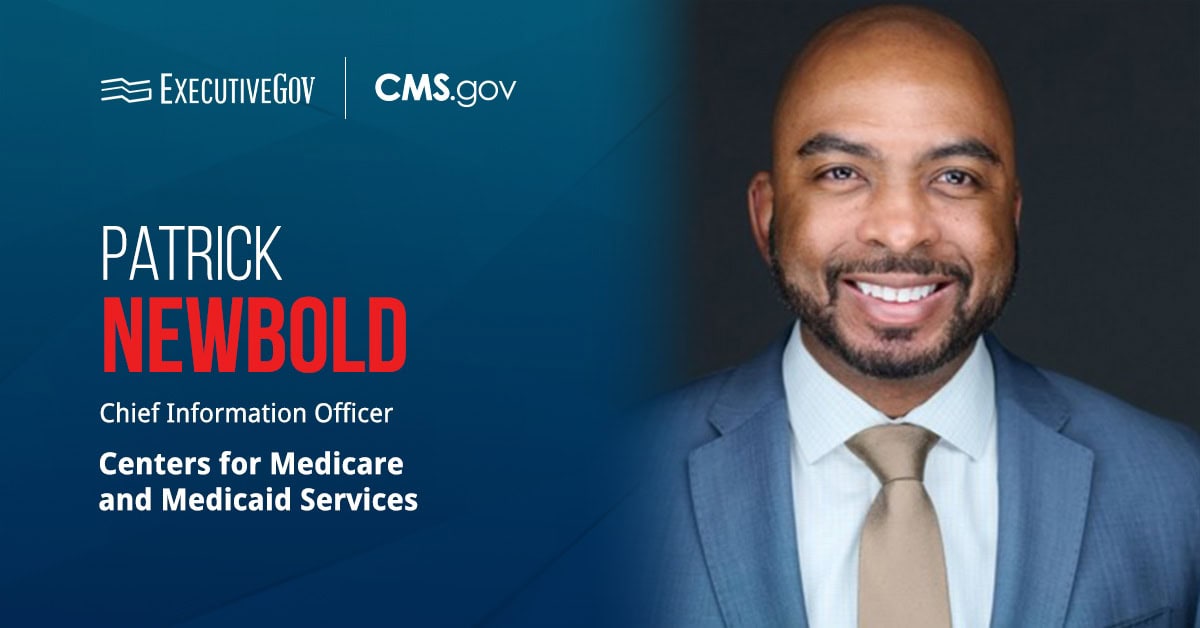
- CMS Chief Information Officer Patrick Newbold discussed how they are shifting away from AI usage metrics
- AI adoption is one of the highlighted topics at the 2026 FedCiv Summit on October 29
As the Centers for Medicare and Medicaid Services continues to expand its artificial intelligence footprint, the agency’s focus has moved beyond simply counting how many employees are using AI tools to measuring what those technologies actually accomplish, FedScoop reported Wednesday.
During a panel discussion at a conference in Bethesda, Maryland, CMS Chief Information Officer Patrick Newbold described the shift as reversing the typical order of priorities: rather than starting conversations with AI itself, the agency now starts with the outcomes it wants to achieve, and views AI as one possible avenue for reaching them.

AI adoption is one of the main priorities of federal civilian agencies. At the 2026 FedCiv Summit on October 29, government and industry will come together to exchange ideas on AI implementation and other important programs. Be an attendee and expand your network in the federal civilian sector.
How Extensive Is AI Adoption at CMS?
CMS has previously reported that approximately 80 percent of its workforce interacts with AI tools in some capacity, a figure that includes usage of its internal AI assistant, CMS Chat. The agency’s AI portfolio also encompasses more than 70 use cases documented in the Department of Health and Human Services’ 2025 AI use case inventory, alongside department-wide generative AI tools made available through discounted contracts under the General Services Administration’s OneGov initiative.
Despite these adoption figures, Newbold noted that usage statistics alone fail to capture whether the technology is genuinely benefiting the populations CMS serves. He added that usage data still holds value as a metric, but it no longer serves as the agency’s central measure of success.
What Is CMS Doing to Measure AI Adoption Outcomes?
To address this gap, Newbold pointed to an internal initiative called Tech Pulse, which the agency uses to track technology-related outcomes. Launched roughly 20 months ago and inspired by a comparable effort at the Social Security Administration, Tech Pulse functions as a performance management forum. Newbold explained that the forum gave CMS a structured way to monitor and advance key IT-related goals and objectives.
Because the forum centers on outcomes rather than outputs, it relies on objectives and key results as its measurement framework. Newbold cited the agency’s push toward a multi-cloud environment by the close of the current fiscal year as one example of a tracked goal. Under this framework, specific tools and technical capabilities are treated as means to an end rather than the end itself.
CMS’ evolving approach unfolds against a backdrop of broader uncertainty in federal AI procurement. The heavily discounted agreements GSA negotiated for AI systems under OneGov are anticipated to expire in the near future, raising unresolved questions about future costs for federal agencies.
Asked whether CMS monitors token consumption or otherwise manages usage to control spending, Newbold acknowledged that while the agency has governance structures in place, he holds some reservations about the road ahead. He pointed to a lack of clarity from AI model developers regarding long-term pricing, noting that CMS benefited from OneGov’s discounted rates but recognizes those arrangements won’t last indefinitely.
Given this uncertainty, Newbold said CMS must maintain strong governance practices to ensure clear visibility into how AI is used and to keep spending from escalating unpredictably. He expressed confidence that the agency currently has the infrastructure needed to manage that oversight effectively.