The U.S. military’s overnight operation to capture Venezuelan President Nicolás Maduro offered a rare, real-world look at how advanced defense technologies are shaping modern military operations.
Known as Operation Absolute Resolve, the Jan. 3 mission combined airpower, intelligence, cyber effects, electronic warfare and space-based capabilities to execute a high-risk raid deep inside contested airspace, according to senior Pentagon officials. More than 150 aircraft and drones launched from dozens of locations across the Western Hemisphere, enabling U.S. forces to apprehend Maduro and exfiltrate without losing personnel or aircraft, DefenseScoop reported.

The operation’s reliance on non-kinetic effects, stealth ISR and spectrum dominance mirrors many of the themes set to be discussed later this month at the 2026 Defense R&D Summit, hosted by Potomac Officers Club on Jan. 29, where defense leaders like Under Secretary of War for Research and Engineering Emil Michael and industry executives will examine how emerging technologies are moving from concept to combat relevance. Save your spot now!
What Technology Was Used in Operation Absolute Resolve?
Operation Absolute Resolve relied on a tightly integrated stack of air, space, cyber, intelligence and electronic warfare technologies rather than a single platform or weapon system.
Chairman of the Joint Chiefs of Staff Gen. Dan Caine said the mission was months in the making and involved coordination across the Department of War, the intelligence community and law enforcement agencies. The force included bombers, fighters, ISR aircraft, rotary-wing platforms and remotely piloted drones, all operating under a unified command-and-control architecture.
That level of integration reflects how modern military operations increasingly depend on data, connectivity and synchronized effects to reduce risk and preserve surprise.
How Did the US Military Disable Venezuelan Defenses During the Maduro Raid?
US forces suppressed Venezuelan defenses by layering space, cyber and electromagnetic effects ahead of kinetic actions, creating what Caine described as a “pathway overhead” for the inbound force.
As U.S aircraft approached Venezuela, the military “began layering different effects provided by U.S. Space Command, U.S. Cyber Command and other members of the interagency,” Caine said during a press briefing. Those non-kinetic effects were followed by targeted kinetic actions to ensure the safe passage of helicopters into Caracas.
This approach reflects a growing emphasis on shaping the operational environment before physical engagement, a concept often described as left-of-launch and a central focus of the Defense R&D Summit panel on Non-Kinetic Considerations for Left of Launch Defeat.
Why Did the US Use More Than 150 Aircraft and Drones to Capture Maduro?
The sheer scale of the operation underscores how complex modern raids have become, particularly when conducted in defended airspace and under intense time constraints.
More than 150 aircraft launched from 20 different bases across the Western Hemisphere, including assets from the Air Force, Navy, Marine Corps and Air National Guard, Caine said, Breaking Defense reported. The force included F-22s, F-35s, F/A-18s, EA-18Gs, B-1 bombers, E-2 command-and-control aircraft and numerous drones.
“Failure of one component of this well-oiled machine would have endangered the entire mission,” Caine said, highlighting the precision required to synchronize such a large joint force.
What Role Did Drones and ISR Play in Tracking Nicolás Maduro?
Intelligence, surveillance and reconnaissance capabilities were essential to building a detailed picture of Maduro’s movements, habits and security posture ahead of the operation.
Caine said months of intelligence collection allowed planners to understand where Maduro lived, how he moved and when he would be most vulnerable. That intelligence picture was continuously updated during the raid, with air and ground ISR assets providing real-time information to the assault force.
Such persistent ISR is increasingly seen as foundational to modern military success, particularly for high-value target operations in urban environments.
Why Is the RQ-170 Sentinel Important for Stealth Surveillance Missions?
Stealth ISR platforms like the RQ-170 Sentinel are uniquely suited for operating over heavily defended capitals such as Caracas.
While the Pentagon has not officially confirmed the RQ-170’s role, the aircraft was spotted returning to Puerto Rico shortly after the operation, Air & Space Forces Magazine reported. Experts said its low observable design makes it far more survivable than conventional ISR platforms in environments protected by Russian-made S-300 air defense systems.
“You cannot park an MQ-9 over the capital of Venezuela and expect that thing to survive,” retired Brig. Gen. Houston Cantwell commented. “But an RQ-170 has a much better potential to be able to surveil when there is an integrated air defense system.”
The platform’s ability to complement satellite ISR by filling coverage gaps and providing unpredictable revisit rates highlights why stealth ISR remains a critical investment area for the U.S. military.
How Did Electronic Warfare Help US Forces Enter Caracas?
Electronic warfare capabilities likely played a central role in degrading Venezuelan radars and communications during the operation.
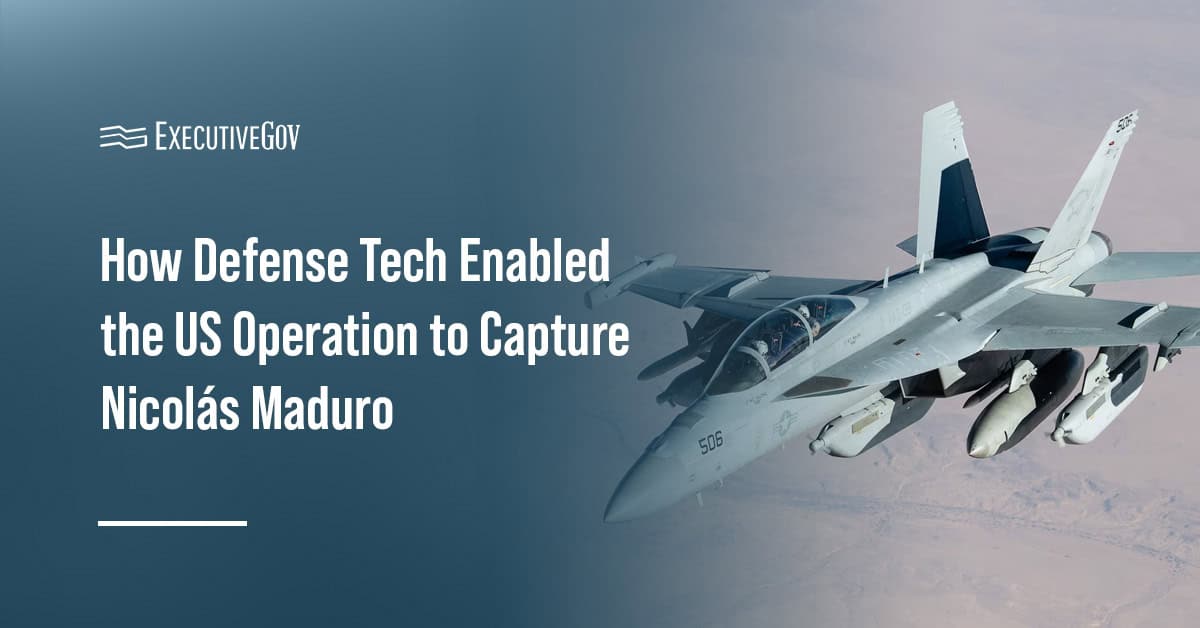
Among the aircraft involved were EA-18G Growlers, the Navy’s primary electronic attack platform, The Wall Street Journal reported. The Growler is designed to locate, jam and suppress enemy radar and communications systems, creating openings for strike and mobility assets.
“The Growler forms the mainstay of U.S. air power’s EW component,” electronic warfare expert Thomas Withington told the Journal, noting that the aircraft would have been well suited to counter Venezuela’s aging air defenses.
The operation reflects a broader resurgence of electronic warfare as a core element of military operations, driven in part by lessons from the war in Ukraine.
Did Cyber Operations Cause the Power Outages in Caracas?
Widespread power outages reported across Caracas during the raid prompted questions about whether cyber operations played a role in disrupting Venezuela’s electrical grid.
President Donald Trump suggested American “expertise” contributed to the blackout, while Caine confirmed that Cyber Command effects were layered into the operation without providing technical details.
Chuck Brooks, president of Brooks Consulting International and an Executive Mosaic GovCon Expert, said the blackout underscores how cyber capabilities could increasingly be used alongside kinetic force.
“Energy infrastructure is at the heart of a country’s operations,” Brooks wrote in an expert contribution shared with Executive Mosaic. “When it fails, communications falter, water systems degrade, hospitals rely on backups and national morale plummets.”
Brooks noted that industrial control systems and SCADA networks were not designed for hostile cyber environments, making them theoretically vulnerable to disruption that is precise, reversible and less visible than physical strikes.
What Does Operation Absolute Resolve Show About the Future of Non-Kinetic Warfare?
The mission highlights how cyber, electronic warfare and space-based effects are becoming as decisive as traditional firepower in modern conflict.
Rather than destroying infrastructure outright, non-kinetic tools can blind, confuse or delay an adversary long enough to achieve mission objectives. Brooks said that blending cyber with electromagnetic and space effects reflects exactly the type of hybrid strategy military planners have been discussing for years.
If such capabilities were employed during Operation Absolute Resolve, it would signal a continued shift toward integrating offensive cyber operations into conventional force projection.
Why Does the Maduro Operation Matter for Defense R&D and Acquisition Leaders?
Operation Absolute Resolve serves as a live case study in how advanced technologies move from development to operational impact, a persistent challenge often described as crossing the “valley of death.”
Capabilities such as stealth ISR, electronic warfare and cyber effects have existed for years, but the Maduro raid demonstrated how they can be fused into a single operational architecture. That transition from innovation to execution will be a central topic at the 2026 Defense R&D Summit on Jan. 29.
Keynote speakers include Hon. Emil Michael, under secretary of defense for research and engineering, and Hon. Michael Duffey, under secretary of defense for acquisition and sustainment. Together, their portfolios span the full lifecycle of defense innovation, from early research to scaled deployment. Make sure your GovCon company is represented at this pivotal networking event.
For defense leaders and industry partners, Operation Absolute Resolve underscores why investments in non-kinetic capabilities, ISR dominance and multi-domain integration are no longer optional but foundational to future military success.