
- IonQ and Sandia National Laboratories will collaborate on research into quantum system co-design and mission-focused applications
- The partnership will focus on system optimization, device development, testing and characterization of quantum technologies
- The collaboration builds on a long-standing relationship that dates back to Sandia’s fabrication of ion traps used in IonQ’s earliest quantum computers
IonQ has partnered with Sandia National Laboratories to jointly explore faster co-design of quantum information science technologies, the quantum platform company announced Tuesday.
What Will IonQ & Sandia Study?
Under the memorandum of understanding, the organizations will conduct research and development efforts in technical areas related to quantum system co-design and mission-relevant use cases, including system optimization, device development, characterization and testing.
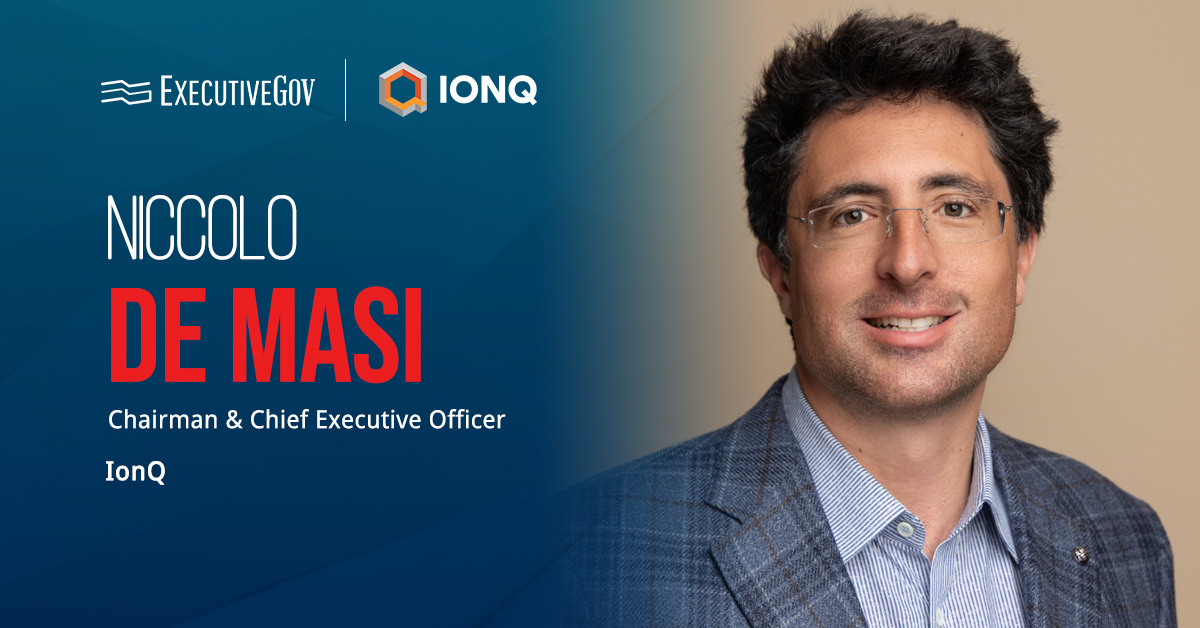
Niccolo de Masi, IonQ chairman and CEO, said partnerships between government and industry have historically driven major breakthroughs, such as the Manhattan Project and the Space Race.
“They could help shape the future of quantum technology—and play an important role in our economic and national security,” de Masi said.
Rick Muller, senior vice president and chief scientist at IonQ Federal, said the partnership builds on a long-standing relationship. Sandia fabricated the ion traps used in IonQ’s earliest quantum computers, and the collaboration now combines IonQ’s hardware and applications expertise with Sandia’s capabilities in trapped-ion fabrication and silicon photonics.
“These two areas most directly determine how fast quantum computers scale and how well they connect to one another,” Muller added.
How Does the Sandia Partnership Fit Into IonQ’s Quantum Strategy?
The agreement follows a series of moves by IonQ to advance its quantum computing capabilities. In July, the company completed its acquisition of SkyWater Technology to strengthen semiconductor manufacturing capabilities. Earlier this year, IonQ opened a Colorado research facility focused on semiconductor ion trap development. The company also advanced networking technologies for distributed quantum computing through an Air Force Research Laboratory-supported project demonstrating photonic interconnection between remote trapped-ion systems.