Developing anti-drone weapons has been an increasing priority of the federal government amid the rise of unmanned aircraft systems (UAS) and rogue drones. Unrestricted drones can pose a threat to homeland security, as malicious actors can use them to conduct illegal aerial surveys, hinder law enforcement, and violate the privacy of Americans.
What are anti-drone weapons?
Anti-drone weapons are a range of systems that detect and defeat rogue drones and unidentified UAS. In recent years, they have become increasingly important with the increase of illegal activities and dangerous activities, especially in security-sensitive airspaces such as near military complexes, energy infrastructure, transportation hubs, and more.
Why does the government need anti-drone weapons?
One of the primary reasons why the government needs anti-drone weapons is the threats they pose to national security and public services. While operations of drones and unidentified UAS are relatively harmless at low altitudes, flying them higher, faster, and longer distances can result in serious hazards and disruptions.
Perils Resulting from UAS and Rogue Drones
Here are a few real-life examples of threats displayed by rogue drones and UAS.
Collisions with manned aircraft, airliners, and military drones
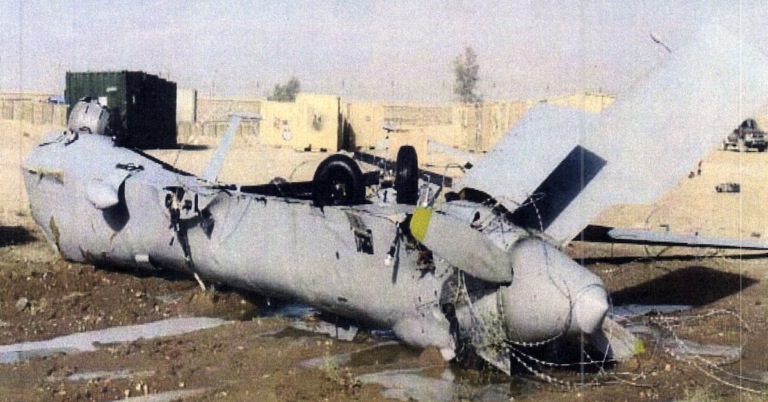
In September 2017, a recreational operator manned the drone beyond their line of sight from its launching point at a park in Brooklyn, New York City. The drone eventually breached a no-fly zone, colliding with the Army Blackhawk that was patrolling the area. While the helicopter was able to land safely, its main rotor assembly was damaged.
Delays and disruptions to airport operations
When drones and UAS are flown near airports, it’s in the best interest of airport officials to see them as threats and proceed with caution. In January 2019, Newark-Liberty Airport in New Jersey was temporarily shut down due to several drone sightings. The same also happened in London’s Gatwick and Heathrow Airports with several drone sightings from late 2018 to early 2019.
Employ as a tool to conduct illegal activities
Drones, presented as harmless hobby drones, are used by unlawful entities, militant groups, and organized crime groups to smuggle contraband across U.S. borders. Homeland security agencies discovered these unauthorized activities, including the transportation of illegal drugs from across the border into several prison yards.
Immobilize the critical infrastructure of the nation
Terrorist organizations may use rogue drones to attack critical infrastructure, facilities, and landmarks of the United States. Moreover, these drones can endanger the lives of people during mass gatherings, such as concerts, sporting events, and more. These examples are exhibited by insurgents throughout the Middle East, particularly in Afghanistan, Iraq, and Syria.
What are the main features of anti-drone weapons?

Anti-drone drone weapons features can be classified into two primary categories: monitoring and countermeasure. Drone monitoring equipment detects, identifies, and analyzes possible threats in airspaces. Meanwhile, drone countermeasure tools allow for targeting, attacking, and deflecting these rogue drones and unidentified UAS.
Drone monitoring features
Anti-drone monitoring weapons improve situational awareness against potential dangers through a system of detection, identification, location tracking, and alerting. Most monitoring equipment is capable of both passively observing the airspaces and actively warning threats by sending signals to threats in real time. Some drone monitoring equipment features include:
- Radio Frequency (RF) analyzers detect a range of radio waves within the RF spectrum that the controller uses to administer the drone.
- Optical sensors use high-quality cameras to detect drones in visible, infrared, and thermal radiation throughout the day and night.
- Acoustic sensors comprise several microphones to catch even the slightest noises and estimate the direction of the controller and the drone.
- A radar sends and receives signals, measures its reflected energy, and calculates the exact position of the drone.
Drone monitoring accounts for the majority of the work in making anti-drone weapons an effective measure against threats. A combination of these features can distinguish differences among birds, airplanes, and other flying objects, determine the drone’s specific manufacturer and MAC address, and alert countermeasures immediately.
Drone countermeasure features

Although anti-drone weapons mostly monitor and deflect threats before they arise, these equipment are ready and capable of countermeasure components. Drone countermeasure features include abilities to physically eradicate the drone, nullify its ability to pose threats, and take over its control. Here are a few drone countermeasure features.
- RF and GPS jammers prevent communication between the controller and the drone by masking controller signals and transmitting RF energy toward the drone.
- GPS spoofers hack and manipulate the signals the drone uses to navigate, allowing it to override control over the drone.
- High-powered lasers and microwave systems focus a light beam or an electromagnetic pulse toward the drone to physically damage its electronics.
- Nets and guns are fired from the ground or another drone to stop rogue drones’ flight mechanisms and rotor blades.
- Cyber takeover technologies use artificial intelligence to locate the controller’s position, hack the drone’s signals, and land it in a safe location.
Drones are equipped with countermeasure features but are expected to deploy them only in emergency situations. If threats can be mitigated with drone monitoring features, it’s best to utilize them as much as possible to prevent possible escalations of these threats.
What are the government rules for drones and unmanned aircraft systems?

Logo from FAA
Although drones and UAS can pose a very real threat to the United States and its key interests, more than 70% are operated for hobby and recreational purposes only. To prevent major drone operation incidents from anti-drone weapons, the Federal Aviation Administration (FAA) requires all owners to register their drones at the FAADrone Zone.
Under regulations set by the FAA, the agency responsible for most of the airspace in the U.S., both commercial and non-commercial drone pilots are allowed to fly registered UAS as long as
- Weigh less than 55 pounds or 25 kg
- Fly drones at a maximum height of 400 feet or 122 m
- Use B4UFLY Mobile App to show real-time restrictions to airspaces
- No flying in no drone zones
- Fly within the line of sight at all times
- Equip with Remote ID within FAA-Recognized Identification Areas
Upon the registration of the drones and UAS, the FAA may require specific regulations for recreational or commercial use. Foreigners, residents of different states, or those living near critical infrastructure may also have an additional requirement. It’s best to always visit the FAA’s website for real-time and comprehensive requirements before flying drones.
What are the legislations about anti-drone weapons?

In their own right, anti-drone weapons are highly capable military equipment that shouldn’t be used negligently. The FAA, in close collaboration with transportation, law enforcement, defense, and homeland security agencies, may limit or prohibit some local, state, and federal agencies from deploying some anti-weapon elements as they can be a public safety concern.
Based on the FAA Reauthorization Act of 2018, authorized federal agencies to intercept hostile drones and UAS to secure critical infrastructure and facilities are:
- Department of Defense
- Department of Justice
- Department of Homeland Security, including the Coast Guard
- Department of Energy
Unauthorized use of anti-drone weapons and counter-UAS systems by event organizers, security teams, and even by state and local governments are subject to serious repercussions in violation of both the FAA and Federal Communications Commission regulations.
What does the future look like for anti-drone weapons?
According to the estimates of the Federal Aviation Administration, approximately 2.3 million drones are to be registered by 2024—1.5 million of which are recreational and model drones, while 800,000 are commercial UAS. The projected increase in the number of drones also heightens the potential threats they pose.
Organizations, such as the National Football League, in partnership with the FAA, advocate expanding the use of counter-UAS systems to state and local law enforcement authorities to allow temporary restrictions during mass gatherings. Congress continues to balance, consider, and study all possibilities to target rogue drones safely and effectively.
Learn more about the homeland security titans who develop, monitor, implement, and regulate anti-drone weapons against rogue drones and unmanned aircraft systems right here.