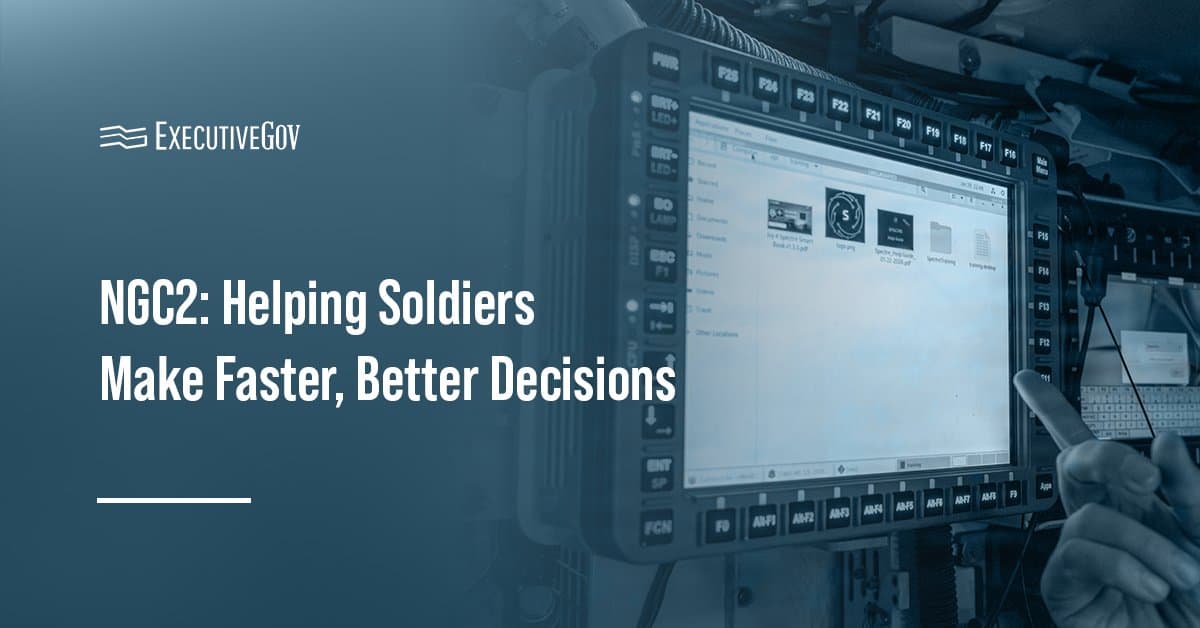
- Next Generation Command and Control, or NGC2, is the Army’s strategy for harnessing commercial technology to help soldiers make better and faster decisions than the enemy.
- It is envisioned as a technology stack including transport, infrastructure, data and applications.
- Dive into NGC2 developments with Brig. Gen. Shane Taylor, capability program executive for CPE C3N, at the 2026 Army Summit on June 18!
Next Generation Command and Control, or NGC2, isn’t just a capability to help Army units and soldiers better communicate and coordinate during combat. It’s a blueprint for how the service will acquire emerging technologies to gain a decisive edge over adversaries.
What Is NGC2?
NGC2 is the Army’s leading effort to use rapid advancements in commercial technology to deliver an information advantage across all warfighting sectors. It’s a new approach to enable commanders to make more, better and faster decisions than the enemy.
NGC2 is not just a single program or a technology. Rather, it’s an ecosystem delivered as a technology stack of four layers:
- Transport
- Infrastructure
- Data
- Applications
This approach integrates information from previously siloed weapon systems. It enables the use of AI and machine learning tools to quickly organize and analyze data to improve solidiers’ decision-making.
Recent developments in NGC2 include the realignment of a program executive office for faster harnessing of commercial technologies, additional funding flexibility in the Army’s FY 2027 budget request, new and innovative industry offerings, demonstrations in combat-representative environments and a market research event on how to best use commercial AI in C2.
Dive into the five biggest recent developments in NGC2.
Discover the latest business opportunities in NGC2 and other advanced command and control technologies at the Potomac Officers Club’s 2026 Army Summit on June 18! Evaluate overcoming procurement bottlenecks and institutional inertia, and scaling solutions for operational impact across the force at the From Pilot to Production: Accelerating Commercial Capabilities at Scale panel discussion. It features a pair of stellar Army technology experts:
- Brig. Gen. Shane Taylor, capability procurement executive for CPE C3N
- Brig. Gen. Anthony Gibbs, capability procurement executive for mission autonomy
Curate your NGC2 solutions for contracting success in 2026. Sign up today!
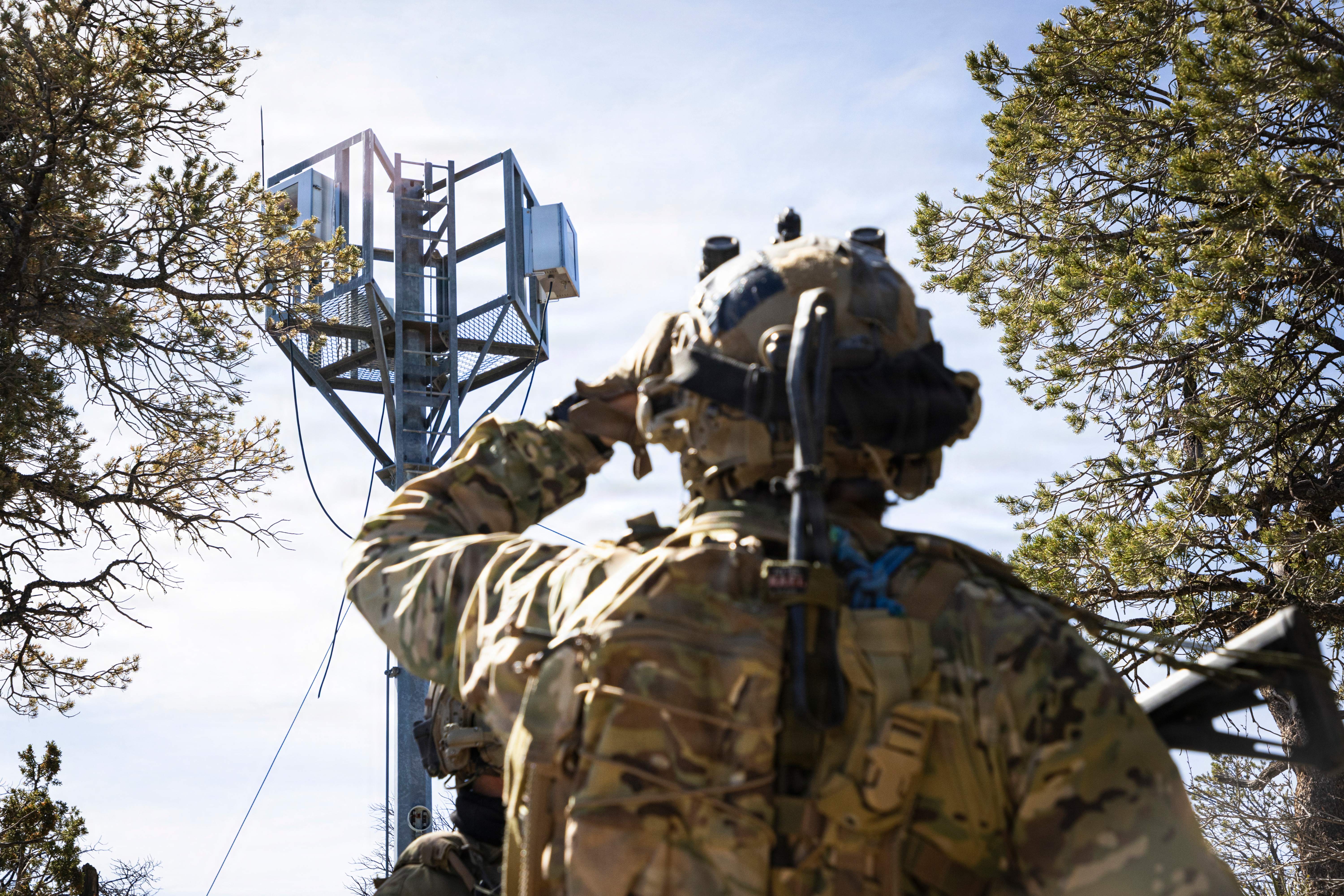
What Are Recent Developments in NGC2?
1. Realignment to Better Harness Commercial Capabilities
The Army reorganized the Program Executive Office Command, Control, Communications and Network, or PEO C3N, to better enable accelerated adoption and delivery of commercial hardware and software solutions for NGC2.
This new realigned organization received a new name as well: Capability Program Executive Command, Control, Communications and Network, aka CPE C3N. The reorganization allows for direct engagements and feedback between industry, program managers and larger acquisition community stakeholders.
2. Better Funding Flexibility for C3N
The Army’s FY 2027 budget request features streamlined budget lines for C2 programs, enabling the service to faster pivot from obsolete efforts to emerging needs or attractive industry solutions, according to Breaking Defense.
Congress, for the FY 2026 budget, allowed the Army to consolidate 13 lines related to electronic warfare, counter unmanned aerial systems, or C-UAS, and drones allowing program executives to have more control over their spending.
“In close coordination with Congress, we plan to expand this into the Army C2 portfolio, allowing the rapid movement of resources to support needs and opportunities in the application, data, network and transport layers,” said Michael Obadal, Army under secretary and 2026 Wash100 Award winner.
The Army is also working with Congress on further consolidated budget line items for FY 2028. These would cover other essential and technical portions of the budget, though Obadal declined to elaborate further, citing negotiation sensitivity.
3. Innovative Industry Offerings
Industry is ready with innovative offerings for NGC2. LMI is performing a rapid development pilot with Anduril to develop targeted capabilities for the NGC2 environment, according to a company statement. The pilot contributes a novel model for conceiving, validating and fielding essential defense services, reducing timelines to provide mission-ready capabilities at the accelerated speed required for modern combat.
The teaming arrangement has roots in the Army’s Ivy Sting exercises, which validate emerging NGC2 technologies under real-world conditions. There, applications like LMI’s SHEPRD are hosted in the NGC2 ecosystem, enabled by Anduril’s Lattice Mesh and tested in field exercises next to active Army Units.
LMI, during Ivy Sting 4, quickly modified and deployed SHEPRD at IL6, the highest level of authorization for cloud systems handling secret classified data, in a matter of weeks. This is traditionally a process that would take months or longer.
The end result was a radically different development cycle, where capabilities could be fielded, examined and refined in almost real time. LMI and Anduril are now working on a rapid development pilot to extend this model.
Want to win more Army business? Join the conversation on advanced Army technologies at the Potomac Officers Club’s 2026 Army Summit on June 18. Get actionable business intelligence from our impressive keynote speaker lineup of top Army officials:
- Marc Andersen, assistant secretary for financial management and comptroller
- Maj. Gen. David Hall, Army Transformation and Training Command deputy commanding general for Army National Guard
- Lt. Gen. Jeth Ray, deputy chief of staff, G-6
- Katie Thompson, deputy executive director for Army Contracting Command-Aberdeen Proving Ground
- Dr. Jeff Waksman, principal deputy assistant secretary for installations, energy and environment
Seating is limited. Secure yours today!
4. Operating in Contested Combat Environments
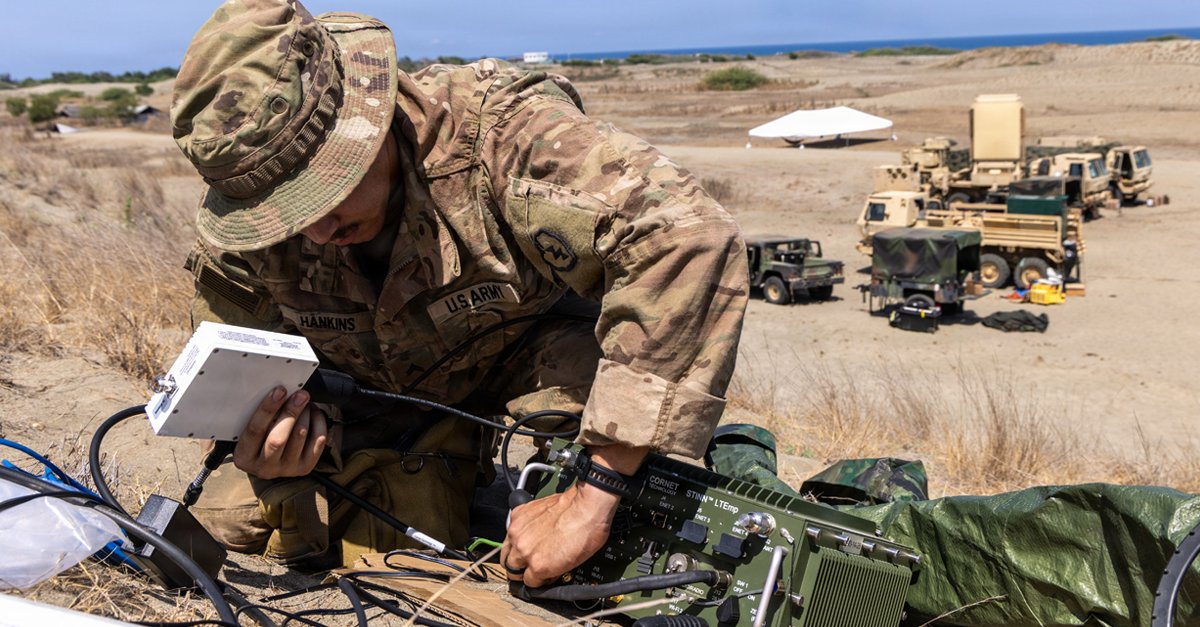
NGC2 needs to work in intense combat situations against near-peer adversaries in order for the U.S. to prevail in future combat. That’s why the Army recently tested NGC2 technologies by linking AH-64 Apache attack helicopters, maneuver forces and sustainment units into a digitally-connected battlefield network, Army Recognition reported.
The exercise put Army divisions in a real-world multidomain warfare situation in which aircraft, logistics and ground forces worked through distributed networks fortified to withstand electronic warfare, cyber disruption and long-range precision attacks. AH-64 units from the 4th Combat Aviation Brigade performed operations through forward arming and refueling locations, connected to novel digital command architectures that share data across formations in almost real time.
Lessons from the Russia-Ukraine war have demonstrated the susceptibility of stationary command posts and centralized communications systems to UAS monitoring, missile attacks and electronic warfare. To combat this, the Army is speeding up the deployment of portable and resilient command networks to maintain combat effectiveness, even under poor operational conditions.
5. Market Research Event for Commercial AI in C2
The Army in December held a market research event on how the service can better leverage private sector innovation in AI for C2. One challenge the Army and industry are jointly facing with AI at the edge is that models are only as good as the data they can ingest and interpret. But available data, as well as the computing and network resources required to process it, will vary widely depending on the tactical environment.
The Army is betting on AI enhancing C2 by using tools to rapidly process data, inform commanders’ decisions and accelerate the fires kill chain and reduce the cognitive burden on soldiers. These are a major focus during ongoing operational prototyping of NGC2.
The overall goal of using AI for C2 is to enable human decisions at machine speeds.
“No other technology will have a bigger impact on future warfare than artificial intelligence,” said Brig. Gen. Michael Kaloostian, Army Transformation and Training Command director of the C2 Future Capability Directorate.