- DOW has partnered with 3 companies to test and qualify low-cost cruise missiles
- FAMM will offer lugged and palletized missile variants under one combined competition
- Explore AI and other capabilities at the Potomac Officers Club’s DOW summits this summer
The Department of War has signed framework agreements with Anduril, CoAspire and Zone 5 to accelerate testing, qualification and validation of air-launched cruise missiles as part of the Family of Affordable Mass Missiles, or FAMM, Air Force program.

The Potomac Officers Club will host two DOW summits this summer. Book your spot now for the 2026 Air and Space Summit on July 30 to hear discussions on artificial intelligence, Golden Dome, commercial space relay and other defense technology priorities. You can also save your seat today for the 2026 Navy Summit on Aug. 27 to explore digital engineering, AI, autonomous systems and next-generation capabilities.
DOW said Wednesday the agreements support the department’s Acquisition Transformation Strategy.
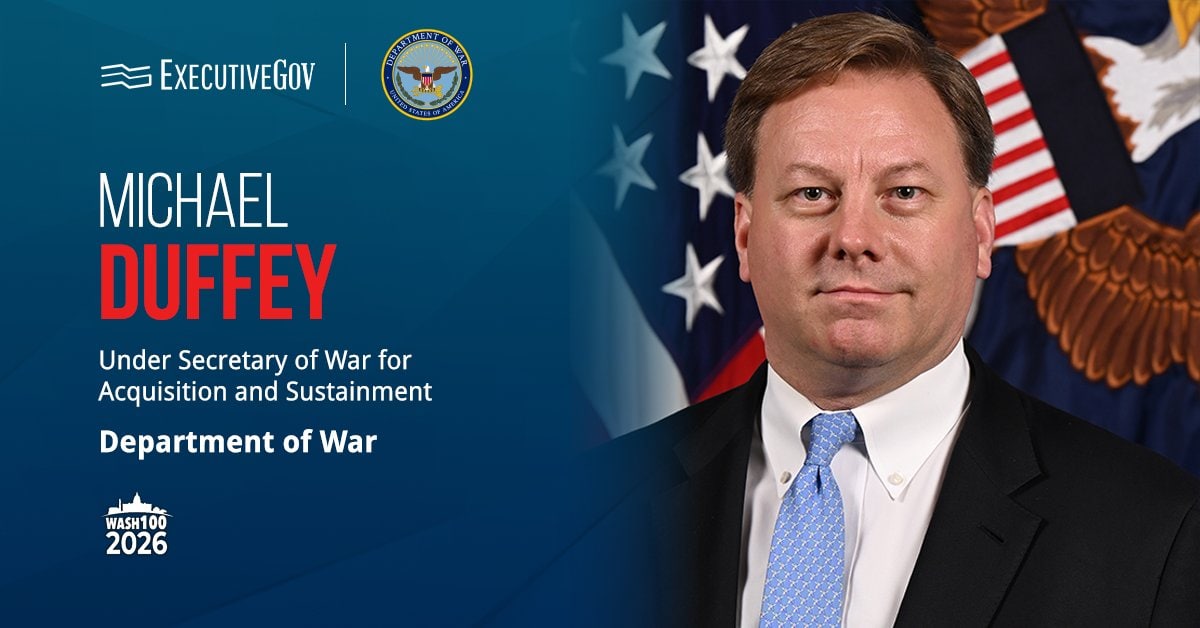
“The Arsenal of Freedom of the 21st Century requires doing business differently,” said Michael Duffey, under secretary of war for acquisition and sustainment and a 2026 Wash100 awardee. “Today’s announcement showcases the Acquisition Transformation Strategy in action, expanding the defense industrial base, fielding capabilities faster, and attracting private investment to fund innovation and increase manufacturing output.”
Anduril will produce Barracuda-500 under the agreement, while CoAspire’s contribution centers on its Rapidly Adaptable Affordable Cruise Missile, or RAACM. Zone 5 Technologies rounds out the group with its AGM-188 Rusty Dagger, giving the department three distinct low-cost cruise missile options to test and qualify under FAMM.
What Is the FAMM Program?
FAMM is a U.S. Air Force program that aims to accelerate the development and deployment of low-cost, air-launched cruise missiles. It offers lugged and palletized variants, giving the Air Force flexible logistics, handling and deployment options. The department will acquire both variants under a single, combined competition.
The department received five-year authorization for FAMM in the fiscal year 2026 National Defense Authorization Act. It is now seeking congressional approval for a seven-year multiyear procurement program in the FY27 NDAA and appropriations bill to provide greater stability to new entrants.
Under the framework agreements, the department will award seven-year agreements once the munitions complete validation and competitive selection. These awards remain subject to congressional appropriations and enactment of all necessary authorizations.
What Is the Procurement Strategy for FAMM?
FAMM’s procurement model combines competition with long-term stability, giving vendors a steady demand signal as production scales. Firm-fixed-price contracts anchor the approach, and a guaranteed minimum order protects each qualified vendor’s share, keeping several production lines ready to ramp up when needed.
Vendors that hit or beat their delivery targets can earn additional orders, contingent on congressional funding, which rewards contractors for speed and efficiency. The department is also leaving room to bring on additional vendors down the line as new capabilities and technologies emerge.
FAMM complements the department’s earlier Low-Cost Containerized Missiles effort, which addresses the ground-launched side of affordable cruise missile production. The Air Force worked with the Munitions Acceleration Council and the Economic Defense Unit on the FAMM initiative.