- DEA’s Fentanyl Free America is a law enforcement operation and awareness campaign against illicit narcotics
- The agency gathers and disseminates drug-related intelligence
- Join intelligence experts from DEA, FBI and other agencies at the 2026 Intel Summit on Sept. 24
President Donald Trump has made stopping the flow of fentanyl in the United States a priority under his administration. In an executive order issued in December 2025, the president designated illicit fentanyl and its core precursor chemicals as weapons of mass destruction. According to the EO, the manufacture and distribution of fentanyl, often performed by organized crime groups, threatens national security.
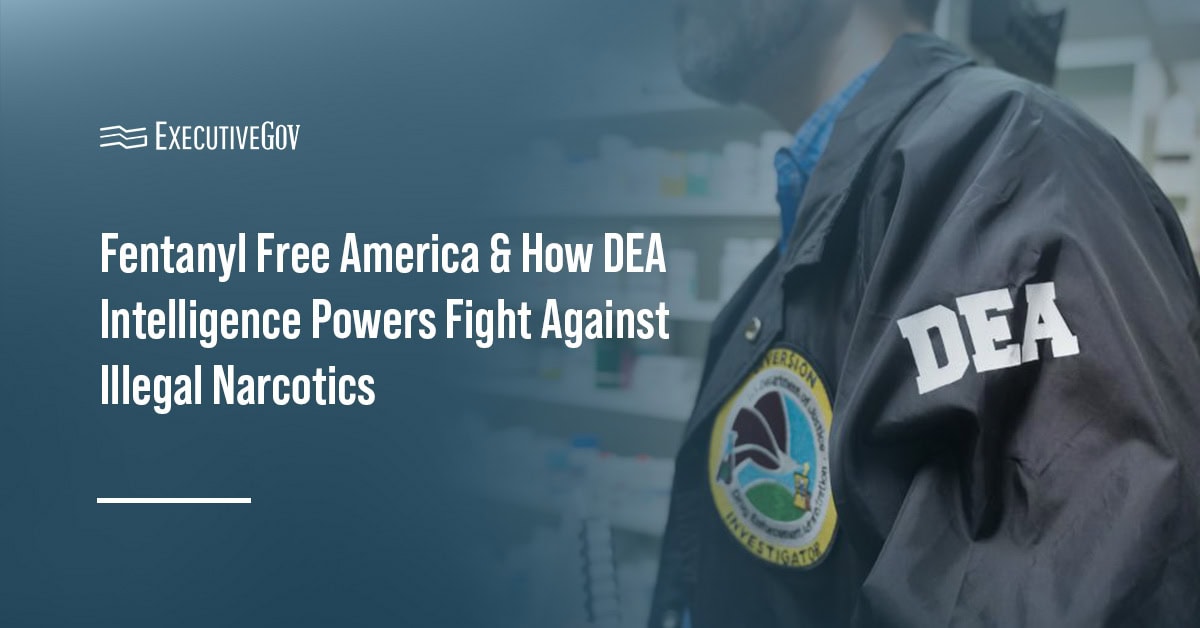
The Drug Enforcement Administration is leading the fight against illicit narcotics with Fentanyl Free America.

Carrie Thompson, deputy assistant administrator for DEA’s Office of Intelligence Programs, will keynote the Potomac Officers Club’s 2026 Intel Summit on Sept. 24. She joins a speaker lineup of top intelligence leaders who will provide a comprehensive look at the current threat environment and identify the technologies needed to strengthen national security. Get your tickets here!
What Is Fentanyl Free America?
Fentanyl Free America is both a law enforcement operation against illicit drug networks and an awareness campaign that aims to reduce the supply and demand for fentanyl.
DEA said in December 2025 that it had seized more than 45 million fentanyl pills and 9,320 pounds of fentanyl powder since the operation began. Between Jan. 12 and Feb. 10, the agency confiscated more than 4.7 million fentanyl pills and 2,396 pounds of fentanyl powder.
According to DEA, the initiative has forced narco-terrorist groups to change business practices. The fentanyl powder purity has also declined significantly in late 2025, and deaths associated with synthetic opioids have decreased to levels not seen since April 2020
Based on agency data, the operation has also led to about 5,000 people arrested, nearly $100 million seized and dozens of pill press machines confiscated between October 2025 and February 2026.
Fentanyl Free America is a multi-phase national effort, with Phase I starting and ending in late 2025 and Phase II starting in January 2026. It required interagency participation and includes DEA’s 23 domestic field divisions and seven foreign divisions.
What Is the Role of Intelligence in Fentanyl Free America?
DEA attributed the successes of Fentanyl Free America to intensified enforcement operations and enhanced intelligence.
“DEA is striking harder and evolving faster to dismantle the foreign terrorists fueling this crisis, while empowering all our partners to join the fight to prevent fentanyl-related tragedies,” stated DEA Administrator Terrance Cole.
In an operation in Arizona, DEA worked with Homeland Security Investigations, the investigative arm of the Department of Homeland Security, and federal, state and local partners to seize more than 11 pounds of fentanyl in pills and powder form and other illegal drugs.
How Does Intelligence Support DEA’s Mission?
Intelligence is an important part of the DEA mission. To carry out major programs such as Fentanyl Free America, the agency collects, analyzes and disseminates drug-related intelligence. It operates a national drug intelligence program to share information with relevant federal, state, local, tribal and foreign officials and manages a global human/confidential source network.
DEA divides its drug intelligence efforts into three categories:
- Tactical – information that can be used for immediate enforcement actions, such as arrests
- Investigative – data that support investigations and prosecutions to dismantle criminal organizations
- Strategic – intelligence that creates a complete picture of drug trafficking networks and activities to support decision-making, policy development and resource deployment.
The agency’s Intelligence Program initiates investigation into drug organizations and leads information efforts that lead to seizures and prosecutions. The program now has over 680 intelligence analysts worldwide.
The El Paso Intelligence Center, or EPIC, in Texas operates under the DEA Intelligence Program. EPIC has grown to become a national-level intelligence center since its establishment in 1974. The center is responsible for identifying threats to national security, with a specific focus on the Southwest border.

Learn more about how DEA conducts intelligence operations to support counternarcotic missions from Carrie Thompson at the 2026 Intel Summit on Sept. 24. Thompson, who previously led the DEA Intelligence Program, is expected to discuss the agency’s efforts to modernize its intelligence enterprise and other investment priorities during her keynote. Sign up today to secure your seat!
Inter-Agency Partnerships
DEA has also increased collaboration with the intelligence community and the Department of War in line with legislation and executive directives.
A national security memorandum issued in 2024 directed the director of national intelligence and the heads of the CIA, the FBI, the Department of Homeland Security and other agencies to increase intelligence collection and information-sharing to disrupt the illicit fentanyl and synthetic opioids supply chain in the U.S.
DEA is additionally working with Customs and Border Protection to stop the cross-border movement of illegal drugs. In its strategy to combat fentanyl, CBP said that it will invest in artificial intelligence and machine learning tools to identify threats by analyzing open source information and previous seizure data.
CBP is already deploying AI-powered non-intrusive inspection, or NII, technology to screen and detect contrabands at borders. Leidos recently secured a potential $270 million contract for medium energy mobile systems, which are designed to screen for weapons, currencies, illicit drugs and other threats.
Additionally, the DHS Science & Technology Directorate, in support of counter-fentanyl efforts, awarded a $2.8 million contract for research and development of novel technologies that can detect fentanyl vapor and particles.
Meanwhile, DEA partners with the FBI to seize cryptocurrency that funds cartel operations. CoinDesk reported in July 2025 that the agencies seized more than $10 million in cryptocurrency linked to the Sinaloa cartel, a Mexican group that the administration has designated as a foreign terrorist organization.
Matthew Fodor, operations director for the FBI’s National Security Branch, will also deliver a keynote speech at the 2026 Intel Summit. A seasoned investigator who has led efforts to uncover financial crimes and terrorist activities, Fodor is well-positioned to provide insights into the evolving national security landscape. Sign up here to gain insights from Fodor and other intelligence agency leaders!