

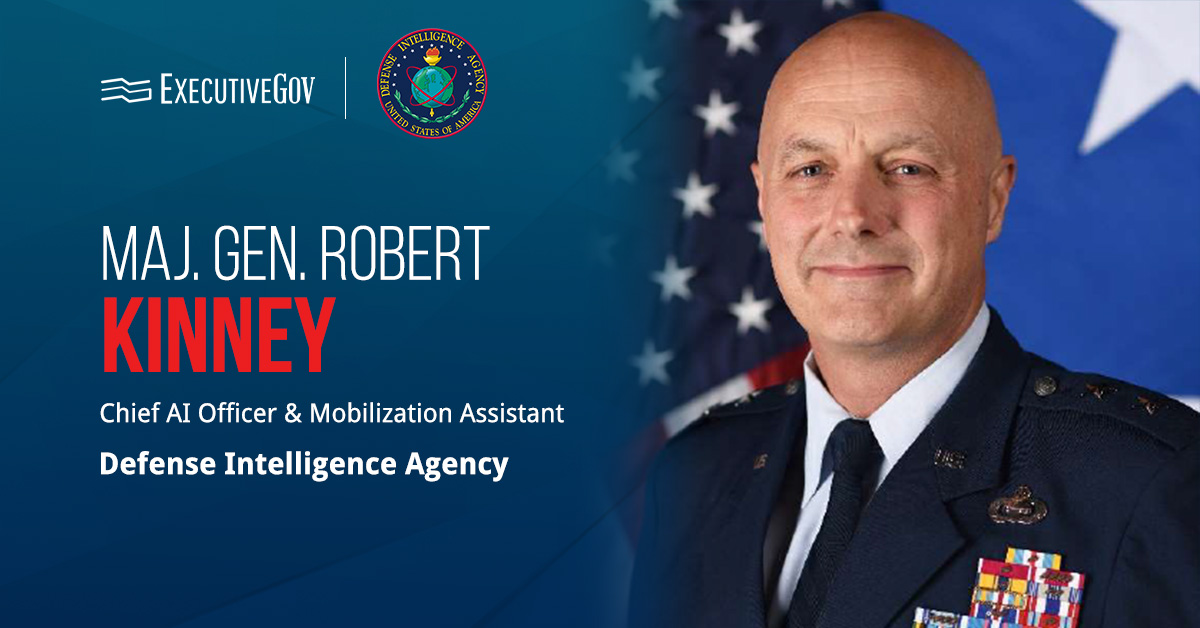
Maj. Gen. Robert Kinney, chief artificial intelligence officer at the Defense Intelligence Agency, said the agency is centralizing its AI efforts through a new organization designed to improve coordination and speed up capability delivery, Breaking Defense reported Friday.

DIA's push to streamline AI efforts through a new centralized unit reflects a broader shift toward faster, more coordinated digital capabilities across the national security landscape. Explore these trends at the 2026 Digital Transformation Summit, which will feature panel discussions on AI in mission-critical environments and the digital backbone of defense modernization. Register now!
What Is the Digital Modernization Accelerator?
According to the report, DIA established the Digital Modernization Accelerator, or DMA, on March 1 as a permanent organization to centralize AI and technical expertise.
DMA, which evolved from Task Force Sabre, operates under a “hub-and-spoke” model to support DIA directorates and combatant commands worldwide. Kinney said the organization, nicknamed the “Maverick Accelerator,” helps consolidate scarce expertise and deploy technical support more efficiently.
What Is Task Force SABRE?
Task Force SABRE served as the precursor to the DMA, operating as a 25-person team with a 12-month mandate to advance AI adoption and accelerate reform efforts.
Kinney, who also serves as DIA's mobilization assistant, said the task force helped the agency adopt faster acquisition approaches, including the use of other transaction authority agreements. Through Task Force Sabre, he noted that DIA executed six OTAs over the past year, including one that moved from request for information to contract award in 40 days.
He also mentioned the development of ChatDIA, the agency's classified generative AI chatbot that was initially deployed in the fall of 2025 before expanding its use in December.
What Are DIA's Plans for Agentic AI?
Kinney said the agency's next goal is to implement agentic AI capable of acting as a semi-autonomous assistant to humans.
“Our intention is to take the applications we’re building, tie them together and build agents,” he said. “We’re moving very rapidly towards [deploying] agents in the classified fabric.”