- Jared Seehafer, a tech executive, steps into a newly created leadership position at FDA
- The role will guide agency-wide technology and AI strategy
- The 2026 Healthcare Summit will explore AI, health IT and more
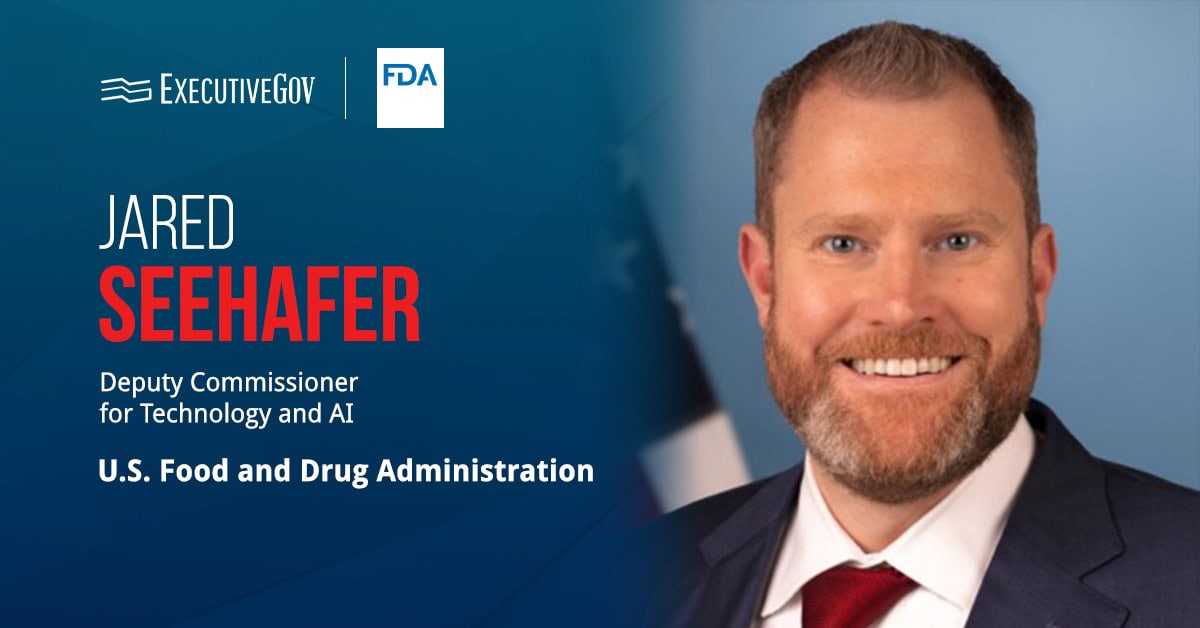
The Department of Health and Human Services has announced the appointment of Jared Seehafer, a technology executive, as the Food and Drug Administration’s first deputy commissioner for technology and artificial intelligence.

As federal health agencies weigh how emerging technologies should be governed and applied across regulatory and clinical functions, questions of oversight, policy expertise and workforce readiness continue to shape agency priorities. The Potomac Officers Club’s 2026 Healthcare Summit on Dec. 3 will bring together senior health officials and industry leaders to discuss AI governance and the role of policy expertise, federal health IT modernization, access to care, and more. Save your spot now to join the conversation.
HHS said Tuesday the appointment is part of a broader set of senior FDA leadership selections aimed at advancing innovation and reform across the agency.
What Are Seehafer’s Responsibilities?
In the newly established role, Seehafer will act as FDA’s senior leader for technology, software and AI, setting agencywide strategy and priorities in those areas.
HHS said the position reflects a broader effort to accelerate the responsible adoption of AI, modernize federal technology systems and support a regulatory framework suited to emerging technologies.
Who Is Jared Seehafer?
Seehafer is a technology executive with two decades of experience spanning software, AI and FDA-regulated medical technology.
Prior to his new appointment, he served as a senior adviser at FDA beginning in August 2025, according to his LinkedIn profile. His professional background also includes work as CEO and co-founder of Enzyme, a company focused on life sciences regulatory and compliance technology, as well as serving as a venture partner at Orange Collective and a network leader at Village Global.
Seehafer holds a master’s degree in medical device and diagnostic engineering from the University of Southern California and a bachelor’s degree in molecular, cellular and developmental biology from the University of Colorado Boulder.
How Does the Appointment Fit Into FDA’s Broader AI Push?
The appointment comes after a string of technology moves at FDA over the past year.
The agency launched Elsa 4.0 and consolidated its application and submission systems into a new platform called HALO this spring, expanding generative AI capabilities for reviewers.
It has also sought industry feedback on how generative AI-enabled medical devices should be regulated and requested vendor input on a planned IT infrastructure services contract built around a hybrid pricing model.
Separately, FDA explored a venture capital-backed contracting structure to give startups a more direct path to agency work.