Executive Gov
  • Home
  • Acquisition & Procurement
  • Agencies
    • Department of War
    • Intelligence
    • DHS
    • Civilian
    • Space
  • Cybersecurity
  • Technology
  • News
  • About
  • Wash100
  • Contact Us
    • Advertising
    • Submit your news
No Result
View All Result
Executive Gov
  • Home
  • Acquisition & Procurement
  • Agencies
    • Department of War
    • Intelligence
    • DHS
    • Civilian
    • Space
  • Cybersecurity
  • Technology
  • News
  • About
  • Wash100
  • Contact Us
    • Advertising
    • Submit your news
No Result
View All Result
Executive Gov
No Result
View All Result
Home Articles

3 Aircraft Carrier Technologies Pushed to the Brink by Long Deployments

by Pat Host
August 24, 2026
in Articles, Department of War
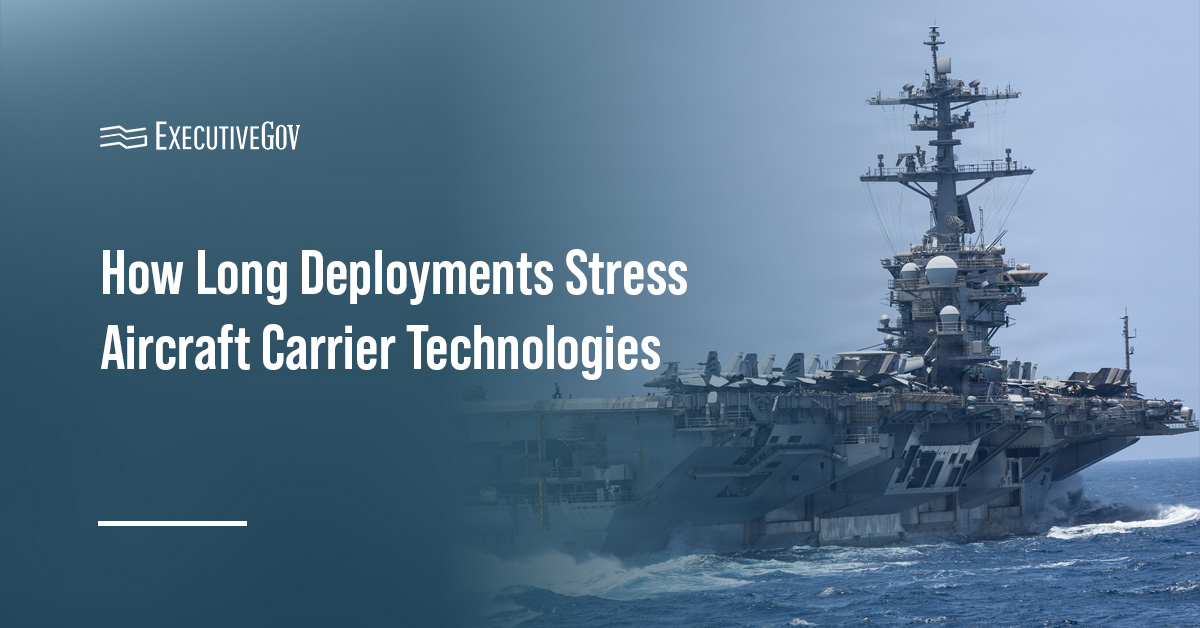
USS Lincoln. How long deployments stress three aircraft carrier technologies on aircraft carriers like the USS Lincoln

Photo: U.S. Navy

  • The extended deployment by the USS Lincoln pushed its technology systems to the brink
  • These systems perform at combat tempo with little opportunity for repair at ports
  • Learn new naval technology maintenance and modernization opportunities at the 2026 Navy Summit on Aug. 27!

U.S. Navy aircraft carriers are the most technologically complex weapon systems on Earth.  Extended deployments, like the 200 days in a combat zone and more than 10,000 sorties facilitated by the USS Abraham Lincoln, according to the Wall Street Journal, push these technologies to the brink.

Table of Contents

    • You might also like
    • GAO Offers Recommendations for Army’s Battlefield Network Modernization Effort
    • Army Veteran Nicole Perry Takes Helm of Navy’s Office of Small Business Programs
    • Defense Innovation Unit Unveils Bridge Program
  • What Are 3 Aircraft Carrier Technologies Stressed by Extended Deployments?
    • 1. Aircraft and Airframes
    • 2. Aviation Systems
    • 3. Human Support Systems

You might also like

GAO Offers Recommendations for Army’s Battlefield Network Modernization Effort

Army Veteran Nicole Perry Takes Helm of Navy’s Office of Small Business Programs

Defense Innovation Unit Unveils Bridge Program

When a carrier is operating at an advanced combat tempo, maintenance of these advanced systems are even more difficult and expensive considering that they can’t be taken out of service in port. Hardware breaks down faster, and the more sophisticated the technology, the more expensive and difficult it is to repair.

Being on combat footing for almost a year also puts advanced hours on radar nodes and other sensors. Extended exposure to seawater corrosion puts additional wear and tear on equipment and systems. 

Let’s dive into three advanced aircraft carrier technological systems impacted by extended deployments.

The USS Abraham Lincoln’s record-breaking 230-plus days at sea is exposing the true cost of sustaining a fleet under extended operational strain. Discover new naval technology maintenance and refurbishment opportunities at the Potomac Officers Club’s 2026 Navy Summit on Aug. 27! 

Join top government and industry leaders, including Acting Secretary of the Navy and 2026 Wash100 Award popular vote winner Hung Cao, and “CFO” Vice Adm. Brad Skillman for a firsthand look at emerging maintenance, sustainment and modernization priorities shaping the fleet’s future. Few tickets remain, so secure your seat before it’s too late!
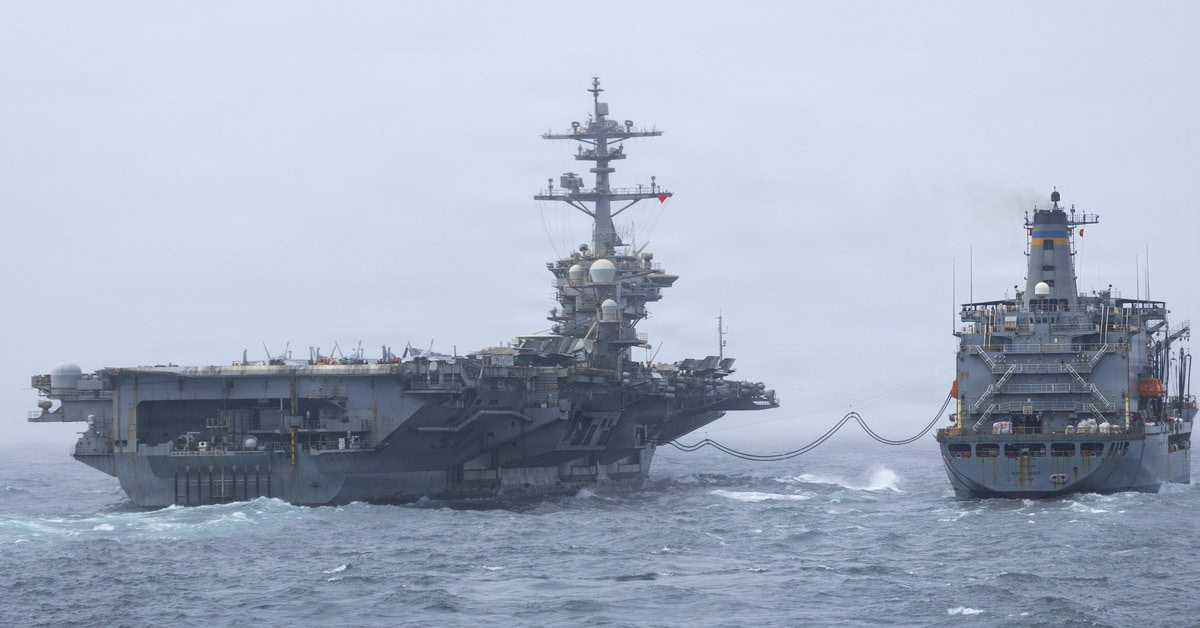
USS Lincoln. The USS Lincoln (left) performs a replenishment mission with the oiler USNS Henry J. Kaiser on Aug. 16, 2026.
USS Abraham Lincoln (CVN 72, left), conducts a replenishment-at-sea with fleet replenishment oiler USNS Henry J. Kaiser (T-AO 187) on Aug. 16. Photo: U.S. Navy

What Are 3 Aircraft Carrier Technologies Stressed by Extended Deployments?

1. Aircraft and Airframes

Aircraft and airframes are racking up sorties far faster than planned, including more than 10,000 on the Lincoln, far faster than planned, according to the magazine Open. This pushes Super Hornets toward flight-hour limits and depot refits ahead of schedule. Every sortie puts hours on an airframe and airframes have hard limits.

Aircraft maintenance that would normally happen methodically in a hangar during downtime, instead, has to happen between combat sorties. With the same jets needed back in the air almost immediately, this leaves less time for thorough inspection and more pressure to keep marginal aircraft flying.

Navy investments in Super Hornet service life would increase the platform’s performance and mitigate risk from extended deployments in the future. The service in December awarded Boeing a $931 million contract to continue work on the Super Hornet Service Life Modification effort, the Aviationist reported. As part of this effort, up to 60 Super Hornets will have their service lives extended from 6,000 to 10,000 flight hours.

2. Aviation Systems

Aviation systems are the ship’s own infrastructure for launching, recovering and moving aircraft, and they’re also put under tremendous pressure during extended deployments. These technologies include:

  • Catapults and arresting gear
  • Elevators
  • Fuel systems

These systems can’t be pulled off the ship and sent to a depot like an airframe. Most repairs have to happen in place, often between flight cycles, sometimes by contractor field teams flown out to the ship. A broken catapult doesn’t just mean one system is down, it can halt flight operations for the entire carrier until it’s fixed.

For example, Ford-class carriers received the Electromagnetic Aircraft Launch System, or EMALS, as part of its redesign. EMALS was meant to be smoother, more precise and better for airframes than the legacy steam catapults.

But in practice, EMALS struggled with reliability as early testing showed regular failures and launch rates were failing to meet goals, according to ModelWorks Direct. This made EMALS vulnerable to failures that ripple throughout carrier aviation during extended deployments. 

Nothing moves a GovCon business forward like the right conversation with the right person, and the 2026 Navy Summit on Aug. 27 puts those people in one room. Network directly with top Navy and Marine Corps officials steering the maintenance and modernization priorities and turn conversations into real opportunities. Spark collaborations with other ambitious GovCons and score that big contract. Sign up now!
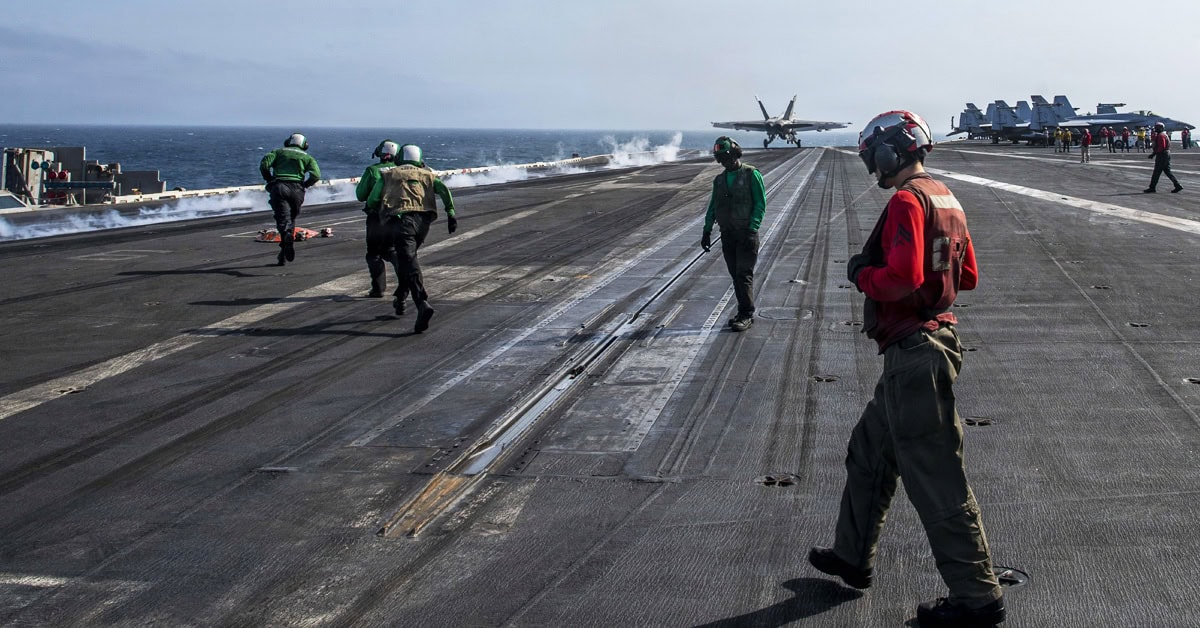
USS Lincoln. Super Hornet flight operations are performed on the USS Abraham Lincoln on Aug. 10.
Super Hornet flight operations are performed from the USS Abraham Lincoln aircraft carrier on Aug. 10. Photo: U.S. Navy

3. Human Support Systems

A carrier of more than 5,000 people is like a small city with utilities running constantly. Carriers need self-sustaining infrastructure like 

  • Water desalination and distribution
  • Sewage treatment
  • Galleys and food storage with refrigeration
  • Communications capabilities
  • Laundry
  • Heating, ventilation and air conditioning
  • Berthing systems

The Navy in 2025 improved communications infrastructure for sailors to keep in touch with loved ones while on a long deployment. The service specifically expanded satellite connectivity more than eight months into USS Gerald R. Ford’s 2025 deployment to help sailors stay in contact with their families, Military.com reported. This demonstrates the scale of logistics required to support thousands of sailors aboard a carrier operating on a regular basis across a variety of theaters.


2026 Navy Summit ad

Stay connected via Google News
Follow us for the latest travel updates and guides.
Add as preferred source on Google
Share5Tweet19
Previous Post

GAO Offers Recommendations for Army’s Battlefield Network Modernization Effort

Recommended For You

Defense Digital Service Chief Brett Goldstein: DoD Should Advance Data Literacy

by Jane Edwards
November 19, 2020
Defense Digital Service Chief Brett Goldstein: DoD Should Advance Data Literacy

Brett Goldstein, director of the Defense Digital Service (DDS), told Nextgov in an interview published Tuesday about the need for the Department of Defense (DoD) to advance data literacy...

Read moreDetails

Army, Navy, Air Force Secretaries Say ‘Adaptive’ Workforce Key to US Security

by Jay Clemens
October 31, 2016
Army, Navy, Air Force Secretaries Say 'Adaptive' Workforce Key to US Security

All three secretaries of the U.S. armed services believe that the government's ability to hire and retain talented professionals will be a critical strategy to address U.S. challenges and threats. Army...

Read moreDetails

Final Demo Set on NRL’s Computer-Based Vision System to Boost Battlefield Awareness in Littoral Environments

by Kristen Smith
August 24, 2024
LittoralLens_272x270

The LittoralLens imaging system that the Naval Research Laboratory developed to help boost situational awareness in shoreline environments is scheduled for final concept demonstration in August. Showcased in...

Read moreDetails

David Norquist on DoD’s $705.4B Budget Request for FY 2021

by Jane Edwards
December 6, 2022
David Norquist on DoD's $705.4B Budget Request for FY 2021

Deputy Defense Secretary and 2020 Wash100 Award winner David Norquist said the Pentagon’s proposed budget of $705.4 billion for fiscal year 2021 seeks to prepare the U.S. armed forces...

Read moreDetails

How AI is Shaping the Future of Joint Operations

by Ireland Degges
April 30, 2024
Mobile military base_272x270

Modern warfare is increasingly characterized by a contested digital landscape, and strong connectivity across this evolving battlefield is critical to U.S. defense missions. The Department of Defense crafted its...

Read moreDetails
Sign Up For Our Newsletter
Subscribe to our mailing list to receives daily updates direct to your inbox!
Invalid email address
Your privacy is guranteed.
Thanks for subscribing!

Sponsors

About ExecutiveGov

ExecutiveGov, published by Executive Mosaic, is a site dedicated to the news and headlines in the federal government. ExecutiveGov serves as a news source for the hot topics and issues facing federal government departments and agencies such as Gov 2.0, cybersecurity policy, health IT, green IT and national security. We also aim to spotlight various federal government employees and interview key government executives whose impact resonates beyond their agency.

CATEGORIES

  • Acquisition & Procurement
  • Announcements
  • Articles
  • Artificial Intelligence
  • Australia
  • Awards
  • Big Data & Analytics News
  • C4ISR
  • C5ISR
  • Civilian
  • Cloud
  • Contract Awards
  • Cybersecurity
  • Defense And Intelligence
  • Defense Security Cooperation
  • Department of War
  • DHS
  • Digital Assets
  • Digital Modernization
  • Events
  • Executive Moves
  • Executive Spotlights
  • Federal Civilian
  • Financial Reports
  • Foreign Military Sales
  • General News
  • GovCon Expert
  • Government Cloud
  • Government Technology
  • GSA
  • Healthcare IT
  • Industry News
  • Intelligence
  • Intelligence Community
  • Legislation
  • M&A Activity
  • Middle East
  • National Security
  • News
  • Policy Updates
  • Press Releases
  • Profiles
  • Space
  • Technology
  • Videos
  • Wash100
Sign Up For Our Newsletter
Subscribe to our mailing list to receives daily updates direct to your inbox!
Invalid email address
Your privacy is guranteed.
Thanks for subscribing!

Copyright 2026 Executive Mosaic. All Rights Reserved. Site Archive

No Result
View All Result
  • Home
  • Acquisition & Procurement
  • Agencies
    • Department of War
    • Intelligence
    • DHS
    • Civilian
    • Space
  • Cybersecurity
  • Technology
  • News
  • About
  • Wash100
  • Contact Us
    • Advertising
    • Submit your news

Copyright 2026 Executive Mosaic. All Rights Reserved. Site Archive

Get your free GovCon news!

Get your latest GovCon news and insights. Become a VIP and subscribe to the GovConWire Daily News.

Invalid email address
We promise not to spam you. You can unsubscribe at any time.
Thanks for subscribing!