

- The Naval Research Laboratory’s Robotic Servicing of Geosynchronous Satellites payload has been launched into orbit
- The payload was installed on SpaceLogistics’ Mission Robotic Vehicle and carried by a SpaceX Falcon rocket
- The RSGS program is intended to extend the life of U.S. orbital assets and repair rather than abandon them in space
The Naval Research Laboratory announced Tuesday that its Robotic Servicing of Geosynchronous Satellites payload has been launched into orbit through its integration with the Mission Robotic Vehicle, a spacecraft built by Northrop Grumman subsidiary SpaceLogistics.
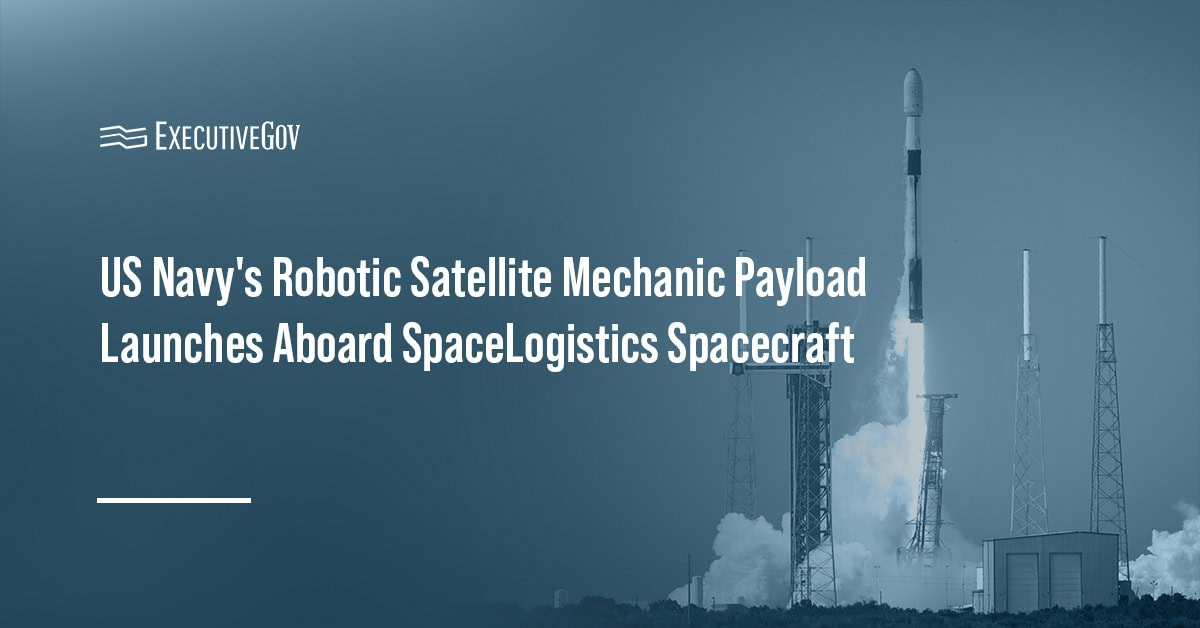
The payload and spacecraft was carried by a SpaceX Falcon rocket and launched at Cape Canaveral Space Force Station in Florida. The launch marks a milestone for the RSGS program, which is being developed in collaboration with the Defense Advanced Research Projects Agency.

U.S. Air Force, Space Force, and NASA leaders will appear at the 2026 Air and Space Summit on July 30 to talk fiscal year 2027 priorities — from Golden Dome to Collaborative Combat Aircraft and AI-driven battle networks. Register now and take part in discussions about the next generation of air and space programs.
What Is the Impact of the Launch on Space Mission Readiness?
Capt. Randy Cruz, NRL’s commanding officer, said the launch delivers a capability the Department of War needs to sustain space infrastructure at operational scale.
“Extending the lifespan of our orbital assets ensures continuous mission readiness and enhances the overall resilience of U.S. space infrastructure,” he explained.
Bernard Kelm, acting director of NRL’s Naval Center for Space Technology, said the system is intended to break what he called the conventional “launch-and-abandon” model for satellite missions. Because most satellites in GEO were not built with servicing interfaces, damaged or malfunctioning spacecraft have historically been left in place rather than repaired.
“The RSGS program shifts this paradigm by enabling on-orbit interventions, including inspections, mechanical anomaly resolution, satellite relocation and upgrades,” he elaborated.
What Are the Next Steps Following the Launch?
Acting as an in-orbit “mechanic,” the RSGS payload will be able to grapple satellites, perform in-flight resupply and carry out orbital repositioning, among other tasks, in support of critical commercial, civil and national security spacecraft.
SpaceLogistics will use the RSGS payload to offer commercial servicing of satellites in geosynchronous orbit. Its Mission Robotic Vehicle will rely on electric propulsion to reach its final position in GEO, a transit expected to take approximately one year before proximity operations and demonstrations can begin.
According to NRL, the mission is the first privately owned and operated robotic servicing capability of its kind, and one that could reshape how both government and industry manage aging orbital infrastructure.