- OSTP Director Michael Kratsios has published a report on revitalizing federal R&D
- The White House has outlined nine R&D priorities for FY 2028 budget planning
- The 2026 FedCiv Summit will explore AI adoption, data infrastructure and more
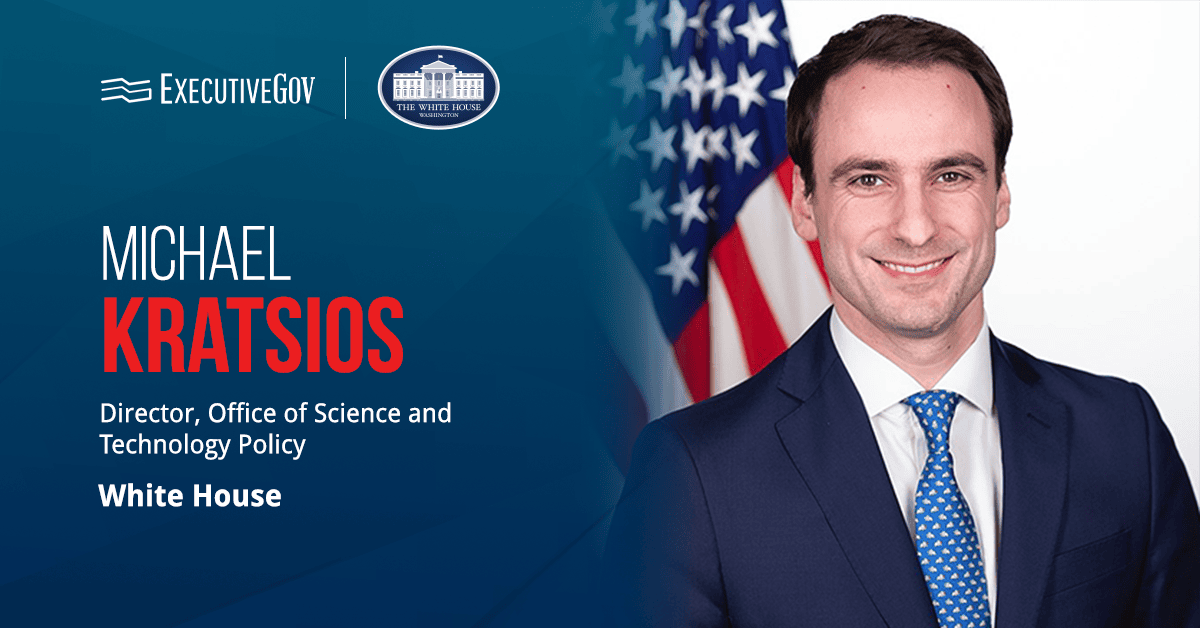
Michael Kratsios, assistant to the president for science and technology and director of the White House Office of Science and Technology Policy, has published a report titled “Science: A New Golden Age,” outlining recommendations to renew the federal research and development enterprise.

As federal agencies weigh how to align research investments with national science and technology priorities, government and industry leaders will gather at the Potomac Officers Club’s 2026 FedCiv Summit on Oct. 29 to discuss AI adoption, data and cloud infrastructure, cybersecurity and workforce enablement. Register now to gain firsthand insights from leaders shaping federal civilian modernization priorities.
“This report lays a policy foundation that frees American scientists to do their most groundbreaking work, revives the national pursuit of ambitious scientific missions, and positions the United States to lead the AI-driven scientific revolution that will define the next century,” Kratsios, a two-time Wash100 awardee, said in a statement published Tuesday.
What Are the Report’s 4 Key Pillars?
The report organizes its recommendations around four pillars.
- Revitalize America’s science and technology enterprise — Shift funding toward individual researchers over established institutions, broaden funding approaches beyond traditional peer review, stand up new agile research bodies like X-Labs and ARPA-style entities, and build metascience units to drive ongoing improvement
- Secure U.S. dominance in critical and emerging technologies — Concentrate federal R&D on mission-driven efforts spanning government, industry, academia and philanthropy, anchored by the Genesis Mission, the Quantum Computer for Application Development and Discovery Science initiative, a mid-2030s commercial fusion demonstration, a crewed lunar return and base, and next-generation semiconductors
- Launch a new golden age powered by AI for science — Scale the Genesis Mission as the government’s flagship AI-for-science effort, build scientific foundation models and high-value datasets, fund AI-enabled verification tools and autonomous labs, and move toward AI-native research institutions
- Ensure science and technology better the lives of all Americans — Bring hands-on technical training and apprenticeships into STEM education, widen access to scientific careers for skilled tradespeople, grow regional hubs linking research to manufacturing, and spread the economic benefits of discovery nationwide
What Are the FY 2028 R&D Priority Areas?
As an annex to the report, Kratsios and Office of Management and Budget Director Russell Vought jointly issued the administration’s fiscal year 2028 research and development budget priorities memorandum. The document outlines nine priorities for agencies to consider in their FY 2028 budget submissions to OMB.
- Rebalance R&D portfolios — Shift funding toward foundational research and the physical sciences and engineering
- Advance national S&T missions — Align investments with national missions such as the Genesis Mission and next-generation semiconductors
- Apply AI to accelerate research — Use AI and emerging technologies to speed up American research and innovation
- Expand R&D infrastructure — Broaden access to research infrastructure for the wider science and technology ecosystem
- Strengthen regional ecosystems — Translate scientific advances into stronger regional economies and broader prosperity
- Explore new funding mechanisms — Consider new institutional models and funding approaches to support frontier science
- Develop scientific talent — Identify better ways to recruit and grow scientific talent
- Improve how science is funded — Study and evaluate federal science funding practices to drive continuous improvement
- Integrate federal R&D — Connect federal research efforts with the broader science and technology enterprise
What Are the Memo’s R&D Priority Practices?
The memo also outlines implementation practices agencies should adopt as they carry out the nine priorities above.
- New mechanisms for frontier science — Diversify funding models, including longer-duration grants, fast grants for exploratory work, and prizes and challenges to support ambitious research
- Development of top technical talent — Broaden recruitment of scientific talent nationwide and expand training pathways spanning K-12 education through early-career research
- A self-improving scientific enterprise — Build metascience capabilities to study which funding practices and institutional models produce the strongest research outcomes
- Integration with the broader S&T enterprise — Coordinate federal R&D with private industry, academia and regional economies to expand the impact of federal investment
Agencies with $3 billion or more in FY 2026 R&D budget authority must submit action plans within 90 days describing how they will implement the priority practices outlined in the memo.