
- President Trump has invoked the Defense Production Act to address munitions production bottlenecks
- Michael Cadenazzi said the authority will support industry coordination through voluntary agreements
- The Potomac Officers Club’s 2026 DOW summits will convene leaders to discuss defense modernization priorities
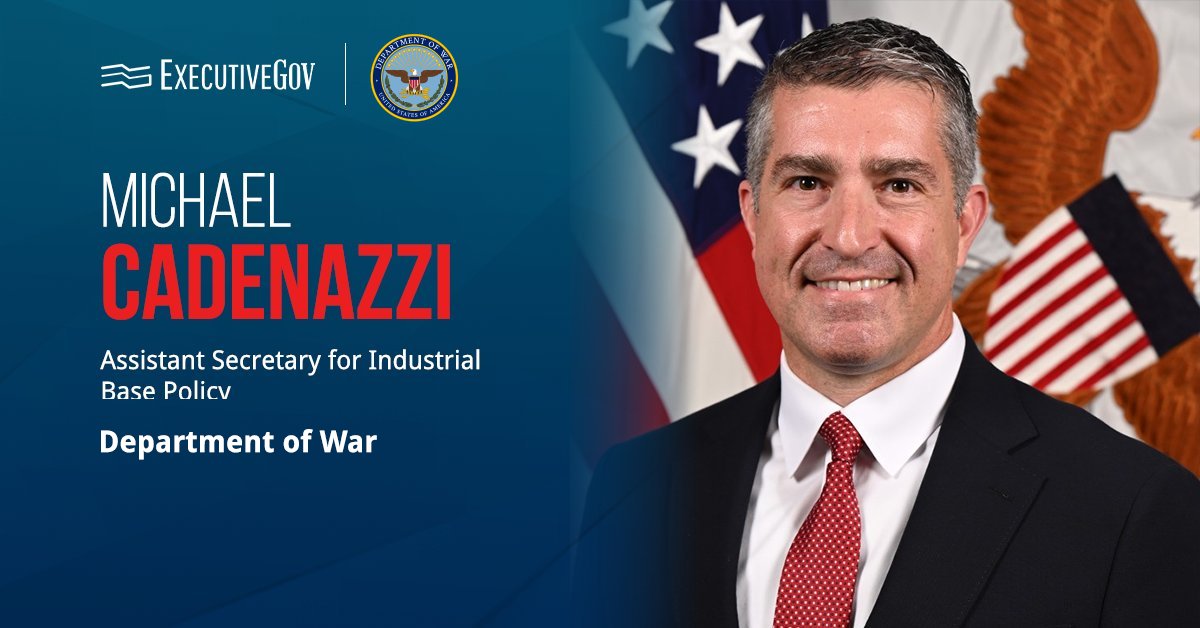
Michael Cadenazzi, the Department of War’s assistant secretary for industrial base policy, said President Donald Trump has invoked the Defense Production Act, or DPA, to establish a framework that allows munitions manufacturers to coordinate with the Pentagon on supply chain, production and industrial base challenges through voluntary agreements, Breaking Defense reported Tuesday.

As the defense industrial base works to expand capacity and address munitions production challenges, military and industry leaders will gather at upcoming Potomac Officers Club events focused on military modernization and readiness. Register now for the 2026 Army Summit, taking place Thursday, June 18, and secure your spot at the 2026 Air and Space Summit on July 30. You can also sign up for the 2026 Navy Summit on Aug. 27 to hear experts discuss the priorities shaping the future of DOW and the defense industrial base.
Speaking at a Center for a New American Security event, Cadenazzi said the authority provides “a way for us to communicate and leverage industry.”
Why Did Trump Invoke the Defense Production Act?
In a presidential memorandum published Tuesday in the Federal Register, Trump determined that systemic constraints in the munitions industrial base could impair the U.S. ability to produce, expand and sustain the availability of missiles, munitions and equipment to meet national defense needs.
The memo cites fragile supply chains, limited production capacity, long-lead dependencies and related bottlenecks as challenges that could affect national defense preparedness. Trump delegated authority to Secretary of War Pete Hegseth, a two-time Wash100 awardee, under DPA’s Section 708 to establish voluntary agreements and plans of action with industry to support national defense requirements.
In 2022, the Biden administration invoked DPA to strengthen domestic production of critical materials used in manufacturing clean energy technologies. During his first term, Trump used the authority to respond to the impact of the COVID-19 pandemic on the defense industrial base.
How Will the Defense Production Act Support Industry Coordination?
According to Breaking Defense, Cadenazzi said the voluntary agreement framework under DPA will allow the Pentagon to bring together companies across the munitions supply chain to discuss challenges and share information related to workforce development, engineering, materials, electronics, certification and qualification processes.
“These conversations can’t happen across companies unless we provide the framework for it. This provides that framework,” Cadenazzi told reporters.
He also told reporters that the authority will help the Pentagon gather input from suppliers and develop approaches to increasing production capacity in areas such as solid rocket motors.
What Other Steps Has the Pentagon Taken to Expand Munitions Production?
The Wall Street Journal reported that the Pentagon has pursued multiyear agreements with defense contractors and encouraged industry investments in manufacturing facilities to support increased output of Patriot, Terminal High Altitude Area Defense, Standard Missile and other weapon systems.
The publication also reported that Cadenazzi compared the voluntary agreement structure to the Civil Reserve Air Fleet, which augments military airlift capacity during national emergencies. In addition, he highlighted collaboration between traditional defense contractors, emerging defense technology companies and commercial manufacturers as part of broader industrial base expansion efforts.
The White House reportedly sought to convene defense industry executives to discuss measures to boost weapons production amid rising demands on military stockpiles. However, the meeting was postponed due to developments related to the Iran conflict, according to sources cited by WSJ.