- The Navy has established a direct reporting portfolio manager for robotic and autonomous systems
- The office will operate alongside DOW’s DRPM for unmanned offensive and defensive systems
- Acting Navy Secretary Hung Cao will keynote the 2026 Navy Summit on Aug. 27
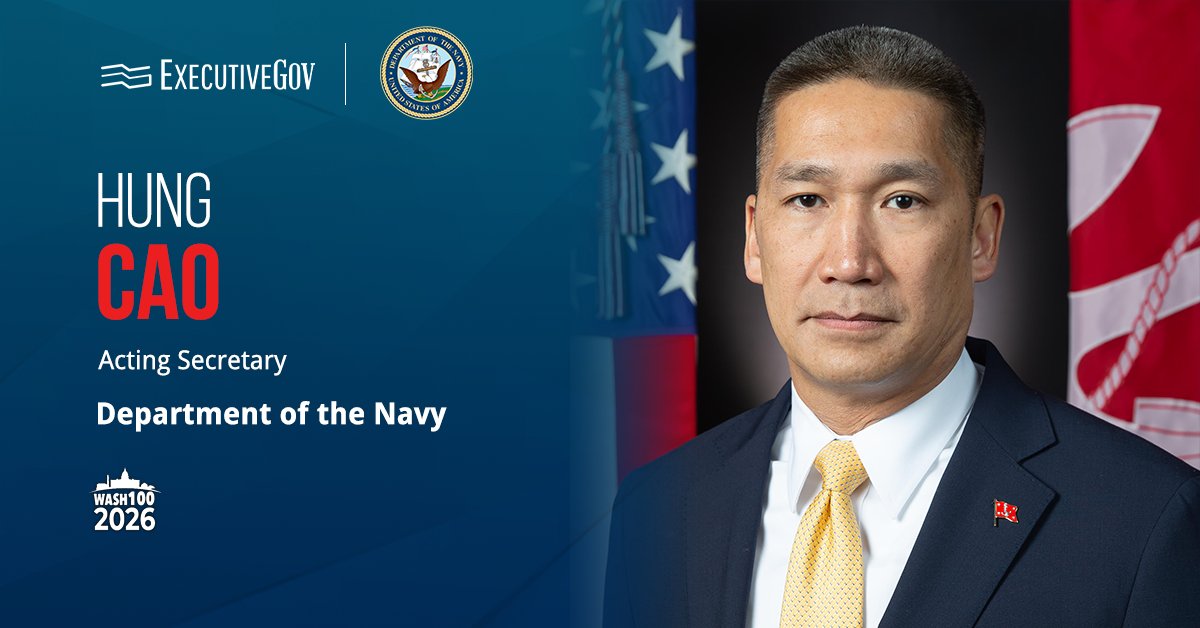
Acting Secretary of the Navy Hung Cao, a 2026 Wash100 awardee, has announced the formation of the direct reporting portfolio manager for robotic and autonomous systems, or DRPM RAS.

As the service continues to reshape how it develops and fields autonomous and unmanned capabilities, Cao will deliver a keynote speech at the Potomac Officers Club’s 2026 Navy Summit on Aug. 27. Hear Cao and other military and industry leaders as they discuss artificial intelligence, digital engineering, shipbuilding, unmanned systems, network modernization and other priorities shaping the future of naval readiness. Sign up now!
The Navy said Wednesday the establishment of DRPM RAS marks a strategic restructuring to integrate the requirements and development of RAS capabilities across the Department of the Navy and reflects DON’s effort to improve acquisition governance and strengthen maritime dominance.
What Is DRPM RAS?
DRPM RAS is a new organization built on DON’s existing DRPM model, which was first established for the submarine portfolio. The office is designed to correct fragmented requirements, resourcing and acquisition practices that previously dispersed accountability, complicated industry engagement and slowed capability delivery to the fleet. DRPM RAS is designed to operate alongside the Department of War’s DRPM for unmanned offensive and defensive systems.
“We are at an inflection point in naval warfare, and the Department has been approaching robotic and autonomous systems through arcane processes that do not deliver capabilities at the speed our Sailors and Marines need,” said William “Bill” Toti, currently performing the duties of the under secretary of the Navy and a previous Wash100 honoree. “Secretary Cao has directed us to replace that model with clear accountability, faster decisions, and a relentless focus on the warfighter.”
DON is considering relocating DRPM RAS personnel away from Washington, D.C., to place them closer to fleet warfighters. The review centers on whether closer proximity to operational forces would strengthen collaboration and speed up the flow of fleet input into capability development and fielding decisions.
Who Will Lead DRPM RAS?
Christopher Miller will serve as acting DRPM RAS, reporting directly to Toti. Miller will also serve concurrently as acting portfolio acquisition executive for RAS.
“To remain the most lethal and technologically advanced maritime force in the world, we must both improve and accelerate how we partner with industry to develop and deliver the next generation of warfighting capabilities,” said Miller. “Success depends on ensuring operational requirements drive rapid development so we’re delivering the right solutions to the warfighter.”
What Other Modernization Efforts Has Cao Led?
The DRPM RAS announcement is the latest in a series of modernization moves under Cao.
Cao recently signed the Navy’s Strategy to Weaponize Data and Artificial Intelligence, the service’s roadmap for establishing a data-ready and AI-proficient force. In May, he announced that Boeing‘s MQ-25A Stingray unmanned refueling aircraft received Milestone C approval to enter low-rate initial production.
More broadly, the acting secretary has also moved to consolidate more than 600 Navy networks, launch a departmentwide narrative strategy and shorten modernization timelines to three-month sprints.