- More than 70 percent of OPM personnel use at least one large language model
- OPM employees have access to ChatGPT, Copilot, Grok and Claude
- AI is being used to process federal training material for an HR systems consolidation effort
The Office of Personnel Management will keep expanding its use of artificial intelligence, following the General Services Administration’s new OneGov agreement with OpenAI, Nextgov reported Tuesday.

The Potomac Officers Club’s 2026 FedCiv Summit on Oct. 29 will bring government leaders and industry executives together to discuss federal civilian AI adoption, data and cloud infrastructure, cybersecurity and procurement priorities. Register today to hear how agencies are putting these priorities into action.
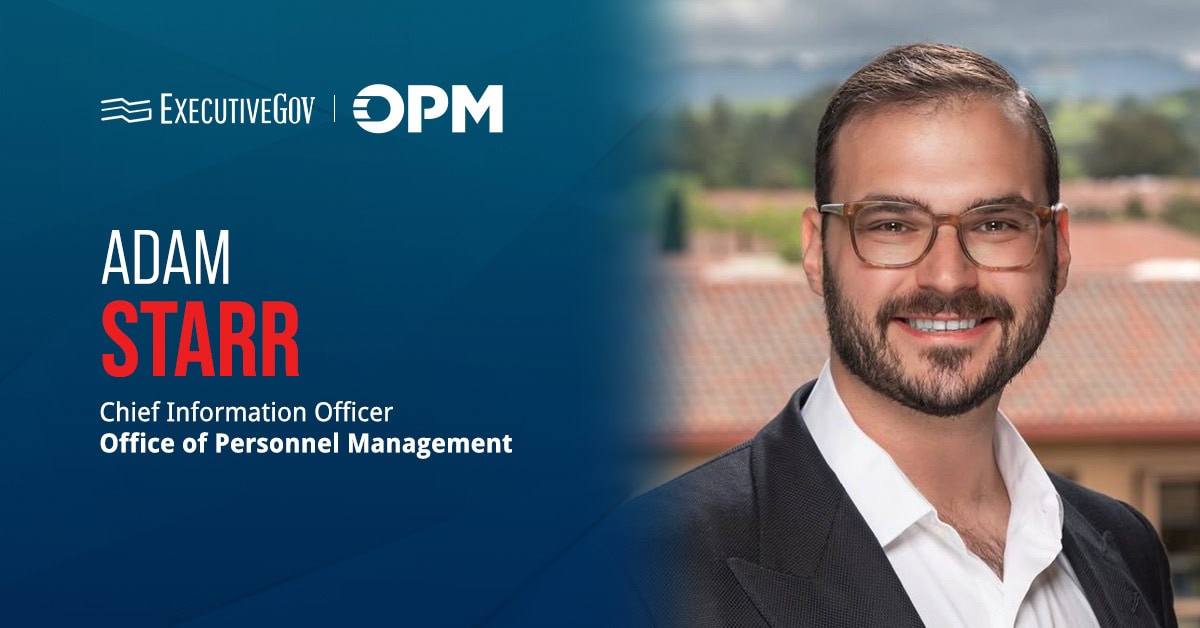
Speaking at the GovExec Government & AI Summit Tuesday, Adam Starr, chief information officer of OPM, said more than 70 percent of OPM personnel actively use at least one large language model. Employees currently have access to four large language models — ChatGPT, Copilot, Grok and Claude — under the agency’s AI inventory.
How Is OPM Using AI Tools?
OPM’s June workforce pulse survey recorded a net promoter score of 17.9 for its AI tools on a scale of -100 to 100, an OPM spokesperson said. The Office of the Director posted the highest score at +95.7 followed by the human capital office at +64.1, the spokesperson added.
One employee is using AI to sort through thousands of pages of training material as OPM works to consolidate 119 human resources IT systems into one, Starr said. Other staff have used AI to build internal dashboards and rewrite the customer relationship management system deployed at retirement services contact centers, he said.
What Does the OneGov Agreement Mean for OPM?
The new GSA OneGov agreement with OpenAI, which will take effect Oct. 1, offers consumption-based pricing instead of the prior $1-a-year rate, while deals covering Anthropic’s Claude and Google’s Gemini are set to expire at the end of the month.
“I want to continue to offer everyone at OPM multiple tools so that, as the frontier changes, people can move to the best tool, and then vendors can compete for our business every day by offering the best tool,” Starr said.
What Is OPM’s STEPS Approach?
OPM’s AI strategy follows a five-part approach Starr calls STEPS: signals, tools, enablement, policies and staffing. Enablement includes an ambassador program that roughly a quarter of the agency has joined, where participants learn how at least two AI tools apply to their work and train five to 10 colleagues. That approach has also shaped AI Governance and Adoption, or AI GAP, a newer OPM program aimed at helping other agencies adopt AI, Starr said.
Starr was a panelist at the Potomac Officers Club’s 2026 Artificial Intelligence Summit in March, where he discussed the use of AI in government automation.