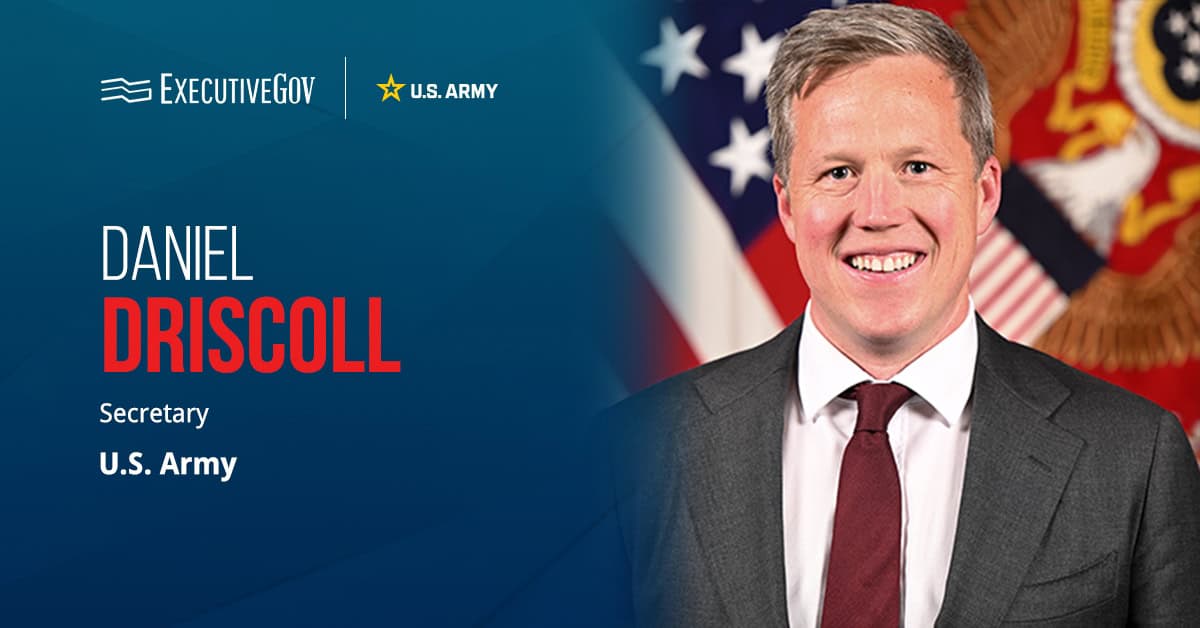
- Army Secretary Dan Driscoll has signed an agreement with NATO allies to widen access to the service’s UAS Marketplace
- Representatives from nine nations, including the U.K., France and Poland, joined the signing at the Eurosatory defense show in Paris
- The marketplace centers on counter-drone systems for now but could later expand to drones, radars, sensors, tanks and helicopters
 Army Secretary Dan Driscoll has signed a statement of intent with NATO allies and partners to expand access to the service’s Uncrewed Aircraft System, or UAS, Marketplace, providing participating nations a path to acquire battle-tested counter-drone capabilities.
Representatives from Sweden, Denmark, Norway, France, Poland, the United Kingdom, the Netherlands, Italy and Lithuania joined Driscoll, a 2026 Wash100 Award winner, on the second day of the Eurosatory defense exhibition in Paris, the U.S. Army said Tuesday. Under the agreement, the participants committed to streamlining counter-UAS acquisition and training and to fielding effective systems faster across their forces.
The Army’s drive to field unmanned and counter-drone capabilities faster will be a central theme at the Potomac Officers Club’s 2026 Army Summit on June 18. With speakers from the Army’s Mission Autonomy enterprise, including Capability Program Executive BG Anthony Gibbs and PM Robotic Control & Integration Robert Monto, the event will explore how industry can help the newly revitalized Army deliver on its priorities. Register now.
What Is the UAS Marketplace Meant to Do?
Driscoll said the marketplace is a way to make procurement more transparent and responsive by letting vendors from participating nations compete in a single environment, gathering feedback directly from soldiers using the equipment and scaling the systems that perform. He framed it as an effort to clear government regulation out of the way and borrow the model of commercial market portals.
While the marketplace is currently focused on counter-drone systems, it could eventually extend to other capabilities, including drones, radars, sensors, tanks and helicopters, highlighting the need for allies to deploy interoperable systems capable of sharing data for sustained collaboration.
He pointed to the Army’s Operation Jailbreak as an example of removing technical barriers. The effort assessed around 100 systems over a month, underscoring the need to ensure equipment can exchange data via common digital interfaces. In Europe, the Army aims to put those lessons to work through the Eastern Flank Deterrence Initiative, pushing vendors to meet allied specifications from the earliest stages of system development.
How Does This Fit the Army’s Drone Acquisition Push?
The signing builds on a marketplace effort the Army has assembled over the past year. The service launched the UAS Marketplace in May, in partnership with Amazon Web Services. A separate counter-UAS marketplace, run by the Army-led Joint Interagency Task Force 401, reached initial operational capability in February and has completed four purchases totaling $13 million.
In April, Driscoll and Romania’s defense minister signed an agreement giving the country access to the JIATF-401 counter-drone marketplace, part of his goal to extend access to 25 partner nations by the end of summer 2026.