
- CENTCOM has announced Task Force Falcon Strike, its first multinational drone unit
- Falcon Strike builds on Task Force Scorpion Strike, launched nine months earlier
- SOCCENT will lead Falcon Strike’s staff of U.S. and regional representatives
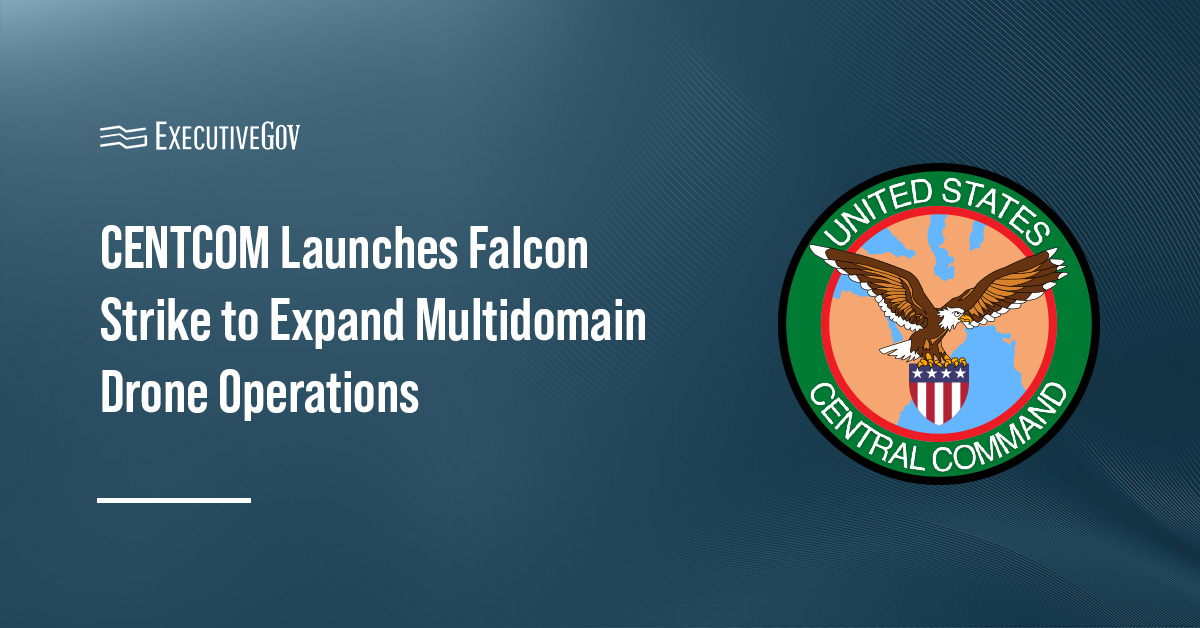
U.S. Central Command has announced the establishment of Task Force Falcon Strike, a new multinational, multidomain unit designed to expand the use of one-way attack drones across the Middle East.
The task force will integrate unmanned systems operating above, on and below the sea. U.S. military personnel and regional partners will operate the systems as participating countries formally join the effort, CENTCOM said Friday.
What Is Falcon Strike Building On?
Falcon Strike follows the creation of Task Force Scorpion Strike, which CENTCOM launched nine months earlier as the military’s first dedicated one-way attack drone squadron in the Middle East.
Scorpion Strike has since reached several operational milestones, including the first launch of an aerial attack drone from a U.S. Navy warship in December. The unit also used unmanned aerial systems during Operation Epic Fury and unmanned attack vessels during July strikes on Iranian port facilities.
“Task Force Falcon Strike will expand on Scorpion Strike’s success given the tremendous innovation happening among our regional allies and partners,” said Adm. Brad Cooper, CENTCOM commander.
How Are Regional Partners Involved?
CENTCOM is consulting with and formally inviting regional partners to join Falcon Strike. The initiative is intended to create a unified multinational capability spanning multiple domains.
“Integrating and deploying our new capabilities together will help us rapidly realize the new possibilities that are on the horizon,” Cooper said.
Personnel from U.S. Special Operations Command Central, which established Scorpion Strike, will lead Falcon Strike’s staff of U.S. and regional representatives. SOCCENT is headquartered at MacDill Air Force Base in Tampa, Florida, and oversees special operations across CENTCOM’s 21-country area of responsibility.
“We are collectively stronger when we integrate and deploy new capabilities together,” Cooper said.