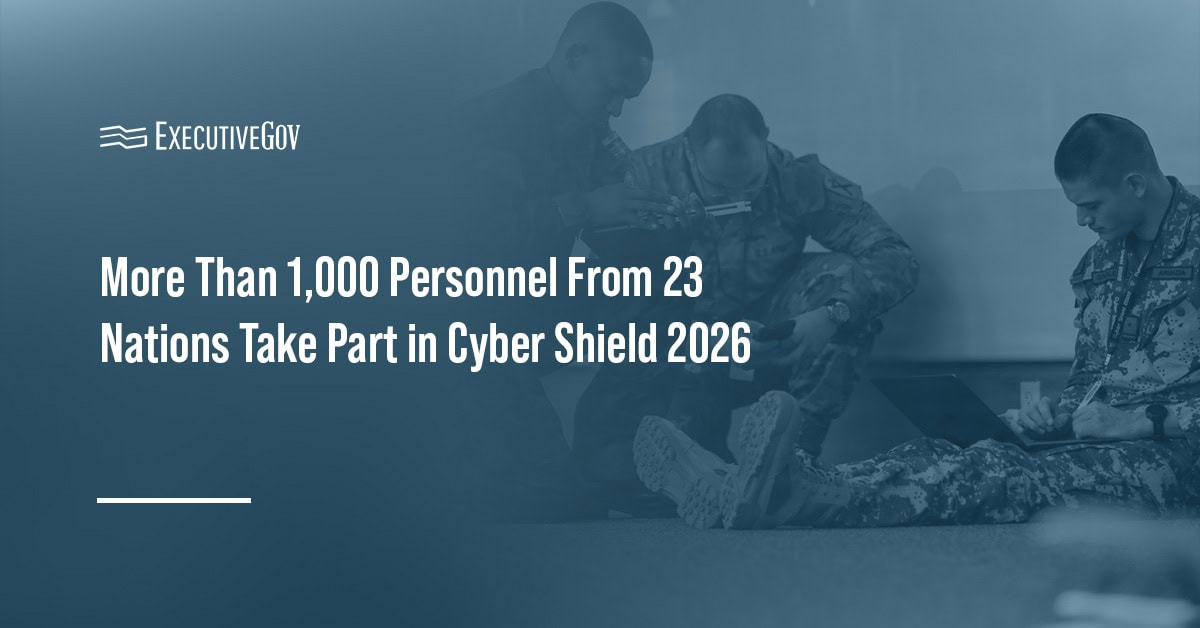
- The Department of War has begun the Cyber Shield 2026 cyber defense exercise in Arkansas
- This year’s event emphasizes the National Guard Bureau’s State Partnership Program, which teams National Guard units with international attendees
- The exercise involves over 1,000 participants from the U.S. and 23 partner countries
The U.S. Army announced Sunday that the Department of War has commenced Cyber Shield 2026, its longest-running and largest unclassified cyber defense exercise, in Little Rock, Arkansas.
The exercise, which takes place from from July 12 through July 25, has drawn more than 1,000 participants representing 44 states and territories, as well as military and civilian cyber professionals from 23 partner countries. Attendees include active-duty service members, reservists, National Guard personnel, civilians and international allies, all working through realistic, scenario-based training designed to sharpen cyber defense capabilities.
What Is the Mission of Cyber Shield?
Cyber Shield’s core mission centers on training cyber forces for internal network defense and incident response. The joint training allows allied forces to exchange threat-hunting techniques, refine response procedures and improve interoperability to defend critical infrastructure against cyber threats that transcend international borders.
For some international attendees, Cyber Shield offers a chance to build on prior training. For others, the exercise represents a first-time opportunity to work directly alongside U.S. cyber professionals.
What Is the Focus of Cyber Shield 2026?
A central component of this year’s exercise is the National Guard Bureau’s State Partnership Program, which pairs National Guard units with international partner nations to encourage collaboration, knowledge exchange and long-term relationship building. The program has supported military-to-military relationships for more than three decades and now spans 107 partnerships with 116 nations.
One of their activities, threat-hunting—the proactive search for hidden, stealthy threats that evade automated defenses—was stressed as a critical line of defense against modern cyberattacks. In these exercises, participants are split into opposing groups: a red team that mimics real-world adversary tactics, and a blue team made up of U.S. and international personnel responsible for detecting, defending against and delivering incident responses to simulated attacks.