
- The U.S is growing its military presence in the Philippines to deter China from invading Taiwan
- This includes complex exercises and tests of advanced technologies like missiles
- Hear directly from acting Navy Secretary Hung Cao at the 2026 Navy Summit on Aug. 27!
The Department of War is bolstering its presence in the Philippines, deploying advanced missile systems, upgrading local bases and performing intricate exercises in the southeast Asian nation, according to the Wall Street Journal.
It’s all part of the U.S. strategy for deterring China from invading Taiwan. The Coast Guard, earlier this year, used flexible patrol craft in Subic Bay for the first time. Cerberus Capital Management, a U.S. private equity company co-founded by Deputy Secretary of War Steven Feinberg, beat out Chinese companies to possess a commercial shipyard in Subic Bay.
A South Korean shipbuilder that could potentially help fix U.S. vessels is a tenant of that shipyard.
“Subic Bay is an important commercial hub that enables logistics coordination between the U.S.” and the Philippine military, U.S. Pacific Command said.
Get exclusive investment insights on innovative naval technologies directly from acting Secretary Hung Cao during his keynote at the 2026 Navy Summit on Aug. 27! Expect to hear about Cao’s plans for the Golden Fleet shipbuilding initiative, advanced submarine efforts and improving contracting with small businesses. Get your burning questions answered during his question-and-answer session. Tickets are almost sold out—secure yours today!
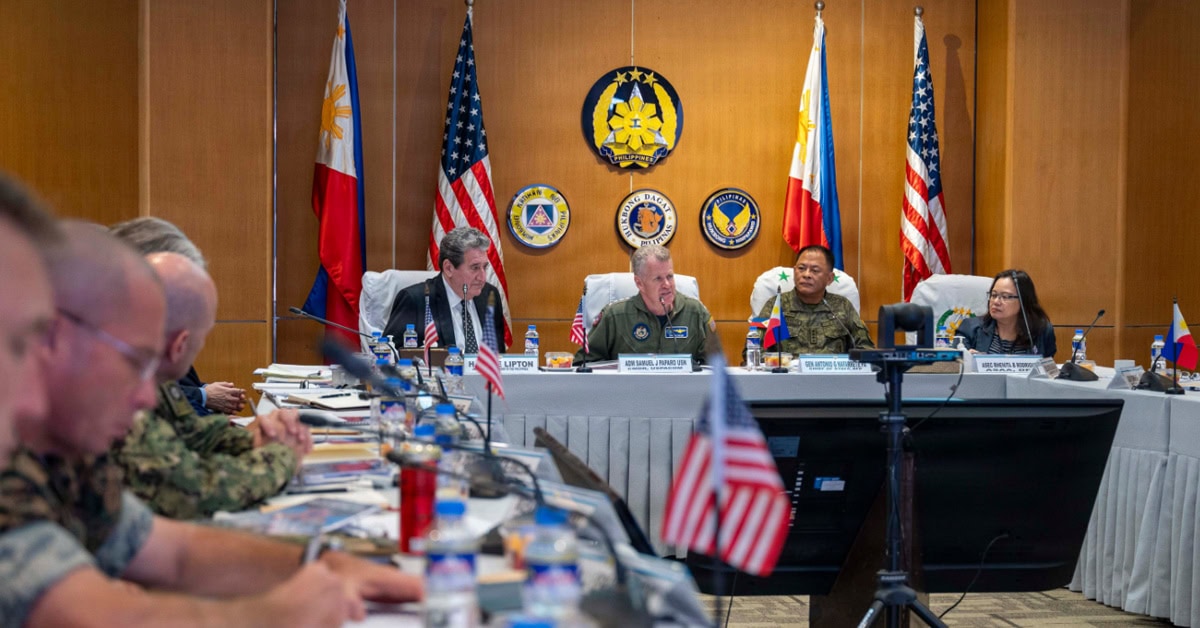
What Access Does the DOW Have in the Philippines?
The DOW has access to nine Philippine airports and bases that allow it to rotate forces, develop infrastructure and house equipment. The DOW has appropriated more than $300 million to improve these bases with new hangars, better runways and additional storage.The Pentagon in 2025 created Task Force-Philippines, with 60 servicemembers located in the nation, to bolster cooperation with the Philippine government.
What Military Technologies Is the U.S. Using in the Philippines?
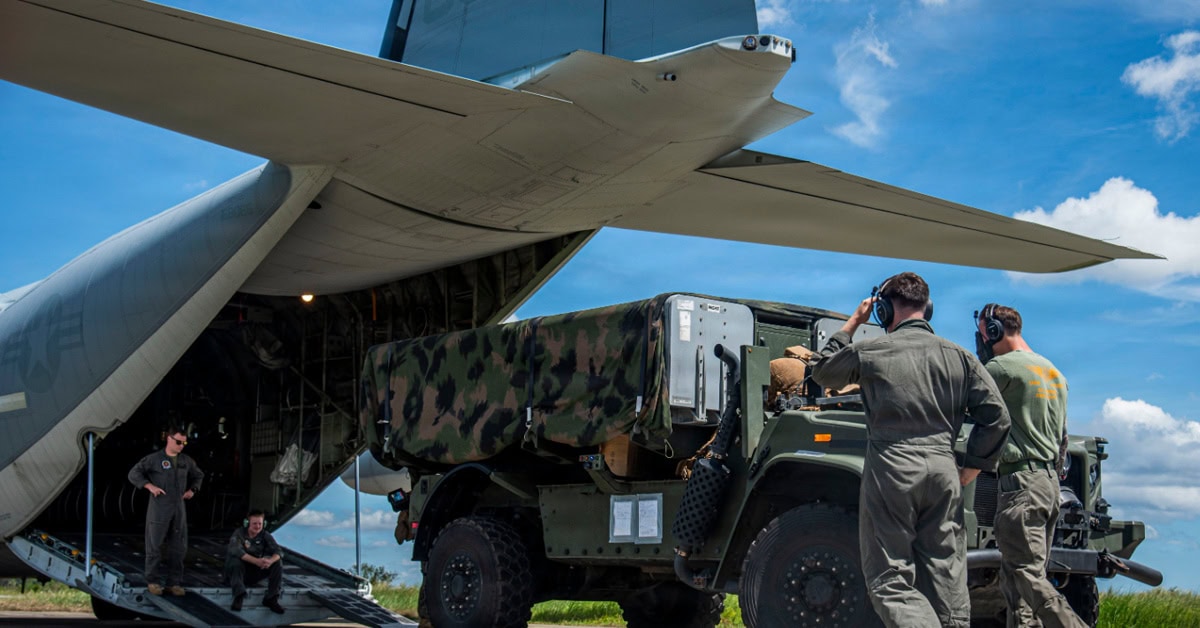
The U.S. is using some of its most advanced military technology in exercises in the Philippines.The Navy-Marine Expeditionary Ship Interdiction System, or Nmesis, was deployed on a runway on Itbayat, one of the Philippines’ most northern islands.
Nmesis is a novel anti-ship missile launcher installed on a remote-controlled truck. The missiles it deploys have a range of nearly 115 miles. This is long enough to allow U.S. Marines to destroy Chinese warships trying to travel south of Taiwan.
The U.S. Army has also fired a Tomahawk missile, which features a range of about 1,200 miles. U.S. Marines, at a naval base on the island of Luzon. It has also practiced downing unmanned aircraft systems using the newest truck-mounted counter-UAS system.
Take advantage of burgeoning opportunities in unmanned systems by attending the Potomac Officers Club’s 2026 Navy Summit on Aug. 24. Discover scaling autonomous systems from experimentation to fleet operations and integrating manned and unmanned platforms across mission sets at our Hybrid Fleet in Production panel discussion. It features top Navy officials and industry experts, including:
- David Raley, Marine Corps Operation Stormbreaker chief digital services officer
- Capt. Randy Cruz, Naval Research Laboratory commanding officer
- Lacy Wean, Carahsoft senior director for space and defense technology
- Vice Adm. (retired) Robert Sharp, Windward Maritime AI chief maritime intelligence officer
Why Is the Philippines Valuable to the U.S. Military?
The Philippines is valuable to the U.S. military for its strategic location in southeast Asia. The nation’s 7,641 islands form a geographic barrier that boxes in Chinese naval forces and prevents its expansion into the Pacific. The Philippines serves as the focus of U.S. strategy to suggest to China that it would be too dangerous to invade Taiwan.
“The Philippines’ geography is irreplaceable,” said Brian Harding, a previous DOW official who was part of early discussions about access to Philippine bases during the Obama administration. “We’re not going to have U.S. bases in the Philippines, but the idea is to have the U.S. present continually and deeply familiar with the facilities.
The U.S. needs Philippine authorities to permit specific activities on its bases, or with the use of its bases. These include storing certain weapon systems. President Ferdinand Marcos Jr. has declared that the nation cannot be used for offensive action.