
- Foundry School is targeting an estimated need for 3.8 million skilled workers by 2033
- Stanford University is developing the curriculum for U.S. and international trainees
- The State Department is also working with Congress to bring in participants from Pax Silica partner economies
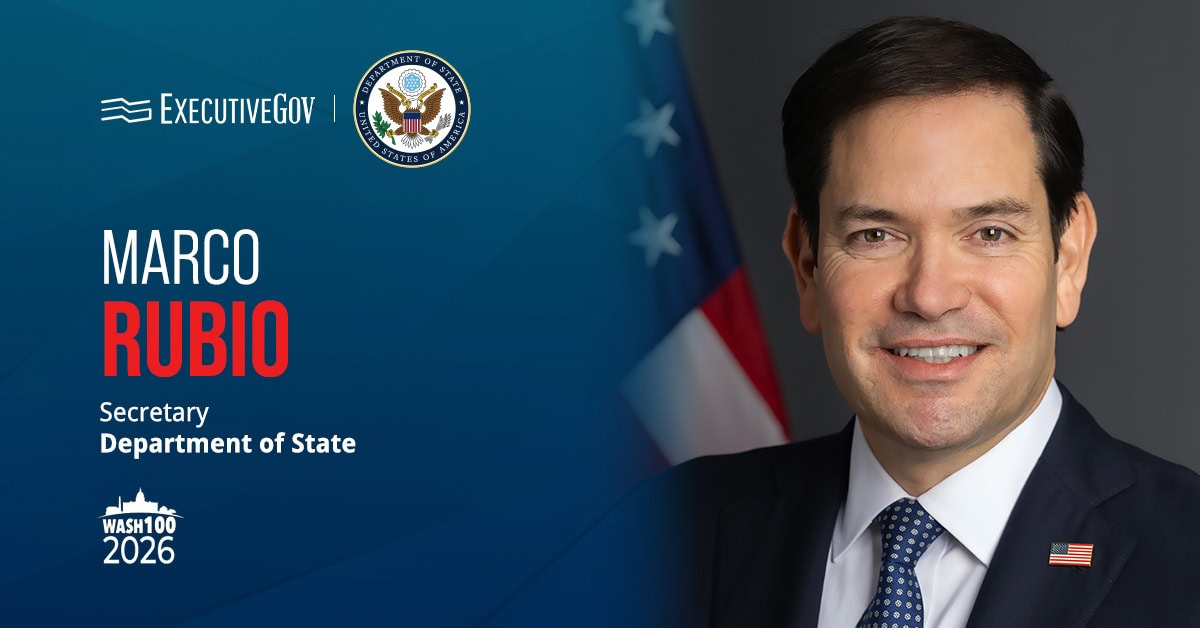
Vice President J.D. Vance and Secretary of State Marco Rubio, a two-time Wash100 Award winner, have launched Foundry School to help close a shortage of skilled manufacturing workers, the Department of State said in a press release published Thursday.
What Is Foundry School?
Foundry School is a training program designed to address workforce and manufacturing capacity gaps by connecting participants with companies involved in building and operating advanced manufacturing facilities.
To meet the demand for an estimated 3.8 million skilled workers by 2033, the program will help prepare entrepreneurs, technicians, engineers and industrial leaders in sectors such as semiconductors, defense and energy.
The department is working with Stanford University to create a curriculum for both U.S. and international trainees. It is also coordinating with Congress to bring in participants from Pax Silica partner economies.
The training initiative comes as the State Department pursues broader Pax Silica efforts to strengthen semiconductor supply chains, advanced manufacturing and related infrastructure. Those efforts include a proposed $250 million Pax Silica Fund for critical minerals, infrastructure and manufacturing assets, as well as plans for new manufacturing capacity in partner countries. One such effort is a proposed 4,000-acre AI-powered manufacturing hub in the Philippines intended to support electronics and semiconductor supply chains.
What Does the Program Teach?
The 17-session curriculum is split into two stages. It opens this September with regional sessions at seven schools, including Arizona State, Georgia Tech, Ohio State, Penn State, the University of Kansas, Vanderbilt and Washington University in St. Louis.
Students will work through factory design, supply chain basics and the groundwork of running a plant. From there, participants move into a ten-session Stanford program starting January 2027 that pushes into more technical territory: industrial automation, precision tooling and defense manufacturing. The program will wrap up with a session built around what past manufacturing ventures got wrong.
Every session is led by a founder or CEO from an advanced manufacturing company, with instructors coming from the U.S. as well as South Korea, Japan, Taiwan and India.