Executive Gov
  • Home
  • Acquisition & Procurement
  • Agencies
    • DoD
    • Intelligence
    • DHS
    • Civilian
    • Space
  • Cybersecurity
  • Technology
  • Awards
  • News
  • About
  • Wash100
  • Contact Us
    • Advertising
    • Submit your news
No Result
View All Result
Executive Gov
  • Home
  • Acquisition & Procurement
  • Agencies
    • DoD
    • Intelligence
    • DHS
    • Civilian
    • Space
  • Cybersecurity
  • Technology
  • Awards
  • News
  • About
  • Wash100
  • Contact Us
    • Advertising
    • Submit your news
No Result
View All Result
Executive Gov
No Result
View All Result
Home Cybersecurity

CISA Orders Federal Civilian Agencies to Prioritize Vulnerability Patching by Risk

by Kristen Smith
June 11, 2026
in Cybersecurity, DHS, Federal Civilian, News
CISA logo. CISA has issued a new directive on vulnerability remediation.

CISA's new Binding Operational Directive 26-04 requires federal civilian agencies to prioritize vulnerability remediation based on four risk criteria.

  • CISA has ordered federal civilian agencies to remediate vulnerabilities on risk-based timelines
  • The most dangerous cases — exposed, exploited, automatable flaws granting full control — must be fixed within three days
  • The agencies have 180 days to meet the new remediation deadlines

CISA Orders Federal Civilian Agencies to Prioritize Vulnerability Patching by RiskThe Cybersecurity and Infrastructure Security Agency on Wednesday issued Binding Operational Directive 26-04, requiring federal civilian agencies to rethink their vulnerability management policies and remediate security flaws on timelines determined by risk rather than treating all vulnerabilities equally.

Table of Contents

    • You might also like
    • NPS Unveils NVIDIA-Built AI Supercomputer
    • Space Force Advances Battle Management Concepts Through Chalkydri IV Wargame
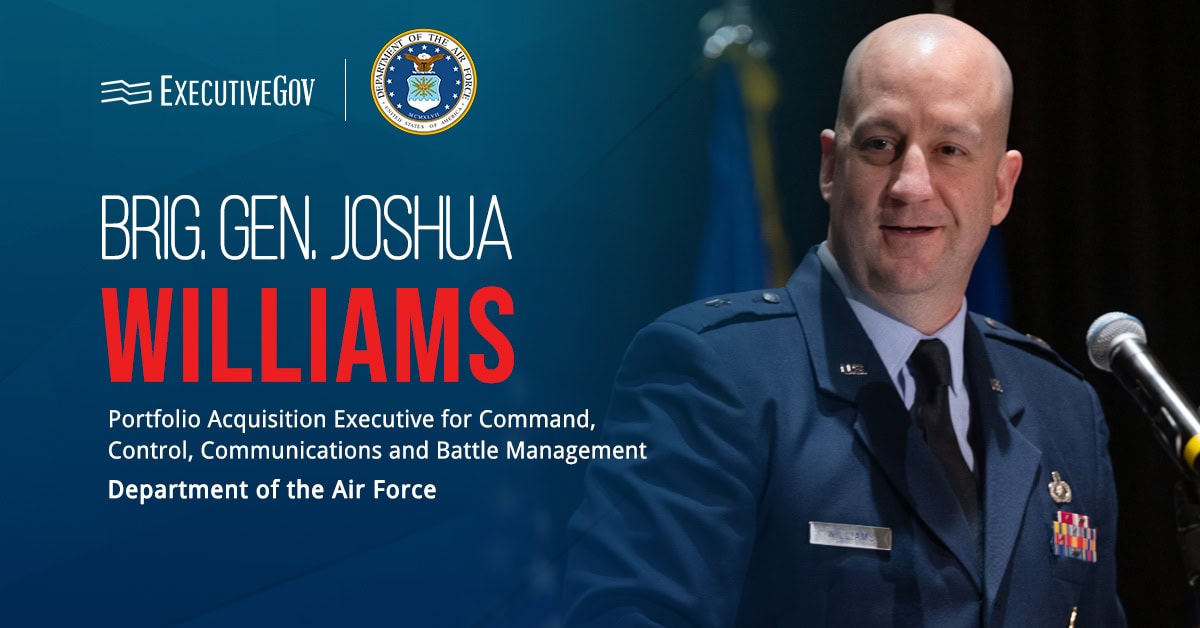
    • USAF Names Brig. Gen. Joshua Williams to Lead C3BM Acquisition Portfolio
  • What Does the Directive Require Agencies to Do?
  • Why Is CISA Changing Its Vulnerability Management Approach?

You might also like

NPS Unveils NVIDIA-Built AI Supercomputer

Space Force Advances Battle Management Concepts Through Chalkydri IV Wargame

USAF Names Brig. Gen. Joshua Williams to Lead C3BM Acquisition Portfolio

CISA’s risk-based pivot is just one piece of a broader shift underway at the Department of Homeland Security, where increased funding for FY2026 is fueling new investments in AI, cyber defense and operational capabilities. Register now for the Potomac Officers Club’s 2026 Homeland Security Summit on Nov. 12 to hear directly from DHS leadership on how industry can support these renewed priorities.

Under the directive, titled Prioritizing Security Updates Based on Risk, the urgency of a fix is set by four criteria: whether the vulnerable asset is publicly exposed; whether the flaw appears in CISA’s Known Exploited Vulnerabilities, or KEV, catalog; whether an adversary can fully automate exploitation; and how much control an attacker would gain after a successful breach.

The new mandate supersedes and revokes two earlier directives — BOD 19-02 on remediating internet-accessible systems and BOD 22-01, which established the KEV catalog in 2021 — consolidating federal patching requirements into a single risk-based framework. Agencies are directed to concentrate resources on the most dangerous flaws while deferring action on low-risk ones, in some cases, until a system’s next scheduled major upgrade.

“This Directive provides clear definitions, timelines, and criteria that enhances transparency, predictability and agencies’ resource planning to execute more effective vulnerability remediation,” said Acting CISA Director Nick Andersen. 

While the order binds only federal civilian agencies, Andersen urged all organizations to adopt comparable practices in their own vulnerability management policies.

What Does the Directive Require Agencies to Do?

The directive rolls out in three phases. Effective immediately, agencies must update vulnerability management policies, monitor KEV catalog updates, automate vulnerability status reporting through the Continuous Diagnostics and Mitigation dashboard, and continue Cyber Hygiene scanning.

Within 60 days of the directive’s implementation, agencies must revise their processes to support ongoing remediation based on both the Common Vulnerabilities and Exposures database and the KEV catalog. Within 180 days, they must meet the directive’s remediation timelines and continuously identify and tag every agency-owned asset reachable from outside their networks, labeling each by organization, environment, exposure and asset type.

The most severe cases — publicly exposed assets with known, exploited, automatable vulnerabilities that grant total control — must be remediated within three days, accompanied by forensic triage to determine whether the system was compromised before the patch landed. CISA noted that applying a patch generally does not remove an attacker already inside a system, making compromise checks essential to managing risk.

CISA, for its part, is committed to keeping the KEV catalog current; supplying vulnerability metadata through its Vulnrichment Program; reassessing remediation timelines each fiscal year; and reporting annually to the homeland security secretary, the Office of Management and Budget director, and the national cyber director on government-wide implementation.

Why Is CISA Changing Its Vulnerability Management Approach?

The agency framed the directive as a response to a threat landscape in which artificial intelligence is shrinking the window between a patch’s release and a vulnerability’s exploitation. The order implements priorities in the executive order on advanced AI innovation and security and reflects agency and stakeholder feedback calling for KEV-based prioritization.

In May, Trump administration officials reportedly weighed cutting the remediation window for some KEV-listed flaws to as little as three days. Those discussions intensified after reports about Anthropic’s Claude Mythos preview raised concerns that advanced AI systems could accelerate the discovery and exploitation of vulnerabilities. Rob Joyce, former National Security Agency cybersecurity director, observed that AI is now finding software flaws at an industrial scale.

Some experts have cautioned that compressed deadlines come with trade-offs for agencies contending with aging infrastructure and staffing shortages. Tod Beardsley, CISA’s former vulnerability response lead, has noted that overly aggressive timelines can overwhelm IT teams and weaken prioritization.


Stay connected via Google News
Follow us for the latest travel updates and guides.
Add as preferred source on Google
Share5Tweet19

Recommended For You

NPS Unveils NVIDIA-Built AI Supercomputer

by Jane Edwards
July 24, 2026
Samuel Paparo. The Navy admiral and head of USINDOPACOM commented on NPS’ launch of the  NVIDIA DGX GB300 AI supercomputer.

NPS has installed the AI supercomputer under a research partnership with NVIDIAThe system will support research in weather modeling, cybersecurity and disaster responseThe 2026 Navy Summit will explore...

Read moreDetails

Space Force Advances Battle Management Concepts Through Chalkydri IV Wargame

by Celeste Vance
July 24, 2026
Space Force. Space Delta 10 has concluded Chalkydri IV, evaluating battle management concepts for future space operations.

Space Training and Readiness Command completed the fourth iteration of the Chalkydri battle management wargameParticipants from 18 organizations across the U.S. Space Force, Army and Air Force evaluated...

Read moreDetails

USAF Names Brig. Gen. Joshua Williams to Lead C3BM Acquisition Portfolio

by Jamie Bennet
July 24, 2026
Brig. Gen. Joshua Williams. The new DAF PAE for C3BM will replace Brig. Gen. Jason Voorheis.

U.S. Air Force Life Cycle Management Center has appointed Brig. Gen. Joshua Williams as the DAF portfolio acquisition executive for C3BMWilliams will replace Brig. Gen. Jason Voorheis, who...

Read moreDetails

NNSA Advances Nuclear Explosion Detection With Fifth Next-Gen GBD Payload

by Miles Jamison
July 24, 2026
Matthew Napoli. The NNSA official discussed the fifth Global Burst Detector sensor payload delivered to the U.S. Space Force.

NNSA’s fifth next-generation GBD payload will join existing satellites after launchThe space-based system is designed to detect nuclear detonations worldwideThe GBD payloads operate from GPS satellites in medium...

Read moreDetails

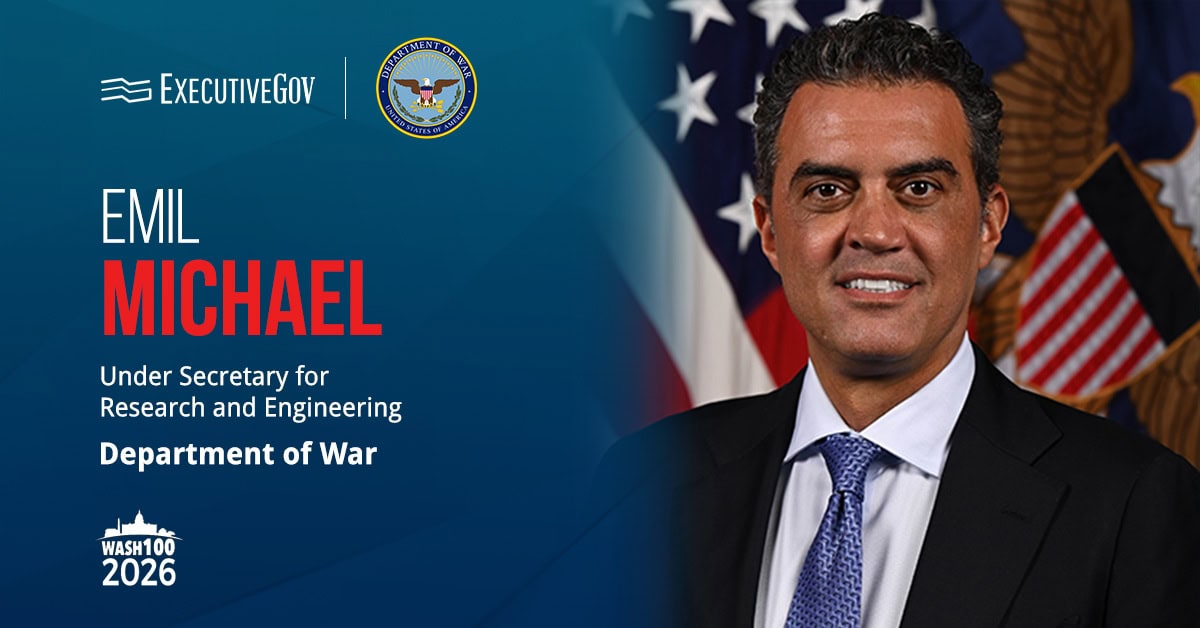
DOW Names 130 Foreign Institutions in Updated Tech Transfer Watch List

by Kristen Smith
July 24, 2026
Emil Michael. The DOW undersecretary commented on the tech transfer watch list update.

The list names 130 academic and research entities across China, Russia and IranDOW said the flagged institutions engage in activities that risk federally funded researchIt urged U.S. researchers...

Read moreDetails
Sign Up For Our Newsletter
Subscribe to our mailing list to receives daily updates direct to your inbox!
Invalid email address
Your privacy is guranteed.
Thanks for subscribing!

Sponsors

About ExecutiveGov

ExecutiveGov, published by Executive Mosaic, is a site dedicated to the news and headlines in the federal government. ExecutiveGov serves as a news source for the hot topics and issues facing federal government departments and agencies such as Gov 2.0, cybersecurity policy, health IT, green IT and national security. We also aim to spotlight various federal government employees and interview key government executives whose impact resonates beyond their agency.

CATEGORIES

  • Acquisition & Procurement
  • Announcements
  • Articles
  • Artificial Intelligence
  • Awards
  • Big Data & Analytics News
  • C4ISR
  • Civilian
  • Cloud
  • Contract Awards
  • Cybersecurity
  • Defense And Intelligence
  • Defense Security Cooperation
  • DHS
  • Digital Assets
  • Digital Modernization
  • DoD
  • Events
  • Executive Moves
  • Executive Spotlights
  • Federal Civilian
  • Financial Reports
  • Foreign Military Sales
  • General News
  • GovCon Expert
  • Government Cloud
  • Government Technology
  • GSA
  • Healthcare IT
  • Industry News
  • Intelligence
  • Legislation
  • M&A Activity
  • National Security
  • News
  • Policy Updates
  • Press Releases
  • Profiles
  • Space
  • Videos
  • Wash100
Sign Up For Our Newsletter
Subscribe to our mailing list to receives daily updates direct to your inbox!
Invalid email address
Your privacy is guranteed.
Thanks for subscribing!

Copyright 2026 Executive Mosaic. All Rights Reserved. Site Archive

No Result
View All Result
  • Home
  • Acquisition & Procurement
  • Agencies
    • DoD
    • Intelligence
    • DHS
    • Civilian
    • Space
  • Cybersecurity
  • Technology
  • Awards
  • News
  • About
  • Wash100
  • Contact Us
    • Advertising
    • Submit your news

Copyright 2026 Executive Mosaic. All Rights Reserved. Site Archive

Get your free GovCon news!

Get your latest GovCon news and insights. Become a VIP and subscribe to the GovConWire Daily News.

Invalid email address
We promise not to spam you. You can unsubscribe at any time.
Thanks for subscribing!