

- NNSA’s fifth next-generation GBD payload will join existing satellites after launch
- The space-based system is designed to detect nuclear detonations worldwide
- The GBD payloads operate from GPS satellites in medium Earth orbit to provide continuous monitoring for nuclear events
The National Nuclear Security Administration has delivered its fifth next-generation Global Burst Detector, or GBD, sensor payload to the U.S. Space Force for a system designed to detect above-ground nuclear detonations worldwide, the Department of Energy said Thursday.
What Is the Global Burst Detector System?
The space-based sensors are part of the U.S. Nuclear Detonation Detection System, a capability that has supported nuclear explosion monitoring for more than 60 years. GBD sensors orbit at about 12,550 miles above Earth aboard U.S. Global Positioning System satellites and provide continuous monitoring of nuclear events on the planet’s surface. The GBD payload includes multiple sensor types designed to identify signatures associated with nuclear explosions.
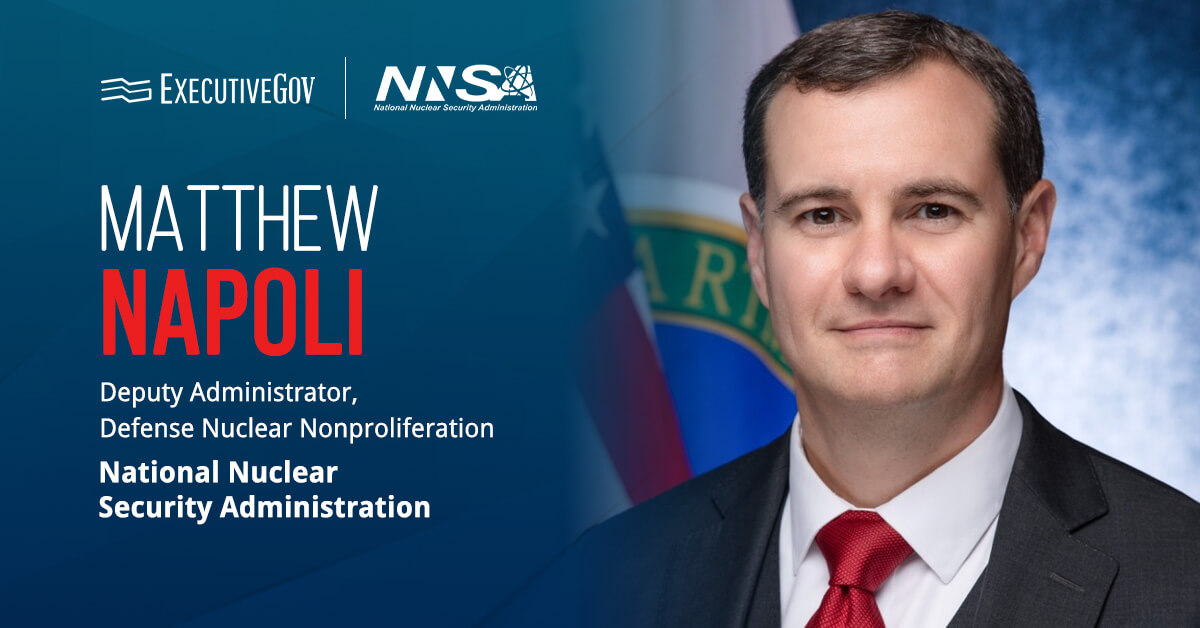
Matthew Napoli, deputy administrator for defense nuclear nonproliferation at NNSA, said the new payload will join existing satellites once launched, extending monitoring capability well into the future and providing the ability to detect nuclear detonations under all conditions.
The latest delivery builds on a transition to the next-generation IIIF series. Sandia National Laboratories and Los Alamos National Laboratory delivered the first two IIIF flight systems in 2024, with the first scheduled for launch in 2027. The fifth payload now joins the pipeline for future deployment as the U.S. continues replacing earlier-generation GBD systems.

Join senior Air Force, Space Force and NASA leaders at the Potomac Officers Club’s 2026 Air and Space Summit on July 30 to discuss space-based capabilities and other technologies supporting national security missions. The event is less than a week away. Register now!
How Are the GBD Sensors Developed & Deployed?
Los Alamos and Sandia jointly design, manufacture and deliver the GBD payloads, while Lawrence Livermore National Laboratory and The Aerospace Corp. provide systems engineering and independent mission assurance support.
Sandia develops the optical sensors and sensor management subsystem, while Los Alamos develops electromagnetic pulse, X-ray and charged-particle sensors.
Each GBD payload undergoes engineering, review, technology development, manufacturing and testing to certify the sensors for spaceflight before delivery. Following completion and delivery to the U.S. Space Force, the payload is handed over to the service’s GPS spacecraft contractor for integration and launch.

