- Louis Koplin has been key in advancing Navy tech like cyber and digital workplace
- He’s prioritized using OTAs to grow small tech bets into productive enterprise services
- Hear directly from Koplin on a panel at the 2026 Navy Summit on Aug. 27!
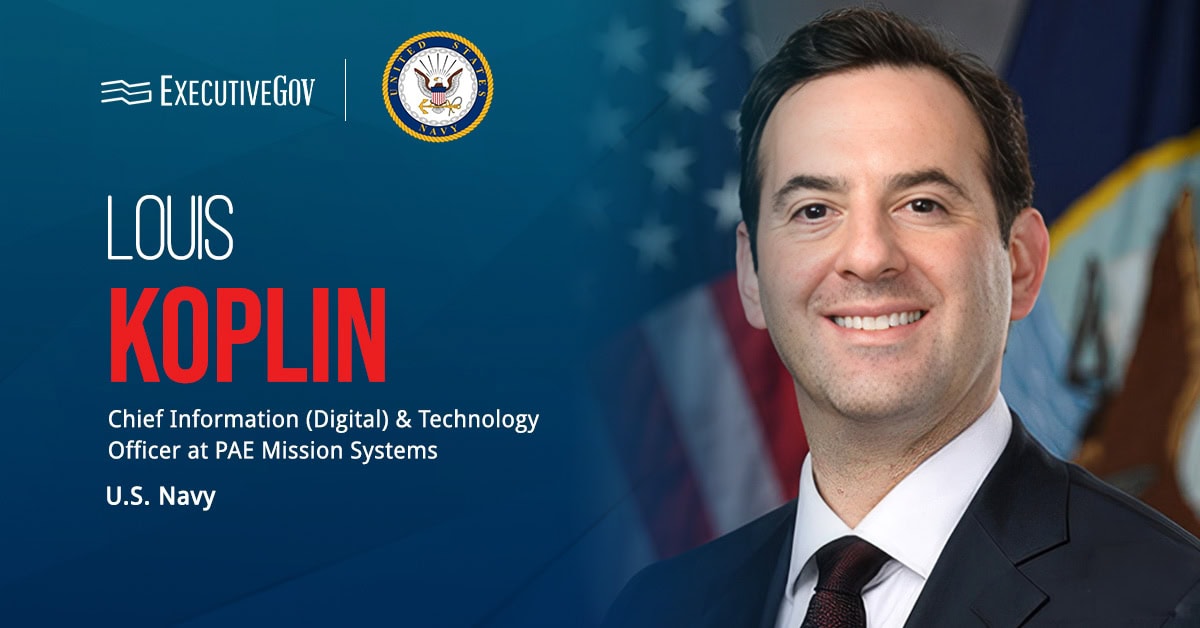
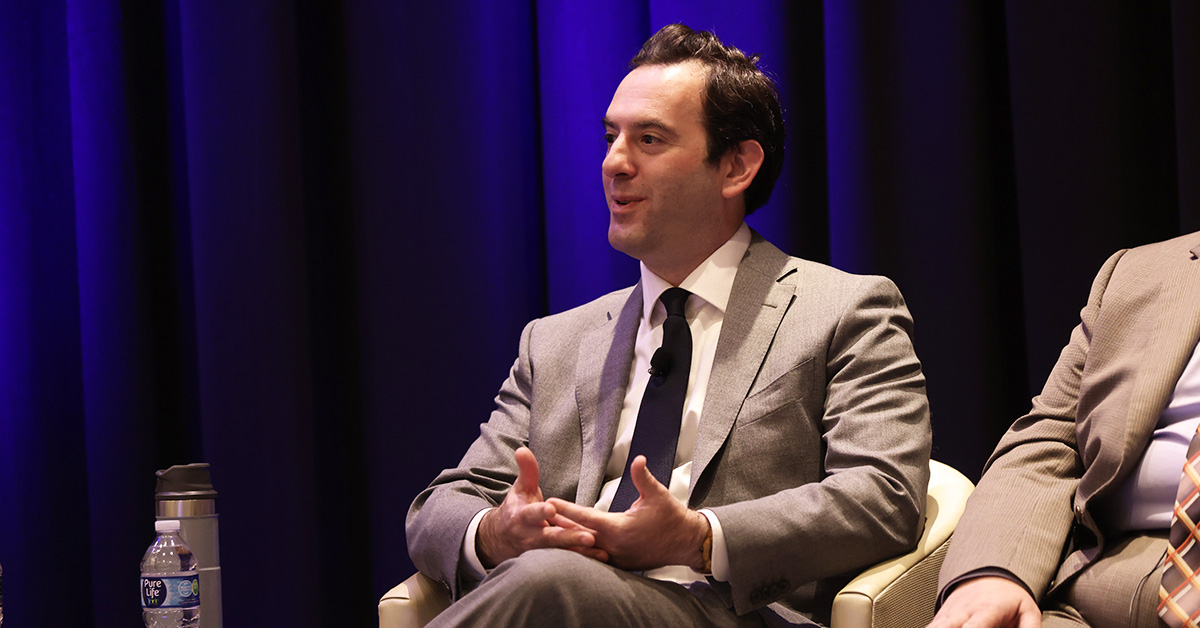
Louis Koplin, the chief information and technology officer for the Navy’s portfolio acquisition executive for mission systems, has been a key player in helping the service make transformational advancements in key technologies like cybersecurity, digital workplace and enterprise IT services.
He’s steering Flank Speed’s evolution, including its zero-trust milestone and the shipboard Flank Speed Wireless rollout. Koplin has also embraced a “lean startup” model that turns small other transaction authority-based tech bets into full enterprise services.
For contractors, Koplin’s experience and successes in naval IT brings unique insights into successful cloud, zero-trust, digital identity and enterprise IT modernization deployment, and how the Navy scales prototypes into production contracts. Let’s dive into the five ways Koplin is progressing Navy IT capabilities and technologies.
Get Navy IT partnership opportunities directly from Koplin during a panel discussion at the Potomac Officers Club’s 2026 Navy Summit on Aug. 27! Bolster your expertise on operationalizing IT to support mission outcomes and sustaining the connected warfighter through agile infrastructure at the Go Live Faster panel featuring Koplin and other leading Navy and industry experts:
- Brian Defelice, Navy deputy director for financial operations
- Brandon Wehler, C5MI Insight LLC executive director
- Vice Adm. (retired) Joe Kernan, SAP NS2 senior vice president of strategic engagements
- Gen. (retired) Charles R. Hamilton, The SPECTRUM Group
What are 5 Ways U.S. Navy Technology Is Racing Ahead?
1. Modernizing Defense Without Disrupting the Mission
Readiness is one of the Pentagon’s top priorities. Readiness efforts, whether highly classified capabilities or critical overseas business systems, are highly dependent on each other and must be executed in a sensitive fashion to not disrupt essential missions.
Koplin is advising GovCon professionals to standardize capabilities to solve common problems while also permitting mission requirements to mould the user experience.
“We want a library of standard services and solutions,” Koplin said, according to GovExec. “It needs to be a fit-for-purpose approach.”
Koplin said units need industrial-grade processes that are both scalable and automated. This is so teams reduce time spent attempting to reinvent solutions while spending more time helping deliver mission outcomes.
“We can’t have our best and brightest just zooming around, trying to be heroes 24/7,” he said. “We need those repeatable processes. We need more automation. People shouldn’t have to reinvent the wheel every time.”
2. Flank Speed Wireless Full Steam Ahead
Koplin played a key role in the implementation of the Navy’s Flank Speed, a cloud-based initiative to provide Microsoft 365 services and applications to shore-based users at any time and anywhere in the world. Flank Speed took a step forward in late 2025 when the Navy demonstrated Flank Speed Wireless, formerly known as Sailor Edge Afloat and Ashore, or SEA2.
Originally developed to provide sailors with secure and reliable wireless connectivity at sea, FSW has proven to be more than a quality-of-life initiative. It’s become a mission-critical enabler.
During a visit by President Trump in late 2025, FSW allowed the White House Communications Agency to integrate with shipboard technologies to maintain secure communications. This demonstrated that investments in sailor-focused digital infrastructure could also be strategic assets.
“Flank Speed Wireless was designed to serve sailors, and it’s now proving itself mission-critical in high-stakes national operations,” said retired Capt. Frederick Crawford, former Navy Enterprise Networks deputy director.
Get the scoop on new Navy requirements before your competition by attending the Potomac Officers Club’s 2026 Navy Summit on Aug. 27! Discover spending priorities with the Navy’s $378 billion FY 2027 budget from leading service officials like Koplin; Hung Cao, acting Navy secretary; and Vice Adm. Michael Vernazza, Naval Information Forces commander, during their insightful keynote addresses. Make your voice heard during panel discussions covering essential Navy technologies like cybersecurity and autonomous systems. Sign up now for this highly-anticipated GovCon event!
3. Expanding AI Use Cases and Aligning Cyber Workforce Needs
Koplin is leading a Navy effort to better leverage commercial approaches to acquiring and investing in new technology, GovCIO Media and Research has reported. PAE Mission Systems wants to slash the systems integration burden faced by end users, which usually happens because the Navy typically fields different projects and programs without considering mission engineering.
This ends up forcing operators to use multiple different computers, applications and data entry systems to perform their jobs. To tackle this, PAE Mission Systems is embracing shared development environments and enterprise services that reduce repetitive efforts across units and commands.
The Navy, by standardizing infrastructure, seeks to speed up delivery timelines and ease software deployment.
“The more that we can provide these common dev environments … the faster these things will go,” he said.
4. Small Bets Paying Off as Enterprise Services
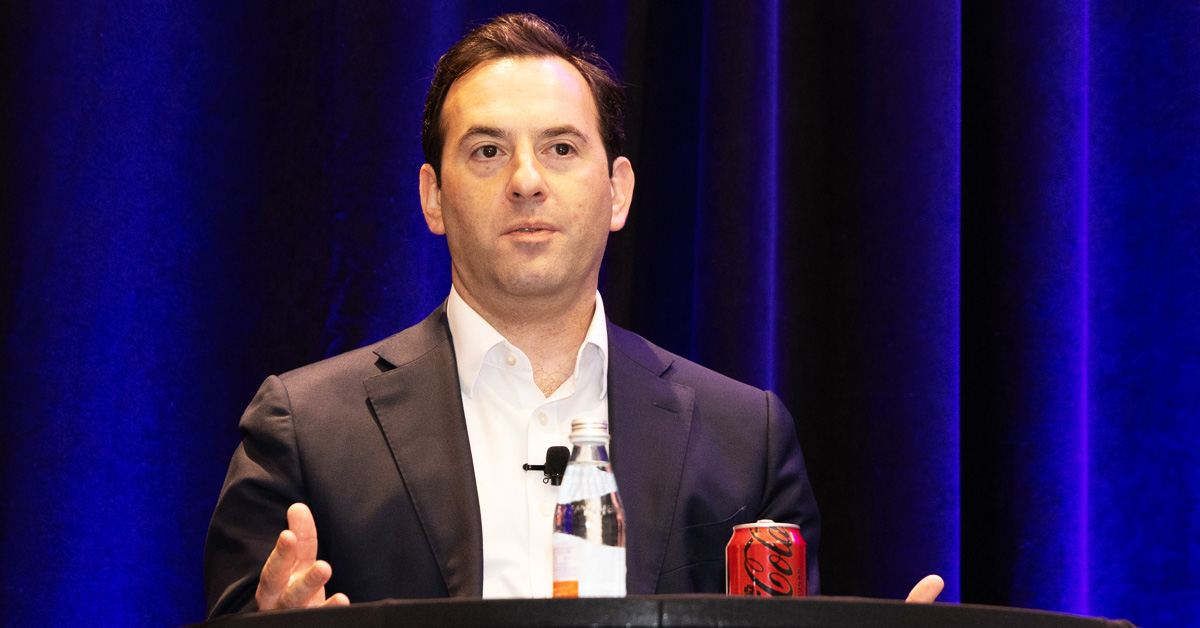
Koplin is helping the Navy make small, but smart, bets on IT, allowing them to grow into productive enterprise services, Federal News Network reported. Two examples are Enterprise Service Desk and Naval Identity Services.
Both have become enterprise services, allowing the service to streamline systems, create common processes and make sure proper security features are in place. Koplin said these both began as ideas, transitioned into prototyping and eventually into production.
In the case of the ESD, which provides help for IT issues, who would the Navy call if it had a problem? Koplin said he prioritized enabling service leaders to experiment, innovate and try new things with the use case and technology.
“But after a while, we think we know what this looks like, vertically and horizontally, so now, how do we shift the focus from investing to maximize effectiveness to extracting costs to maximize efficiency,” Koplin said.
5. Prioritizing Acquisition Excellence
Koplin has directed PEO Digital to use a big picture perspective when acquiring cutting edge software and prioritize customer feedback, according to Federal News Network. This is because PEO Digital’s evolution from narrowly focused on engineering to an acquisition command requires a better approach to procurement.
Koplin said the unit also needs to keep software design in mind and not be surprised by the pace of change.
“We need to design with the expectation of change and not be continually surprised that Windows 11 follows Windows 10 and Windows 12 follows Windows 11,” Koplin said. “We continue to be surprised by that fact.”