- Latest Army directive targets modular, standards-based system interfaces
- Directive covers program managers across active, Guard and Reserve components
- The Army’s acquisition chief will oversee the rollout
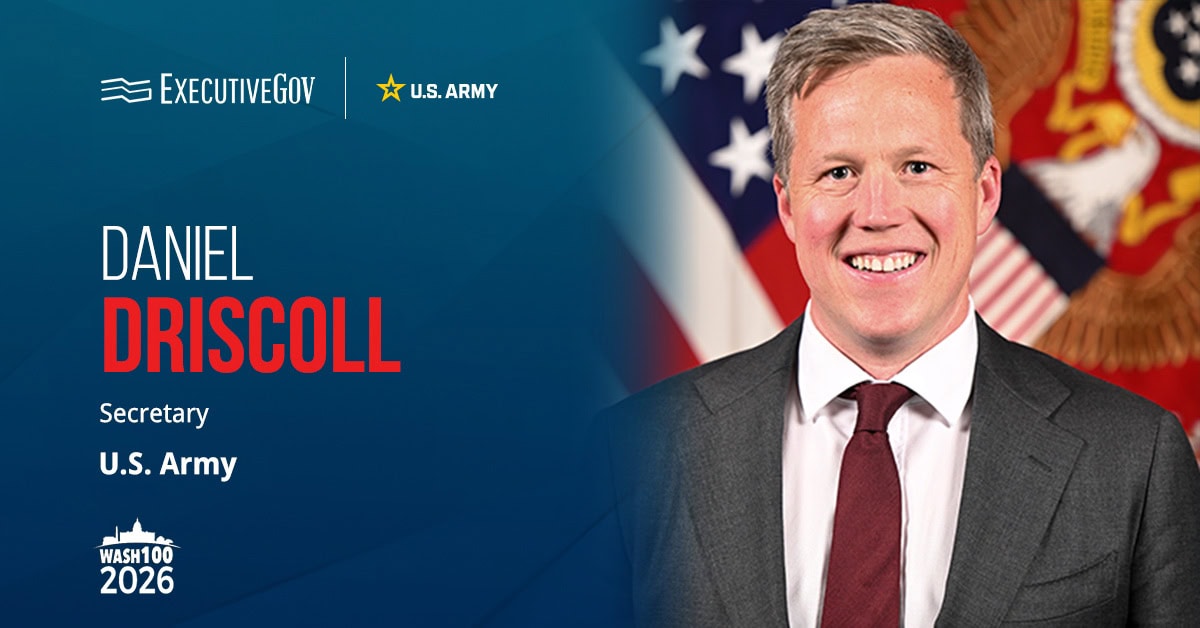
Outgoing Army Secretary Dan Driscoll, a 2026 Wash100 awardee, has issued a directive requiring the service’s acquisition programs to build modular, standards-based system interfaces designed to improve interoperability across Army platforms.
The Army said the directive, which took effect Aug. 24, applies to the regular Army, Army National Guard and Army Reserve.
Why Was the Directive Issued?
The directive builds on requirements under Title 10 of the U.S. Code for a modular open systems approach, or MOSA, in major defense acquisition programs. According to the memorandum, program managers are expected to apply MOSA principles wherever possible, and other Army programs are encouraged to consider the approach to strengthen system interoperability.
The memo points to operational reporting from combat activities as evidence of a need to speed up the adoption of open, modular interfaces. It also references a validation sprint carried out during Operation Jailbreak, which the Army said demonstrated that open systems architectures and application programming interfaces, or APIs, allow Army systems to share information and support battlefield visibility.
What Must Program Managers Do Under the Army Directive?
The directive lays out a series of requirements for program managers across new and legacy acquisition efforts, regardless of dollar value or acquisition pathway:
- Open system architecture. Software and systems must be designed and maintained using modular design and standardized interfaces to support integration with existing and future Army systems and authorized third-party applications.
- Secure, exposed APIs. Program managers must obtain and maintain secure, bidirectional APIs or similar protocols, such as gRPC, MQTT, WebSockets, GraphQL and Model Context Protocol, giving the Army programmatic access to system data and functions.
- No artificial barriers. Contractors may not use proprietary data formats or technical limits that would restrict the Army’s ability to integrate a system with other platforms, and API endpoints cannot be deprecated without an equivalent or superior replacement at no added cost.
- Documented interfaces. Contracts must require delivery of well-documented interfaces exposing system telemetry, operational data streams and control functions, with defined inputs, outputs, formats and protocols.
- Developer documentation and data rights. Contracts must include commercially reasonable developer documentation along with the technical data, computer software and associated government data rights needed to support sustainment and interoperability.
- Cybersecurity compliance. All modular interface services and deliverables must comply with Army and Department of War cybersecurity laws, regulations and policies.
What Are the Responsibilities of the Army’s Acquisition Chief?
The directive assigns implementation oversight to the assistant secretary of the Army for acquisition, logistics and technology, who serves as the Army acquisition executive. Under the policy, the official must issue implementing guidance addressing the directive’s program manager requirements within 90 days of the directive’s Aug. 24 signing date and report the status of implementation to the secretary of the Army within 120 days.
The assistant secretary also holds oversight responsibility for the policy going forward and is required to incorporate its provisions into Army Regulation 70-1 within two years of the directive’s signing. The directive will remain in effect until the revised regulation is published.
How Does the Directive Fit Into Driscoll’s Broader Acquisition Agenda?
The push for modular, standards-based interfaces builds on a series of moves Driscoll has made to speed up how the Army buys and integrates technology. Back in October 2025, he outlined a Silicon Valley-style approach to Army acquisition, signaling a shift toward faster, less bureaucratic contracting cycles.
That philosophy carried into the Right to Integrate hackathon initiative, where Driscoll and major defense contractors worked to reduce the custom engineering typically required to get systems talking to one another. He also signed a memo moving the Army to a commercial-first model for software acquisition, prioritizing off-the-shelf products over bespoke builds.
The latest directive arrives as Driscoll’s tenure as Army secretary comes to a close, representing one of the last acquisition-related actions of his time in the role.