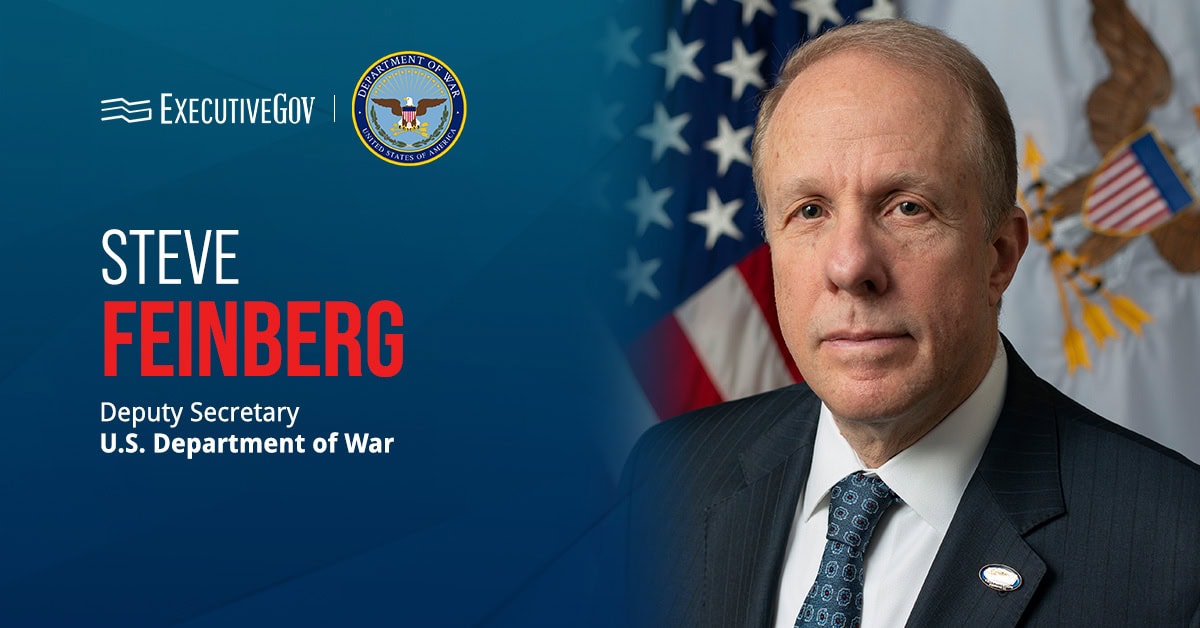
- DOW Deputy Secretary Steve Feinberg has signed a memo overhauling contractor cost accounting and audit rules
- The shift moves contractors toward standard private-sector accounting practices
- Implementation actions carry deadlines ranging from seven to 180 days
Deputy Secretary of War Steve Feinberg has issued a memorandum directing the Department of War to eliminate audit, accounting and compliance requirements that have separated defense contractors from the broader U.S. economy.
DOW said Tuesday the memo sets deadlines for senior leaders to open competition, narrow the scope of government-unique cost accounting, and rely on the financial controls and audits companies already maintain.
According to the memo, the current framework’s companywide accounting rules and duplicative audits have limited competition and raised prices rather than controlling costs. It directs the department to move from Cost Accounting Standards, or CAS, to Generally Accepted Accounting Principles, or GAAP, extending the change to every tier of the supply chain.
What Did Feinberg Say About the Memo?
Feinberg said selling to DOW should function as a line of business rather than a corporate identity, and that the defense industry should be able to draw on the strength of the private sector.
“Our nation’s greatest strength is its private sector, and our defense industry must harness and mimic it – unleashing industry first, and protecting taxpayers by confining our most burdensome oversight tools to the narrow set of work that genuinely demands them,” Feinberg said. “Transparency and partnership runs both ways: the Department opens its buying to market forces, pays fair prices with honest margins, and in exchange industry shares, when asked, the cost and pricing information it already keeps.”
What Are the Memo’s 3 Objectives?
The memorandum outlines three objectives to guide the changes:
- Compete continuously for speed and volume — DOW will carry multiple performers into production, direct orders to those who deliver and keep future opportunities open to competition.
- Attach oversight rules to contracts, not companies — An award carrying a particular oversight regime should not require a company to restructure itself, and no company should be excluded from or locked into the defense market by government-unique requirements.
- Limit audits to genuine risk — The department will rely first on the independent audits companies already undergo, reserving government-specific oversight for high-risk work where no alternative exists.
What Implementation Actions Does the Appendix Direct?
The memo’s appendix assigns a series of dated actions across DOW leadership:
- Vice chairman of the joint chiefs of staff — Within 30 days, co-chair a review with the deputy secretary of how the services and military departments have put requirements reform into practice.
- Under secretary of war for acquisition and sustainment, or USW(A&S), — Within seven days, issue a departmentwide modular open systems approach policy and a portfolio acquisition executive operating framework. The office must also apply the higher CAS thresholds enacted in the fiscal 2026 National Defense Authorization Act, issue a CAS waiver policy within 60 days, block components from imposing “shadow CAS” requirements on exempt awards, and require written approval before any solicitation brings a new business unit under full CAS coverage.
- Commerciality and contracting-tool actions — Within 45 days, commercial product and service determinations must be completed within 15 business days of a complete request, and the department will expand use of other transaction authority through fixed-amount, milestone-based payment structures.
- Profit policy and requirements review — Within 90 days, DOW will begin rulemaking to revise its profit policy so negotiated margins reflect value delivered, risk carried and private capital invested rather than cost incurred alone. The same 90-day window applies to a review requiring every procedural requirement below the Federal Acquisition Regulation and Defense Federal Acquisition Regulation Supplement to cite its governing authority or lapse.
- Forward-pricing and supplier transparency — The Defense Contract Management Agency and the Defense Contract Audit Agency will overhaul the approach to forward pricing rate agreements, and the department will issue implementing procedures within 30 days for the Aug. 18 supplier cost and pricing transparency memorandum.
- Under secretary of war (comptroller), or USW(C), — Will advance CAS-to-GAAP reform proposals with the Cost Accounting Standards Board, direct that audits rely first on a contractor’s audited GAAP financial statements, and recommend the department’s nominee to the board within 30 days.
- Joint USW(A&S) and USW(C) actions — Within 90 days, consolidate contractor business-system requirements into simplified, commercial-aligned criteria, and within 60 days accept independent public accounting firm certification in place of separate department review.
- Military department acquisition executives — Within 120 days of the framework’s issuance, delegate Portfolio Acquisition Executive authorities as the default, with exceptions requiring component-head signoff.
- Director, Defense Innovation Unit — Within 180 days, expand advance market commitments, building on the Drone Dominance initiative, to reward demonstrated performance and delivered production scale.
- Director of administration and management — Within 90 days, deliver options for aligning the department’s contract-oversight enterprise while preserving mission-critical functions and addressing workforce effects.
The appendix directs USW(A&S) and USW(C) to jointly define and baseline measures of progress — including eliminated requirements, CAS coverage levels and audit cycle times — within 90 days and report quarterly thereafter.
How Does the Latest Memo Build on the DOW Acquisition Reform Push?
The industrial base memo extends a reform push directed by an executive order calling on the department to modernize its acquisition process and drive innovation across the defense industrial base. In November 2025, the department redesignated its acquisition system as the Warfighting Acquisition System, a change the Air Force began implementing in January through new portfolio acquisition executive roles.
The memo also carries out an executive order making fixed-price and performance-based contracts the default and preferred method of federal procurement, with cost-reimbursement contracts reserved as the exception.
Building on that shift, Under Secretary Michael Duffey has established program czars reporting directly to Feinberg for top-priority weapon systems. The department has also worked to embed private-sector executives into its acquisition, production and supply chain functions through the BOND initiative.
Most recently, Feinberg directed the acquisition workforce to obtain actual cost and pricing data across every tier of the supply chain for contracts valued at $10 million or more, a directive that preceded this week’s industrial base memo.