
As AI is more prevalently used in high-security environments, cybersecurity can no longer rely on static defenses like application logins or network boundaries. Instead, the focus must shift toward securing the data itself.
Current frameworks remain rooted in legacy thinking, where security models still rely on traditional perimeter security, even as use of AI increasingly poses access and security challenges, prompting a transformation. Traditional models are becoming obsolete as organizations prioritize data accessibility and AI-driven outcomes.
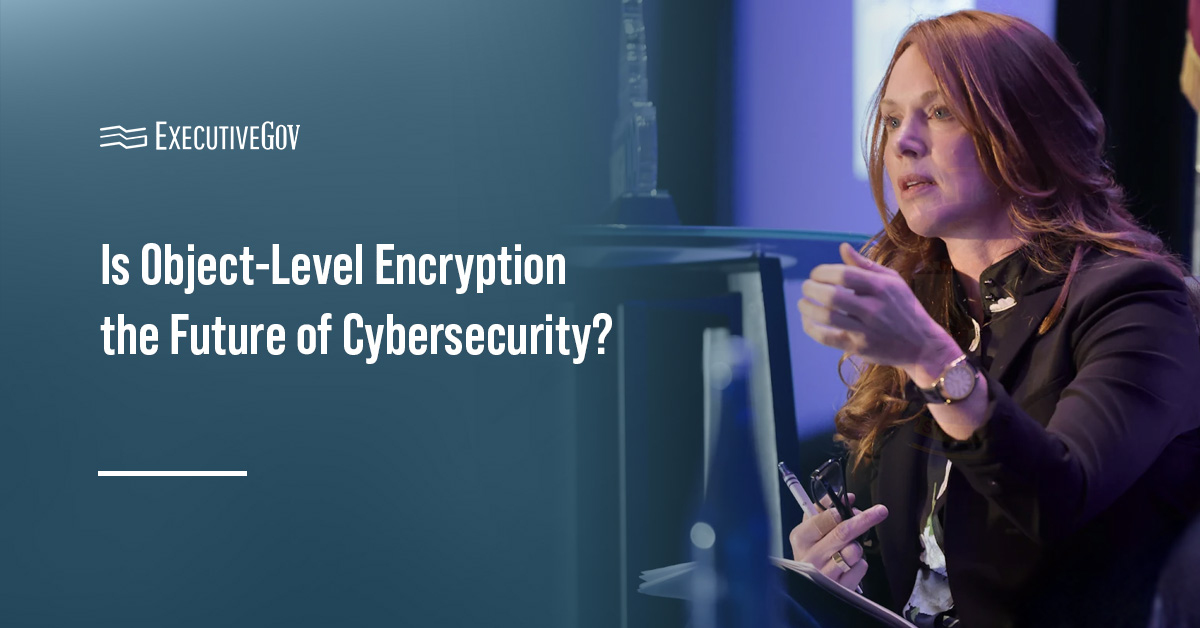
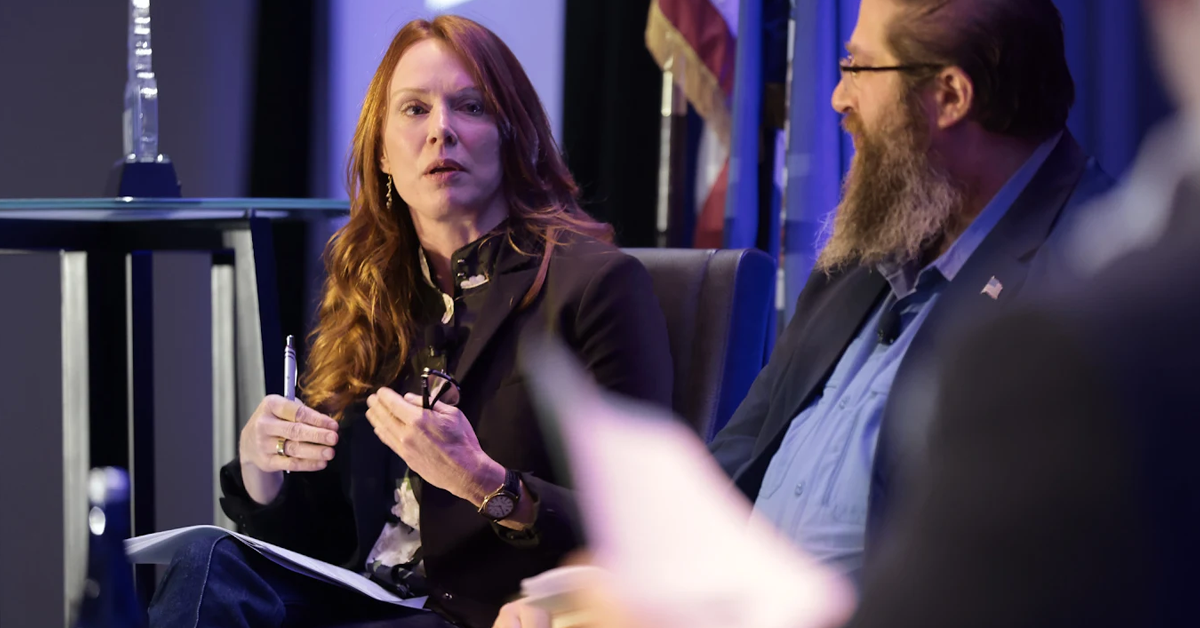
At Potomac Officers Club’s 2026 Artificial Intelligence Summit earlier this month, Angel Smith, president of global public sector at Virtru, led a forward-looking discussion on how cybersecurity must evolve in an era shaped by agentic AI and increasingly fluid data environments. In answering whether object-level encryption can replace traditional cybersecurity models, Smith suggested the shift is not only possible but increasingly necessary, as perimeter-based approaches alone are no longer sufficient in AI-driven environments.
 To continue exploring these challenges and the path forward, join government and industry leaders at the 2026 Cyber Summit on May 21, where discussions will focus on cyber infrastructure, securely adopting AI and overcoming legacy barriers to innovation. Reserve your seat here.
Change From Traditional Perimeter Security to Object-Level Encryption
A central theme of Smith’s panel discussion at the Artificial Intelligence Summit was the transition away from perimeter-based security toward object-level encryption. This shift represents a paradigm change in how organizations protect sensitive information.
Using a vivid analogy, Smith explained: “you’ve got a castle and you’ve got the moat around the castle…you bust over that moat, you’re going to get access to everything in the castle.” This model—long the foundation of cybersecurity—assumes that threats can be kept out by reinforcing external boundaries.
However, Smith argued that this approach is increasingly ineffective in modern, interconnected environments. Instead, she proposed encrypting data at its core, rendering external defenses less critical: “if we were to think about the castle [in] terms of encrypting everything inside…who cares [about the moat, an analogy for perimeter security]? Come on in… It’s all encrypted.”
Object-level encryption could replace key functions of perimeter security by protecting data itself rather than relying on external defenses. This shift is described as a “game-changer,” but one that requires organizations to fundamentally change the way that they think about cybersecurity.
What Is Perimeter Security?
Perimeter security refers to the traditional cybersecurity model focused on protecting the boundaries of a network or system. This includes firewalls, access controls and segmented environments designed to keep unauthorized users out.
As described during the panel, perimeter security operates as a containment strategy. This approach often leads to siloed systems and limited data-sharing.
While effective in earlier IT environments, perimeter security struggles in today’s landscape of interconnected systems and AI-driven workflows.
What Is Object-Level Encryption?
Object-level encryption shifts the focus from protecting systems to protecting individual data elements. Instead of securing the perimeter, every piece of data gets encrypted and governed by access controls.
Smith described this approach as securing data “at the object level, no longer around the boundary level.”
This means encryption can be applied at granular levels, such as “the word document level” or even “the sensor field level.” Each data object carries its own permissions and attributes, ensuring that only authorized users can access it regardless of where the data resides.
The implications are significant: “clouds don’t matter anymore…On-prem doesn’t matter. You can move data, you can use AI because every single piece of information has attributes associated with it that only allows the right people to [access] it.” Smith explained.
These capabilities position object-level encryption as a viable replacement for traditional models; by enabling secure data sharing across environments, object-level encryption methods support interoperability and AI integration.
What Barriers Are Slowing the Shift to Data-Centric Security?
Transitioning to object-level encryption is not just a technical upgrade—it requires a cultural and operational transformation.
Panelists emphasized that the biggest barriers are not technological but institutional.
“Our policies are wrong, our perspectives are wrong,” Smith said, noting that organizations often make decisions “based off of fear and legacy and infrastructure.”
Interoperability also presents a major challenge, particularly in government and defense environments. The inability to seamlessly share data across systems and organizations remains a critical obstacle, with Smith pointing to persistent difficulties “trading information between squadrons…or…ground units.”
Ultimately, making the shift requires rethinking cybersecurity from the ground up—prioritizing data-centric security models, enabling secure data-sharing and aligning policy with emerging technological realities.
As the panel concluded, the future of cybersecurity will depend on whether organizations can overcome entrenched habits and embrace a model built for the AI-driven world.
Who Is Angel Smith?
Angel Smith is president of global public sector at Virtru, where she leads strategy and growth across government, defense and intelligence markets, with a focus on advancing data-centric security solutions. Prior to joining Virtru in 2026, she spent nearly a decade at Microsoft where she drove adoption of cloud, AI and data technologies across complex federal and international environments.
Smith also brings government and military experience, previously serving as a senior professional staff member on the House Permanent Select Committee on Intelligence, overseeing Department of War intelligence programs and supporting early cloud initiatives. Earlier in her career, she spent 23 years in the U.S. Marine Corps, rising from an enlisted electronics technician to a KC-130 pilot and detachment commander, shaping her perspective on national security and cybersecurity challenges.
Where Can GovCons Learn How Cybersecurity Is Evolving at Federal Agencies?
To dive deeper into the evolving cybersecurity landscape, join the Potomac Officers Club’s 2026 Cyber Summit on May 21, where government and industry leaders will explore the latest strategies for securing networks in the age of AI.
The event will feature expert discussions on zero trust, data-centric security, emerging threats and the technologies shaping the future of cyber defense, with insights from featured keynote speakers including Assistant Secretary for Cyber Policy at DOW Katherine Sutton. Don’t miss this opportunity to gain actionable insights and connect with key decision-makers driving innovation across the public and private sectors. Save your seat today!