- NASA has named four prime crew members and one backup for Artemis III
- The 2027 mission will test Orion rendezvous and docking with commercial lunar landers
- NASA Deputy Administrator Matt Anderson will keynote the 2026 Air and Space Summit
NASA has named the four prime crew members and one backup astronaut for the Artemis III mission, a 2027 test flight designed to validate rendezvous and docking operations between the Orion spacecraft and commercial lunar landing systems developed by Blue Origin and SpaceX.

The announcement comes as government and industry leaders prepare to discuss space capabilities at the Potomac Officers Club’s 2026 Air and Space Summit. NASA Deputy Administrator Matt Anderson will deliver a keynote address at the July 30 event, which will feature panel discussions on commercial space relay, interoperable optical networks, artificial intelligence and other emerging capabilities. Register now!
Who Are the Artemis III Crew Members?
- Andre Douglas, mission specialist — Selected by NASA in 2021, Douglas is a former U.S. Coast Guard officer and systems engineer who previously served as a backup and closeout crew member for Artemis II.
- Frank Rubio, mission specialist — A NASA astronaut and U.S. Army colonel, Rubio set the record for the longest single spaceflight by an American astronaut after spending 371 days aboard the International Space Station.
- Luca Parmitano, pilot — The European Space Agency astronaut and Italian air force colonel will become the first European assigned to an Artemis mission. He previously commanded Expedition 61 aboard the International Space Station.
- Randy Bresnik, commander — A veteran NASA astronaut and retired U.S. Marine colonel, Bresnik has completed two space missions and currently supports the development and testing of Artemis exploration systems.
NASA astronaut Bob Hines will serve as the backup crew member. Hines previously flew as pilot of NASA’s SpaceX Crew-4 mission to the International Space Station and will train alongside the prime crew.
What Is Artemis III?
Artemis III is a crewed test mission that will launch aboard NASA’s Space Launch System rocket from Kennedy Space Center in Florida and place the Orion spacecraft and crew into low Earth orbit.
During the approximately two-week mission, Orion will conduct rendezvous and docking demonstrations with test versions of lunar landers being developed by Blue Origin and SpaceX. NASA said the flight will test integrated hardware, software, propulsion, communications and spacecraft interfaces that support future Artemis missions.
Under the mission profile, Blue Origin’s Blue Moon pathfinder will launch first and remain in orbit awaiting Orion. After completing tests with Blue Moon, Orion will undock and later rendezvous with SpaceX’s Starship pathfinder for additional checkout activities before returning to Earth for recovery by NASA and the U.S. Navy.
NASA said the mission will help prepare for Artemis IV, currently planned as the first crewed mission to the lunar South Pole in 2028.
The agency also highlighted continued progress on Artemis III hardware, including Orion spacecraft integration, docking system installation, heat shield testing and Space Launch System rocket processing. Blue Origin and SpaceX are continuing development of their respective lunar landing systems with support from NASA engineers and technical teams.
What Did NASA Administrator Jared Isaacman Say About Artemis III?
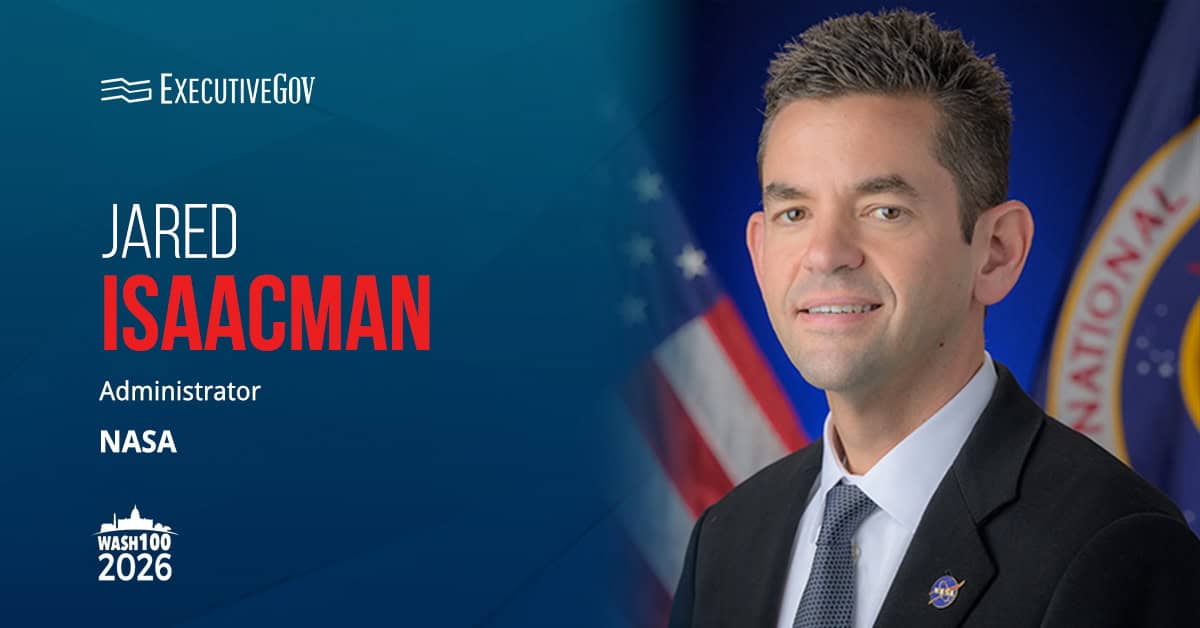
NASA Administrator Jared Isaacman, a 2026 Wash100 awardee, said Artemis III builds on the foundation established by the Artemis II crew and will demonstrate American innovation and international cooperation through complex rendezvous and docking operations.
He said the mission will require coordinated launches of heavy-lift rockets and support the development of technologies needed for future deep space exploration missions.
“The Artemis III astronauts, alongside ESA and our international partners, and the tens of thousands of the best and brightest across the agency and industry, are ushering in a new Golden Age of exploration carrying forward the hopes and dreams of the next generation just as the Apollo astronauts did for so many of us,” Isaacman added.