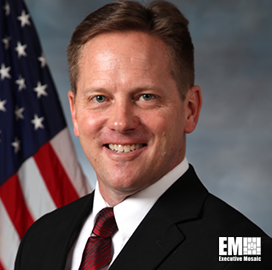

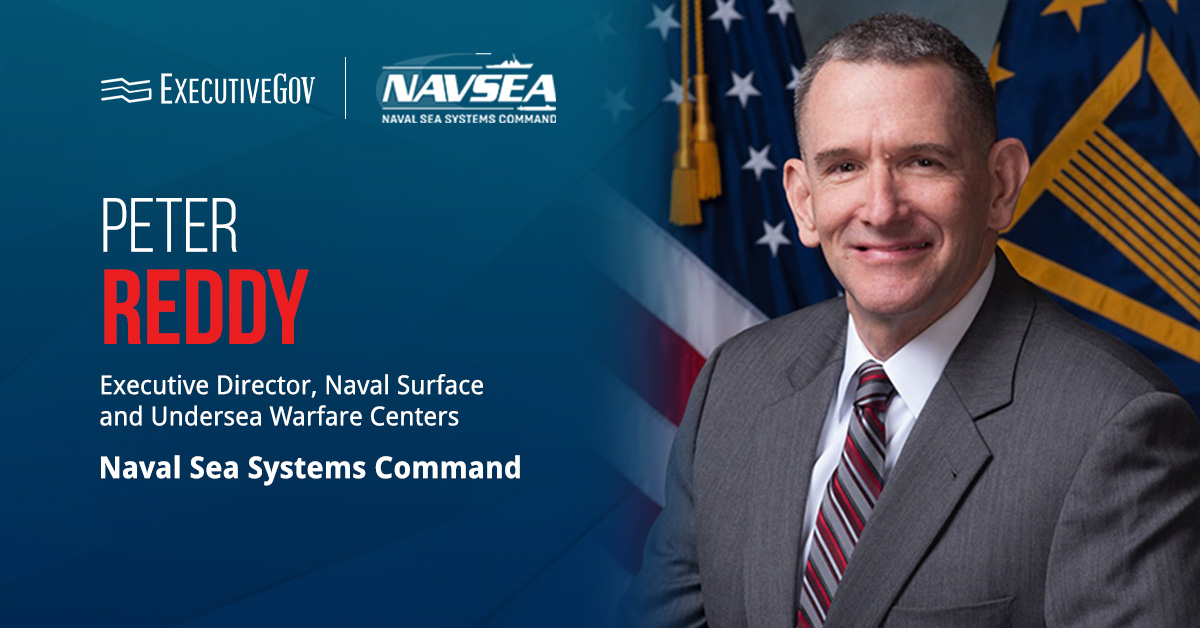
The U.S. Navy has named Peter Reddy as executive director of the Naval Sea Systems Command’s Naval Surface and Undersea Warfare Centers, placing a senior engineering and acquisition official in charge of the service’s core technical enterprise at a time of mounting pressure on fleet delivery and modernization.

The Potomac Officers Club’s 2026 Navy Summit on Aug. 27 convenes a high-level assembly of Navy leaders, defense officials and industry innovators to navigate the emerging technologies and modernization priorities critical to the future of naval dominance. Register now!
Reddy most recently served as deputy assistant secretary of the Navy for research, development, test and engineering, where he oversaw science and engineering efforts, prototyping and experimentation, and test and evaluation activities across the service, NAVSEA said Wednesday. He also managed the Naval Research and Development Establishment, which includes warfare centers, naval laboratories, the Office of Naval Research and affiliated research institutions.
What Role Do NAVSEA Warfare Centers Play in Navy RDT&E?
The NAVSEA Warfare Centers serve as the Navy’s principal RDT&E organizations for surface ship and submarine systems.
The enterprise comprises multiple Naval Surface Warfare Center and Naval Undersea Warfare Center divisions that provide engineering services, technical expertise and operational support needed to design, develop and sustain naval platforms.
Reddy's appointment positions a leader with direct oversight of the Navy’s RDT&E ecosystem to now guide execution within the very organizations responsible for delivering engineering capabilities to the fleet.
What Experience Does Peter Reddy Bring to the Role?
Reddy brings a combination of senior Pentagon leadership, technical oversight and operational experience spanning decades.
Before his most recent role, he served as executive director of Naval Information Warfare Center Atlantic, where he led a large workforce delivering cyber, communications, intelligence and enterprise IT capabilities to naval and joint customers. He also previously served as the organization's deputy executive director and as chief engineer and 5.0 engineering competency lead when the command was known as Space and Naval Warfare Systems Center Atlantic.
How Has Reddy Led Acquisition and Engineering Programs?
Reddy’s career includes extensive experience managing acquisition and systems engineering efforts across the Department of the Navy and joint mission areas.
At Marine Corps Systems Command, he served as a program manager overseeing command, control and communications capabilities for the Marine Air-Ground Task Force, responsible for acquisition strategy, engineering execution, budgeting and system performance.
He also led product groups focused on sensors, command and control systems, and air defense capabilities, coordinating across the Navy, Marine Corps and joint stakeholders while managing resources and program delivery.
As an SRA International senior strategist in 2014, Reddy supported the Department of War's technical evaluation of alternative materiel for anti-personnel landmines and cluster munitions.
A retired U.S. Marine Corps colonel, his military career included command of Marine Air Control units deployed to Afghanistan and Iraq, where he led aviation command and control operations and supported joint missions in contested environments.
Why Does Reddy’s Appointment Come at a Critical Time?
Reddy’s appointment comes as the Navy continues to face persistent challenges in delivering and sustaining its fleet, including shipbuilding delays, cost growth and industrial base constraints.
Several major Navy ship programs have experienced schedule slips of one to three years, in part due to workforce shortages and supply chain issues, Defense News reported.
In March 2025, the Government Accountability Office identified systemic issues in shipbuilding planning and execution, including cost overruns and delays that affected the delivery of new vessels and the achievement of long-term fleet growth targets.
More recently, GAO has identified gaps in digital engineering and test infrastructure that affect how effectively the Navy evaluates and fields new capabilities — functions closely tied to the warfare centers.
Against this backdrop, Reddy steps into a role that sits at the intersection of engineering execution, testing and capability delivery to the fleet.