
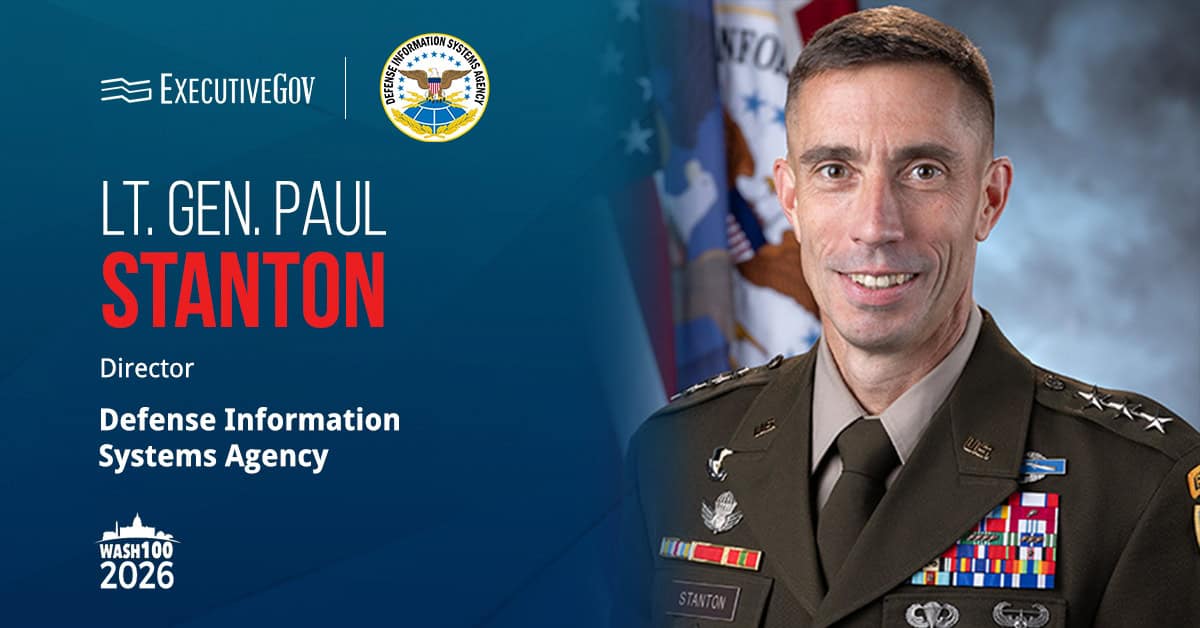
- Lt. Gen. Paul Stanton has outlined four priorities to strengthen DOW-industry collaboration in securing DOWIN
- Priorities include readiness and continuous modernization
- Stanton said AI-driven challenges require a team-based approach to defending DOWIN
Lt. Gen. Paul Stanton, director of the Defense Information Systems Agency and a 2026 Wash100 awardee, outlined four priorities to strengthen collaboration between the Department of War and industry partners in securing the DOW Information Network during a keynote address Tuesday at AFCEA International’s TechNet Cyber 2026 conference.

The Potomac Officers Club’s 2026 Army Summit on June 18 will feature panel discussions about cybersecurity, artificial intelligence, hyperconnected battlefield, tactical edge and other priorities shaping the future force. Sign up now and be part of the conversation!
What 4 Priorities Did Stanton Outline to Drive a Collaborative Culture?
DISA said Wednesday Stanton identified four priorities to strengthen collaboration between the Pentagon and industry partners:
- Readiness: Stanton described readiness as the foundation of mission effectiveness, emphasizing that service members, government civilians and contractors must be trained and prepared to perform their responsibilities.
- Campaigning: He said organizations should deliver integrated, mission-focused capabilities rather than standalone products, providing solutions that meet warfighters’ operational requirements.
- Continuous Modernization: Stanton said industry and government must continuously adapt to evolving threats and operating environments while ensuring updates and system changes are coordinated across the DOWIN.
- Establishing Lethality: The lieutenant general said secure, interoperable systems are necessary to deliver the right data to military leaders and enable faster decision-making than adversaries.
“We must get the right data to the right place at the right time to make a better and faster decision than our enemies,” Stanton said.
Why Did Stanton Call for a Team-Based Approach to Securing DOWIN?
Stanton said the emergence of artificial intelligence and the increasing complexity of modern warfare require closer collaboration between government and industry.
“The speed, scope and scale of frontier AI models will significantly change the way that we approach delivering warfighting capabilities and securing them for our nation,” the DISA director said. “We cannot do that in isolation … It requires a team.”
How Do Stanton’s Priorities Align With DISA’s Cybersecurity Strategy?
Stanton’s emphasis on readiness and continuous modernization aligns with previous remarks on treating the DOWIN as a warfighting capability.
In earlier appearances, he highlighted the importance of zero trust implementation, network modernization and proactive cyber defense to secure military operations and enable faster decision-making across the department.