- Federal cyber officials warn advanced AI tools could aid both defenders and hackers
- CIA official says Anthropic’s Mythos model marks a major cybersecurity inflection point
- Public-private cooperation seen as essential to protecting critical infrastructure
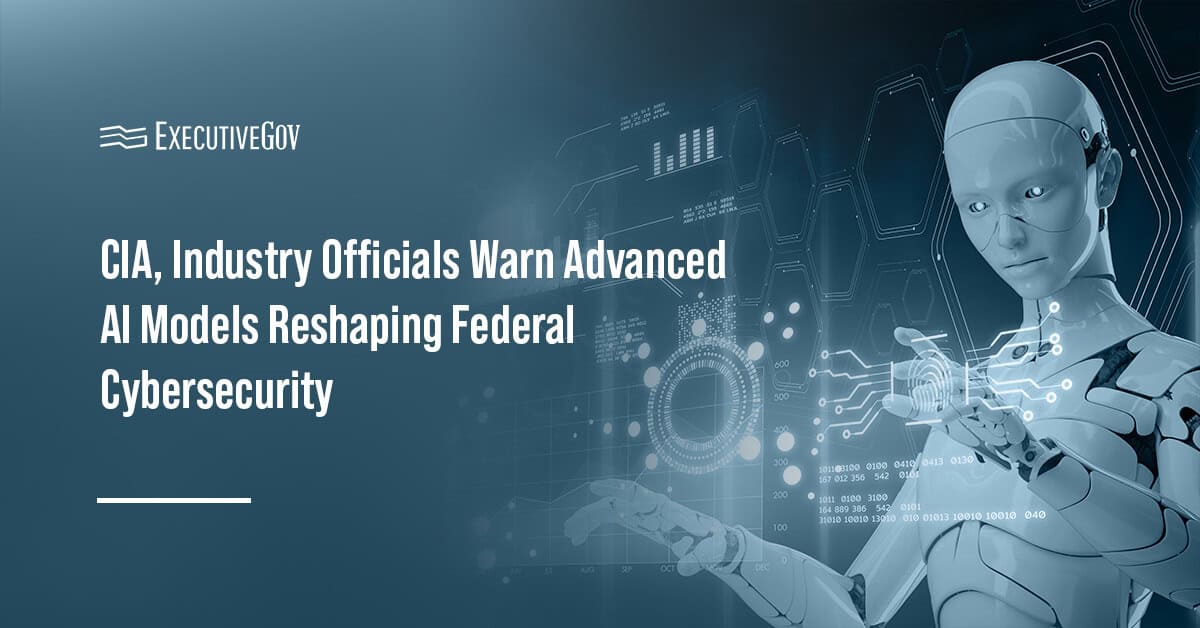
Federal cyber leaders have warned that advanced artificial intelligence models pose both opportunity and risk, urging agencies to strengthen partnerships with the private sector, Nextgov/FCW reported Monday.

Advancements in AI and cybersecurity are reshaping how intelligence agencies collaborate with industry to address evolving threats and mission demands. Learn more about the technologies driving the intelligence community at the Potomac Officers Club’s 2026 Intel Summit on Sept. 24. Register now.
Why Is Mythos a Turning Point?
Dan Richard, associate deputy director of the Digital Innovation Directorate at the CIA, said during the Qualys ROCon Public Sector 2026 conference that Anthropic’s Mythos model represents a “reflection point” for agencies managing sensitive data. Mythos can detect extensive software flaws, raising concerns that it could also empower hackers.
Anthropic introduced Mythos in April as part of its Project Glasswing cybersecurity initiative, describing the model as capable of autonomously identifying software vulnerabilities and exploit paths. The company said the technology could strengthen cyber defense operations but warned that malicious actors could also misuse similar frontier AI systems.
Richard said the CIA sees potential to automate threat response but emphasized the need for collaboration with industry, noting that most U.S. critical infrastructure is privately owned.
How Could AI Change Federal Cybersecurity Operations?
Richard said public-private collaboration will be critical as agencies adapt to rapidly evolving AI technologies. He noted that 80 percent of the nation’s critical infrastructure is operated by private-sector organizations, requiring closer coordination between government and industry.
IonQ Chief Information Officer Katie Arrington, former Pentagon CIO and previous winner of the Wash100 Award, said agencies may struggle to keep pace with the speed of AI-driven cybersecurity threats. She noted that traditional patching timelines may no longer be sufficient as AI tools accelerate vulnerability discovery.
According to Qualys CEO Sumedh Thakar, AI-enabled cybersecurity tools can help organizations accelerate patch management and reduce manual security processes, arguing that public sector agencies must embrace autonomous remediation to keep pace with increasingly automated and fast-evolving cyber threats.