- Many of these business opportunities are around components like crystal technologies
- They are in demand because a commercial fusion power plant has yet to be developed
- Learn about advanced energy and Genesis Mission requirements at the 2026 FedCiv Summit on Oct. 29!
Business opportunities abound for industry in the American quest for the first commercial fusion energy plant that could potentially provide a safe, abundant and zero carbon source of reliable primary energy.
Laura Berzak Hopkins, Princeton Plasma Physics Laboratory deputy director for research and chief research officer, told ExecutiveGov in an exclusive interview that this growing area includes, in addition to ongoing scientific research: parts, components and subcomponents such as crystal technologies for the spectrometers that will measure X-rays. It also includes different welding technologies and vacuum fittings.
These technologies are in demand because a commercial fusion power plant to deliver power to the electrical grid has yet to be developed, meaning there is no existing vendor base. Berzak Hopkins said this is a challenge for more than 60 vertically-integrated fusion companies, which are often backed by private equity or venture capital, that are pursuing a fusion concept toward a fusion pilot plant. Their goal is commercial fusion energy, a core Genesis Mission initiative to harness AI for scientific discovery.
“They are having to find vendors that either don’t exist, are very new, or are in different sectors of the economy,” she said. “But it also provides this wide-open field for new industrial partners to come in and have a prime contribution in this space.”
Get the latest Genesis Mission and advanced energy business opportunities at the Potomac Officers Club’s 2026 FedCiv Summit on Oct. 29! Explore how federal civilian agencies are investing in emerging technologies like data, cloud computing and cybersecurity. Get insights unavailable anywhere else during keynotes from these top federal officials, with more to be announced:
- Mangala Kuppa (pending confirmation), Department of Labor chief information officer and chief AI officer
- Pavan Pidugu (pending confirmation), Department of Transportation chief digital and information officer
What Is Fusion?
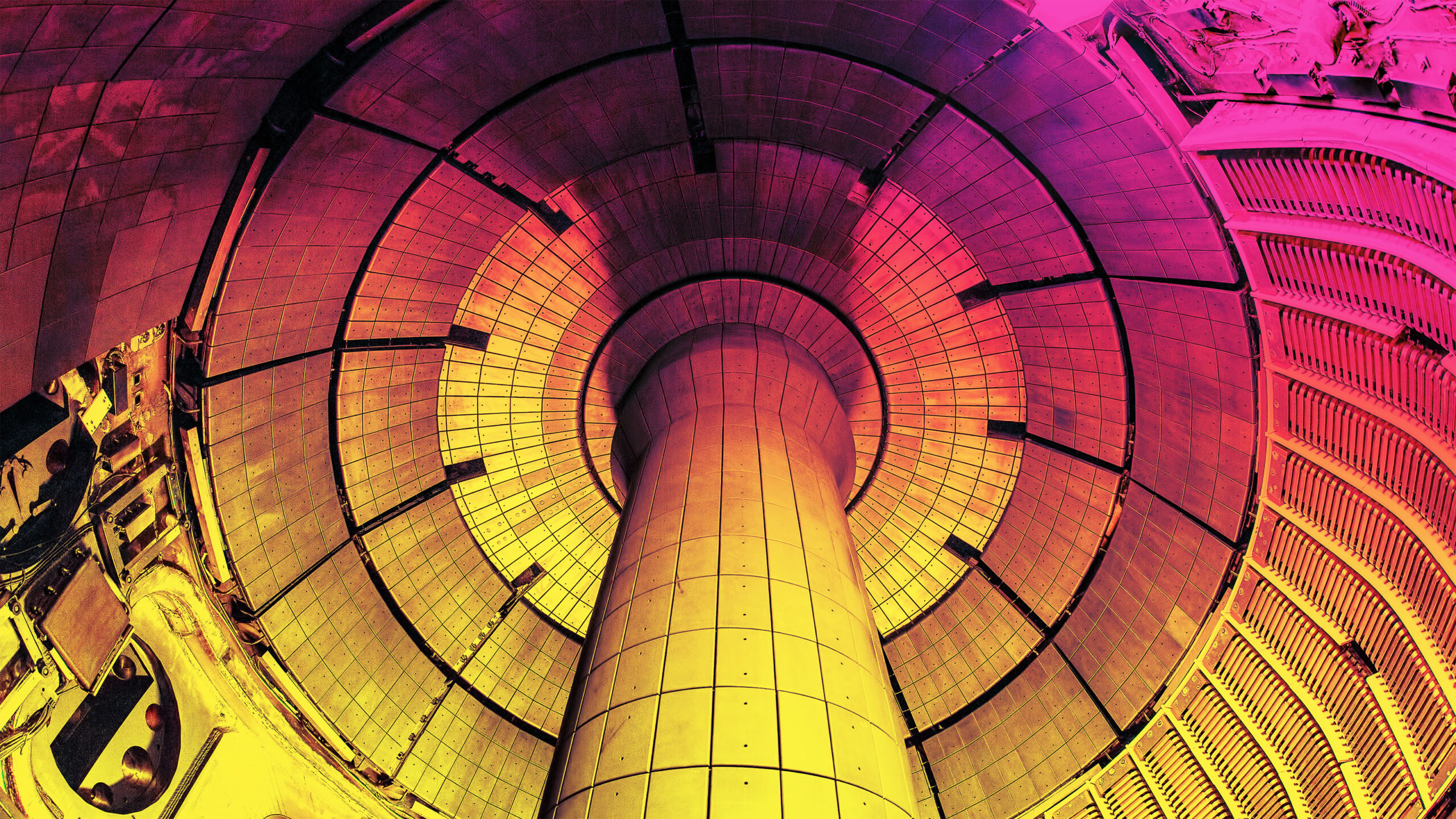
Fusion, or nuclear fusion, is the process by which two light atomic nuclei combine to form a single heavier one while releasing massive amounts of energy. Fusion reactions take place in plasma: a hot, charged state of matter made of free-moving electrons and atomic nuclei. Plasma has unique properties distinct from solids, liquids and gases.
How Much Private Sector Investment Has Fusion Attracted?
The U.S. private selector has attracted more than $10 billion in cumulative private investment to commercialize fusion technology and deliver fusion energy to the grid, according to the Department of Energy’s Fusion Science and Technology Roadmap published in June. Fusion power is still in the experimental stage and the national fusion community is pursuing the design and construction of experimental machines of all sorts, including pieces and components, to explore the trade space of how these machines perform. PPPL’s primary experiment is the National Spherical Torus Experiment-Upgrade, a fusion system that confines plasma in a compact, apple core shape using powerful magnetic fields.
PPPL is working on the best wall materials for the inside of a fusion system. Those inner walls must withstand temperatures hotter than the core of the sun, where temperatures top 27 million degrees Fahrenheit, according to NASA. PPPL believes liquid metals, such as lithium, might be the right material to add to walls made of porous tungsten, but more research is needed.
PPPL also does a lot of work on the measurement systems, called diagnostics, needed for fusion systems. They measure things like the temperature and the density of the plasma, among others. X-ray spectrometers are one example of these diagnostics.
I think there is a real reason for this level of aggressive optimism right now, and that’s because we have these generational experimental achievements coupled with advanced understanding and new AI-powered tools. — Laura Berzak Hopkins
What Are Princeton Plasma Physics Laboratory’s Contributions to Fusion Research?
Berzak Hopkins said PPPL is developing enabling capabilities for fusion energy in the form of knowledge, tools, skilled workforce and new data sets. PPPL’s private fusion partners, she said, are utilizing those capabilities to deliver their own types of plasma devices and, eventually, potentially fusion pilot plants.
FedCiv agencies are positioned to receive a record $76 billion to support IT projects in FY 2027. Get exclusive investment insights at the Potomac Officers Club’s 2026 FedCiv Summit on Oct. 29! Examine which modernization programs federal civilian agencies like the Department of the Interior, the Department of Justice and others will target with this expected budget boost at intriguing panel discussions like From Strategy to Delivery: Modernizing Federal Civilian IT Through AI for Mission Impact. Sign up now for this highly-anticipated GovCon event!
Is Fusion Energy Part of the Genesis Mission?
Fusion energy is a focal point of the Genesis Mission. PPPL received a Genesis Mission award for AI-4-Gyrotrons: Accelerating Electron Cyclotron Heating, or ECH. The lab, as this project’s leader, will use AI to improve ECH, a crucial method for heating the plasma held by magnetic fields in certain fusion systems.
“In many ways, that’s one of the exciting transitions that I see in the fusion community,” Berzak Hopkins said.
What Will PPPL Perform as Part of the AI-4-Gyrotron Award?
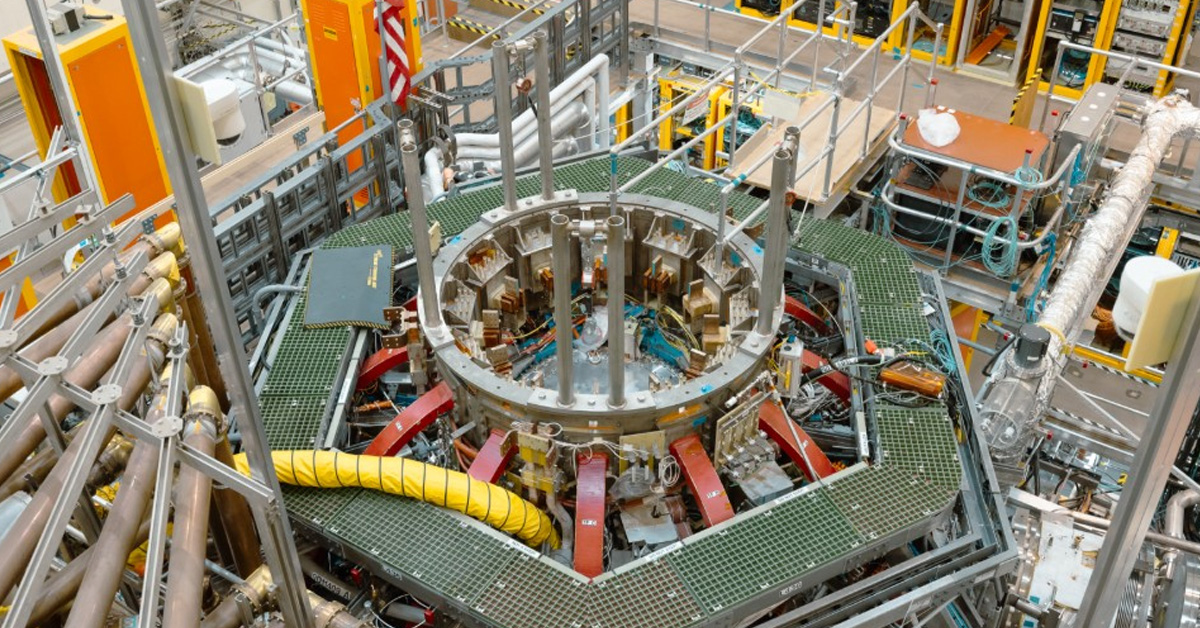
The PPPL research team will develop an AI system to autonomously operate the high-power gyrotrons used for ECH, according to a PPPL statement. The researchers will also build a digital twin to accelerate simulations of the physics inside a gyrotron and high-frequency gyrotron development needed by the fusion industry. Researchers from Rice University, the Naval Research Laboratory, Brookhaven National Laboratory and Sophelio will collaborate on this project. PPPL declined to specify the value of its AI-4-Gyrotron award.
What Does the PPPL Do?
PPPL’s core is in fusion and its identity is plasma physics, which includes microelectronics research. Approximately half of the process steps in semiconductor fabrication occur through a plasma process, or plasmas interacting with solids or plasmas interacting with liquids. In addition to fusion, Berzak Hopkins said, PPPL researches low-temperature plasmas to advance semiconductor and microelectronics manufacturing processes, which are considered critical to the long-term national and economic security of the U.S.
Berzak Hopkins said fusion energy research, which has been pursued for more than 70 years, is knocked for being “50 years away—always has, always will be.” But she is optimistic about the technology as demonstrated in recent advancements, such as almost 70 megajoules of energy released from the Joint European Torus, or JET, in the U.K. and ignition at the National Ignition Facility, a.k.a. NIF, in the U.S., and computational tools that capture how plasma behaves plus new sets of AI tools.
“I think there is a real reason for this level of aggressive optimism right now, and that’s because we have these generational experimental achievements coupled with advanced understanding and new AI-powered tools,” Berzak Hopkins said.
What Is the Genesis Mission?
The Genesis Mission is a federal initiative to accelerate scientific discovery and research and development workflows using novel AI models and frameworks. The DOE has secured more than $800 million in partner support through the Genesis Mission Consortium, including compute resources and credits, access to foundational AI models, cloud infrastructure and more.
For example, Google Public Sector is contributing $40 million of AI tokens and cloud credits for researchers in support of the Genesis Mission. The consortium currently includes all 17 DOE National Laboratories, five National Nuclear Security Administration plants and sites, and 41 industry, nonprofit, and philanthropic organizations.